AI-assisted note, based on the text and a physical inspection of this copy.
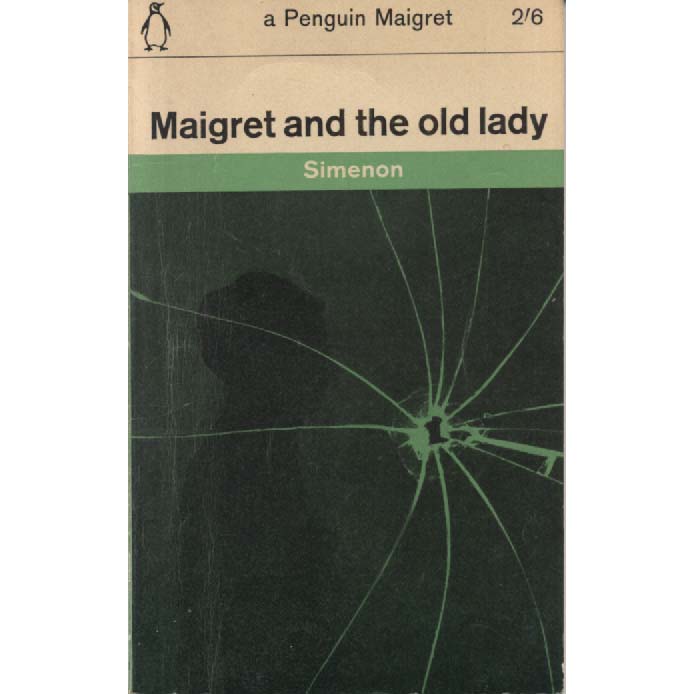
“Maigret and the Old Lady” is one of those books that feels like a well-worn shoe, familiar yet slightly uncomfortable. Published in 1963 by Penguin Books, it is part of the renowned Maigret series featuring the iconic Belgian detective, Jules Maigret. The cover design, with its signature Penguin aesthetic, is a delightful nod to the mid-20th century paperback vibe, characterised by bold colours and simple, striking typography. This particular edition employs a rather minimalist approach, letting the title take centre stage against a muted background, which is in stark contrast to the more ornate covers often seen in contemporary crime fiction. The book's physicality—its size, weight, and the texture of the paper—whispers of a time when reading was a tactile experience. The yellowing pages and faint scent of mustiness evoke a comforting nostalgia, a reminder of countless readers before us who have thumbed through its pages.
George Simenon, the mind behind Maigret, is a literary figure of considerable importance within the realms of detective fiction. Born in Belgium in 1903, Simenon is best known for creating the Maigret character, who has been a staple in detective literature since his first appearance in 1931. Over his prolific career, Simenon wrote approximately 75 Maigret novels and short stories, along with numerous other works. Despite his extensive bibliography, Simenon's personal life remains somewhat enigmatic, with varying accounts suggesting he led an adventurous existence that included frequent travels and a multitude of relationships. He has been both celebrated and critiqued for his contributions to the genre, often regarded as a precursor to modern psychological thrillers. His work transcended mere crime stories, delving into the human psyche and societal issues, a characteristic that sets him apart in the pantheon of detective fiction authors.
The year 1963 was a period marked by significant cultural shifts—social upheaval, the civil rights movement, and the lingering effects of post-war optimism were all in the air. In literature, the early 1960s saw the rise of experimental prose and a departure from traditional narrative forms. However, Simenon’s Maigret series remained steadfastly rooted in classic detective storytelling. The juxtaposition of Simenon's work against the backdrop of this evolving literary landscape is fascinating; while other authors were pushing boundaries, he maintained a steady course, focusing on character development and the moral complexities of crime rather than stylistic innovation. In this regard, “Maigret and the Old Lady” serves as a time capsule, encapsulating a world where the detective genre was both a reflection of societal norms and a critique of its underlying issues.
In “Maigret and the Old Lady”, we find our beloved detective navigating the murky waters of human relationships and moral ambiguity, which is a hallmark of Simenon’s storytelling. The plot unfolds in a manner that is both straightforward and intricate, showcasing the intricacies of human nature. Maigret’s interactions with the titular “Old Lady” are tinged with a sense of compassion that elevates the narrative beyond mere crime-solving. The author’s ability to develop characters who are both relatable and flawed is commendable, allowing readers to engage on a deeper level than surface-level intrigue. The pacing of the novel is deliberate, echoing the rhythms of life and the slow unraveling of secrets, which may be off-putting for readers accustomed to the frenetic pace of contemporary thrillers. However, those willing to invest their time will find richness in Simenon’s prose, which often reads like a meditation on the human condition.
As a cultural object, “Maigret and the Old Lady” encapsulates the essence of its time—both as a representation of the detective genre and as a reflection of societal norms in the 1960s. The book is a testament to the enduring appeal of the detective story, where the pursuit of truth often leads to greater questions about morality, justice, and the human experience. The simplicity of the cover belies the depth of the narrative within, inviting readers to explore the complexities of human interactions through the lens of crime. In a literary landscape increasingly dominated by sensationalism, Simenon’s understated approach offers a refreshing alternative, one that invites contemplation rather than mere entertainment.
In conclusion, “Maigret and the Old Lady” stands as a testament to George Simenon’s significant role in the development of detective fiction. Its 1963 publication places it firmly within a cultural context that both challenges and affirms traditional narratives, making it a valuable read for those interested in the evolution of literature. As part of the Crappy Old Books collection, this novel serves not only as an enjoyable story but also as a reminder of the rich tapestry of literary history that continues to influence contemporary writing.