AI-assisted note, based on the text and a physical inspection of this copy.
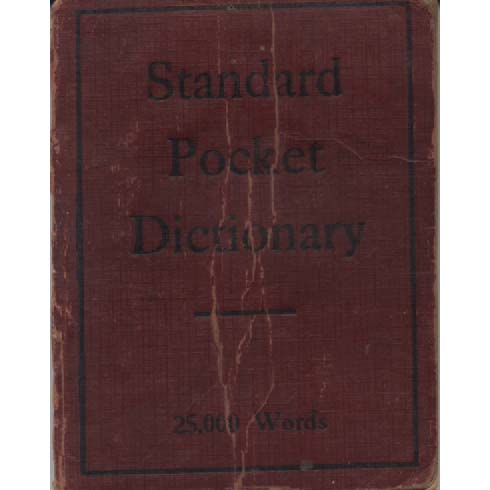
The Standard Pocket Dictionary, presumably published around 1930, serves as a fascinating artefact of its time, encapsulating the cultural and practical concerns of an era that valued compactness and accessibility in literature. The cover design is unassuming, typical of the period, featuring a simple cloth binding that has aged with a certain charm. Its dimensions make it an ideal companion for the pockets of the day, a nod to the era's emphasis on mobility and convenience, characteristics that become ever more significant as society progressed through the early 20th century. The paper quality reflects a utilitarian approach, with pages that have yellowed slightly over the decades, adding to its vintage appeal. The overall aesthetic conveys a sense of no-nonsense functionality, making it less of a decorative object and more of a practical tool, which aligns with the ethos of dictionaries of its time.
The author of this dictionary remains unknown, which is not uncommon for reference works of this period. Many dictionaries were compiled anonymously or under the umbrella of publishing houses that prioritised the information rather than the individual behind the content. This lack of attribution raises intriguing questions about the nature of authorship in reference literature; it suggests that the knowledge contained within was considered more important than the identity of its creator. In the broader context of publishing history, the absence of a named author is indicative of a genre that often eschews personal branding in favour of collective knowledge dissemination. This could also reflect a cultural belief in the authority of the dictionary itself, as if the compilation of words transcended individual effort.
Published around 1930, this dictionary emerges from a notable period in history, one marked by significant social change and the rise of mass literacy. The 1920s and 1930s were times when education was becoming more widely accessible, and the demand for tools that could aid in self-education was on the rise. As such, dictionaries became essential items in every household, reflecting a growing middle class that sought to improve their language skills and, by extension, their social mobility. The world was also witnessing the early stirrings of modernism, with a shift in how language was perceived – not merely as a means of communication but as a tool for cultural expression. This dictionary, though seemingly straightforward, played a part in the larger narrative of language's role in shaping identity and thought during this transformative period.
The practicality of the Standard Pocket Dictionary is evident in its design and content, which likely aimed to serve as a quick reference for everyday use. Dictionaries in this era often included not just definitions, but also phonetic spellings and sometimes even usage examples, catering to a public eager to refine its understanding of the English language. The compact size suggests it was intended for portability, allowing users to carry it in their bags or pockets, reinforcing the idea of language as a tool for empowerment and everyday communication. This dictionary would have been particularly useful for students, professionals, and anyone keen on improving their command of English, reflecting the societal push towards literacy and education that characterised the time.
In the realm of print culture, the 1930s saw the rise of various printing technologies that made book production faster and more efficient. The choice of paper and binding techniques used for the Standard Pocket Dictionary likely reflects these advancements, enabling the publisher to produce a reliable yet affordable reference book. This was an exciting time for print media, with a plethora of new titles being published across genres, yet dictionaries remained a staple in the literary landscape. The evolution of dictionaries during this time also mirrored broader trends in language use, as people began to embrace colloquial expressions and the dynamic nature of English itself.
In conclusion, the Standard Pocket Dictionary serves as a compelling snapshot of its time. Its unassuming design belies the important role it played in the lives of those who sought to navigate the complexities of language. The anonymity of its author and the lack of concrete publishing details do not diminish its value; rather, they invite contemplation about the nature of knowledge and authorship in the realm of reference literature. The cultural context of the 1930s, with its emphasis on education and accessibility, further enhances our understanding of why such a book was necessary and how it contributed to the evolving dialogue around language. For those interested in the intersections of culture and literature, this dictionary stands as an intriguing example of the utilitarian side of print culture, worthy of exploration and appreciation, particularly in the light of Crappy Old Books and their dedication to preserving and discussing these often-overlooked cultural artefacts.