AI-assisted note, based on the text and a physical inspection of this copy.
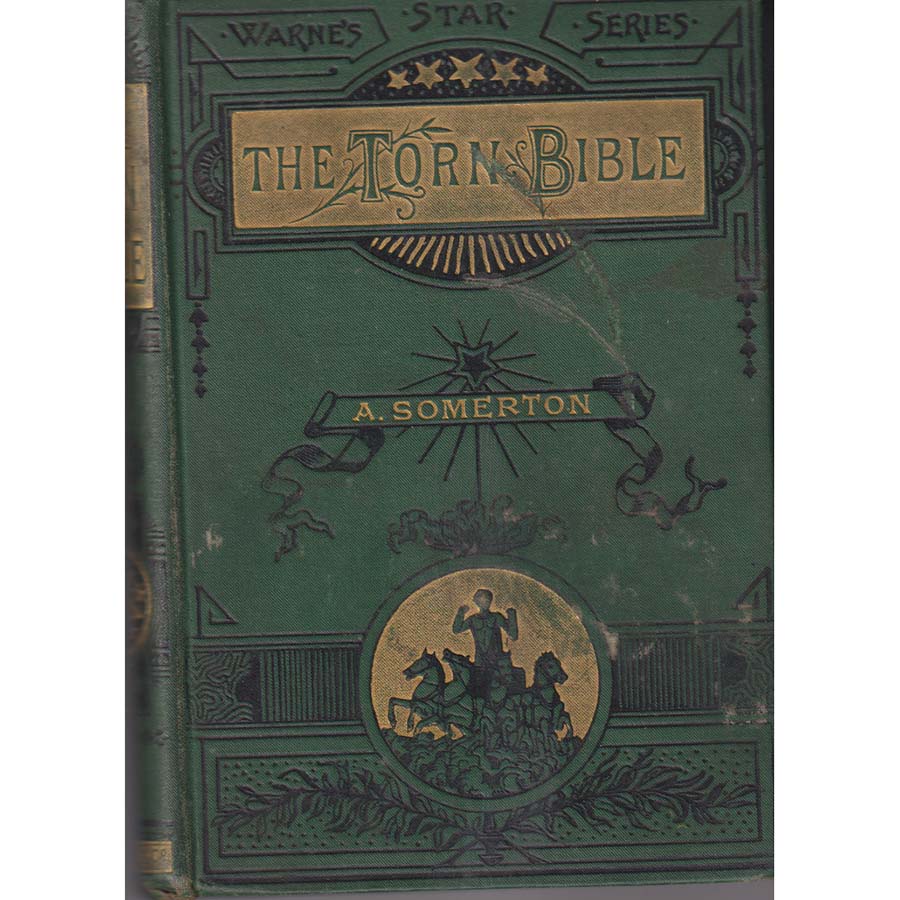
"The Torn Bible" by A Somerton, published in 1903 by Frederick Warne, stands as an intriguing artefact of early 20th-century literature. The book's cover design, typical of its era, features a muted colour palette that reflects the aesthetics of a time when print media was beginning to flourish. The embossed title, elegantly rendered in gold leaf, gives it an air of reverence, suggesting a text that is both sacred and significant. Its paperback vibe, however, betrays a certain fragility—an appropriate metaphor for the themes of torn identities and fragmented narratives that are often explored in literature from this period.
As one leafs through the pages, the paper's texture evokes a sense of nostalgia, reminiscent of an age when the printed word carried a certain weight and importance. The yellowed pages, with their slight scent of history, transport the reader back to a time when books were not merely commodities but vessels of thought and reflection. The typography, while standard for its time, lends a certain charm, with its serif fonts and careful spacing that guide the reader’s eye through the text. However, one cannot help but notice the occasional typographical errors that seem to have slipped through the cracks—an endearing flaw that adds to its character and authenticity.
Regarding the author, A Somerton, information appears sparse. There is a notable absence of extensive biographical details or acknowledgments in literary history, which suggests that Somerton may be a relatively obscure figure. This obscurity adds a layer of mystique, inviting speculation about their place within the broader spectrum of publishing culture. Were they a one-hit wonder, or did they contribute to other works that have simply faded from memory? The lack of record leaves us to ponder the life and intentions behind "The Torn Bible," enhancing the book's enigmatic quality.
The year 1903 sits at an interesting juncture in literary history. It was a time when the Victorian era's literary conventions were giving way to modernist movements, yet many authors still clung to traditional narrative forms. The societal landscape was marked by rapid industrialisation, shifting moral values, and the burgeoning influence of the middle class. Books became more accessible to the masses, and as such, the content of literature began to reflect broader social issues. "The Torn Bible" may not engage overtly with these themes, but its very existence within this transitional period speaks volumes about the cultural shifts of the time. It captures a sense of uncertainty and fragmentation that resonates with the evolving identities of its readers, mirroring the societal transformations occurring around them.
In terms of its narrative, "The Torn Bible" could be seen as a metaphor for the personal and societal upheavals that characterised early 20th-century life. The title itself evokes images of disarray and conflict, suggesting a text that might grapple with themes of faith, trust, and the human condition. However, without a broader context or detailed exploration of its content, readers are left to fill in the gaps with their interpretations. The book’s potential ambiguity invites discussion and debate among its readers, making it a curious object of study for those interested in the cultural implications of literature.
Moreover, the book's publication by Frederick Warne, a publisher known for its commitment to quality and educational texts, adds another layer to its cultural significance. Warne was prominent in producing illustrated works and children's literature, which indicates a certain expectation of moral and educational value. "The Torn Bible," while perhaps not a children's book, may still reflect the publisher's ethos. This connection raises questions about the intended audience and the book's reception at the time of its release. Did it find its way into the hands of earnest seekers of knowledge, or was it merely a shelf ornament in the parlours of the era?
In conclusion, "The Torn Bible" serves as an intriguing cultural artefact that reflects the complexities of its time. Its design, texture, and the aura of mystery surrounding its author make it a compelling subject for examination. While it may not be a literary masterpiece, it embodies the spirit of an era marked by flux and transformation. For those interested in the nuances of early 20th-century literature, this book, like many found in the Crappy Old Books collection, offers a unique glimpse into the past, inviting readers to ponder the stories that remain untold within its pages.