AI-assisted note, based on the text and a physical inspection of this copy.
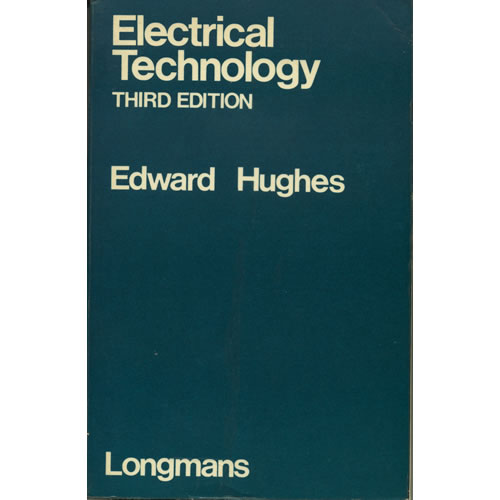
In the realm of educational texts, few titles evoke the same sense of nostalgia as Edward Hughes’ Electrical Technology Third Edition, published in 1967 by Longman. The book is a hefty tome, bound in a somewhat unremarkable yet sturdy paperback cover that reflects the utilitarian ethos of its era. The cover design is typical of mid-20th-century educational publications, featuring bold, block lettering and a simple, monochromatic image that hints at the technical content within. One cannot help but feel a certain charm in its straightforward presentation, reminiscent of a time when books aimed to educate rather than dazzle.
The book itself is a comprehensive guide to electrical technology, a subject that was gaining traction in the post-war era as society increasingly relied on electrical systems. Hughes’ writing is dense, filled with diagrams and technical jargon, which may seem daunting to the uninitiated. However, for those engaged in or entering the field, this text serves as both a reference and a foundational learning tool. The paper quality is robust, a testament to the print culture of the time where durability was paramount in educational resources. Flipping through its pages, one can almost feel the weight of knowledge and the importance of the subject matter, which remains relevant even in today's context of rapid technological advancement.
Edward Hughes appears to be a somewhat obscure figure in the literary landscape, with limited widely accessible biographical information. His name is notably associated with technical education, particularly in the field of electrical engineering. Although little is documented about his life and career, his contributions to educational texts, particularly in the mid-20th century, signify an important role within the niche of technical publishing. This lack of comprehensive information may suggest that Hughes was not a prolific author but rather a specialist focused on imparting knowledge in a specific domain. His work remains a testament to the pedagogical methods of the time, prioritising clarity and thoroughness over literary flair.
The year 1967 marked a significant period in both societal and technological advancements. The post-war boom saw an increasing emphasis on education and vocational training, particularly in fields related to science and technology. This was a time when electrical technology began to permeate everyday life, influencing everything from household appliances to industrial machinery. The publication of Electrical Technology during this era can be seen as a response to the growing demand for skilled workers who could navigate the complexities of an electrified world. As such, Hughes’ book not only serves as an academic resource but also as a reflection of the aspirations and challenges faced by society at the time.
The book’s structure is methodical, guiding readers through various concepts of electrical technology, from the fundamentals of circuits to more complex theories. Each chapter builds upon the last, creating a comprehensive understanding of the subject. However, the readability may be compromised for those not already familiar with the technical language. Despite this, the educational intent behind the text is clear, aiming to equip readers with the knowledge necessary to engage with the rapidly evolving technological landscape of the 1960s.
In terms of print culture, Electrical Technology stands as a product of its time, illustrating the transition towards more specialised educational materials in the wake of increasing technological relevance. The use of diagrams and illustrations is particularly noteworthy; they serve not only as visual aids but also as an integral part of the learning experience. This emphasis on visuals reflects a growing understanding of diverse learning styles, which would later influence educational publishing in significant ways.
As we delve into the legacy of Hughes’ work, it becomes evident that Electrical Technology Third Edition is more than just an instructional manual; it is a cultural artifact that encapsulates a pivotal moment in educational publishing. While its approach may feel dated to modern readers, the underlying principles of technical education remain as valid today as they were then. Hughes’ text offers a glimpse into the past, inviting reflection on how far electrical technology has come and how educational resources have evolved in response.
In conclusion, Edward Hughes’ Electrical Technology Third Edition is a significant cultural object that deserves recognition within the canon of educational texts. Its historical context, combined with the author’s apparent niche within the realm of technical publishing, contributes to its status as a noteworthy piece in the landscape of Crappy Old Books. For those interested in the evolution of technical education and the societal changes that influenced it, this book serves as both a valuable resource and a window into a bygone era.