AI-assisted note, based on the text and a physical inspection of this copy.
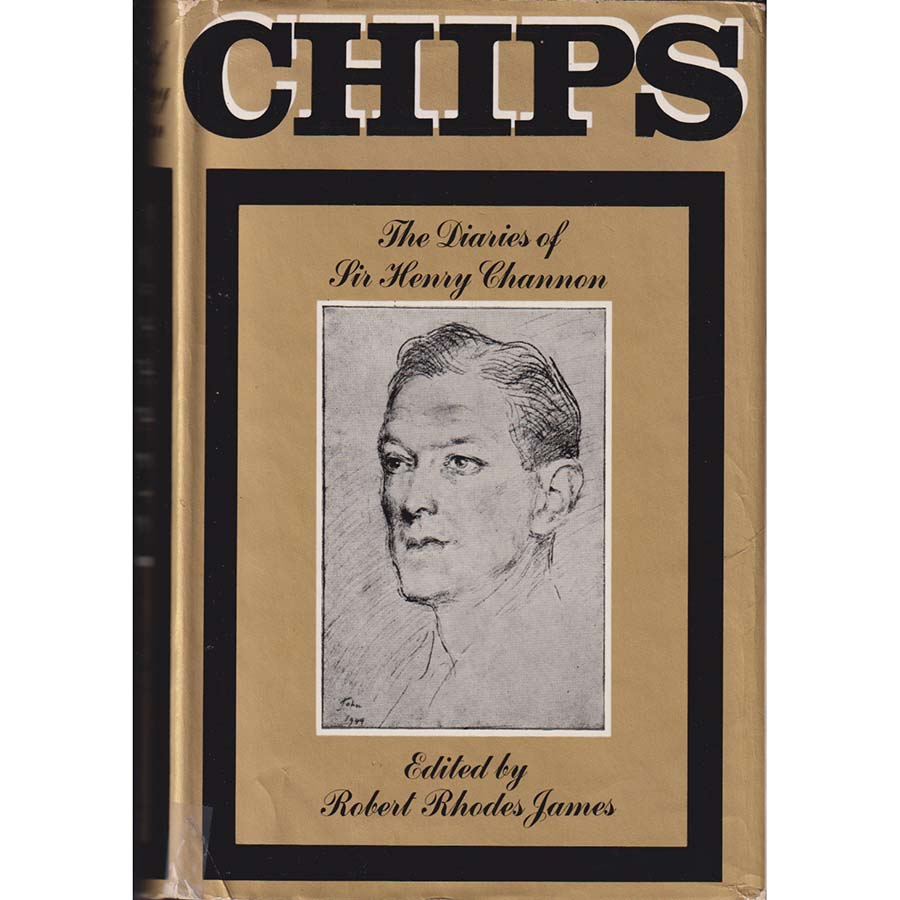
"Chips - The Diaries of Sir Henry Channon," edited by Robert Rhodes James and published in 1967 by Weidenfeld and Nicolson, is an intriguing glimpse into the life of a British politician and socialite during a time of significant cultural evolution. The book boasts a cover that is both striking and somewhat austere, featuring a portrait of Sir Henry Channon himself, set against a muted background that speaks to the seriousness of its subject matter. The paperback vibe, with its slightly worn edges and yellowing pages, evokes the feel of a bygone era, suggesting that this is more than just a literary work; it is a cultural artifact that captures the essence of British society in the mid-20th century.
Channon's diaries offer a personal perspective on the political and social landscape of the period, showcasing his interactions with key figures of the day and providing insights into the private lives of the elite. The book's layout features an assortment of entries that are both candid and reflective, punctuated by Channon's distinctive voice, which oscillates between wit and earnestness. As a cultural object, the diaries serve not only as a record of Channon's experiences but also as a mirror reflecting the evolving attitudes, norms, and events that characterised British society at the time. The meticulous editing by Rhodes James adds a layer of coherence and accessibility, making it easier for contemporary readers to engage with Channon's thoughts, albeit filtered through another's sensibility.
Robert Rhodes James, while not a household name in literary circles, is a noted British historian and editor. His work primarily revolved around political history, and he has contributed to various biographies and historical texts. However, his role in the literary culture surrounding "Chips" is chiefly as an editor who has curated Channon's diaries for public consumption. This task requires a delicate balance of fidelity to the original text and the ability to present it in a way that resonates with modern readers. Although Rhodes James may not have the prominence of some of his contemporaries, his editorial contributions have allowed for a significant work to reach a broader audience, thereby solidifying his place within the context of British literary history.
Published in 1967, "Chips" arrived at a time when Britain was undergoing profound social and political changes. The post-war period saw the decline of the British Empire and the emergence of a new social order, marked by shifting class dynamics and the gradual loosening of traditional societal norms. The late 1960s were characterised by a spirit of experimentation and rebellion, with movements challenging established authority and advocating for greater freedoms. In this context, Channon's diaries serve as both a record of a past world and a commentary on the cracks forming within the societal façade. The juxtaposition of his elite status against the backdrop of a rapidly changing society invites readers to reflect on the tensions between tradition and modernity.
As a cultural object, "Chips" embodies the complexities of its era. The tone of the diaries oscillates between nostalgia for a way of life that is slipping away and a sense of bewilderment at the changes taking place. The juxtaposition of Channon's personal experiences with broader societal shifts is indicative of the challenges faced by individuals caught between the past and an uncertain future. This duality renders the diaries not merely a collection of thoughts but a profound commentary on the interplay between personal and public life during a transformative period in British history.
The production quality of the book adds to its appeal as a cultural artifact. The typesetting, while straightforward, is easy on the eyes, and the paper quality reflects the publishing standards of the time, which may not live up to modern expectations but carries a certain charm. The physicality of the book, with its paperback format and slightly worn aesthetic, enhances its status as a relic, inviting readers to leaf through its pages and engage with the past in a tactile way. Readers today may find themselves drawn into the world of Sir Henry Channon, not only through his words but also through the very experience of handling the book itself.
In conclusion, "Chips - The Diaries of Sir Henry Channon" is a multifaceted cultural object that encapsulates a moment in time while offering insights into the complexities of human experience. Edited by Robert Rhodes James, the book serves as both a personal memoir and a historical document, reflecting the tensions of its era and the struggles of individuals navigating a changing world. As one delves into its pages, the reader is transported to a different age, encountering the thoughts and observations of a man who lived through a pivotal moment in British history. For those interested in the intersection of personal narrative and cultural history, this book stands as a worthwhile exploration, and it is a fine addition to the trove of gems offered by Crappy Old Books.