At Swim-Two-Birds
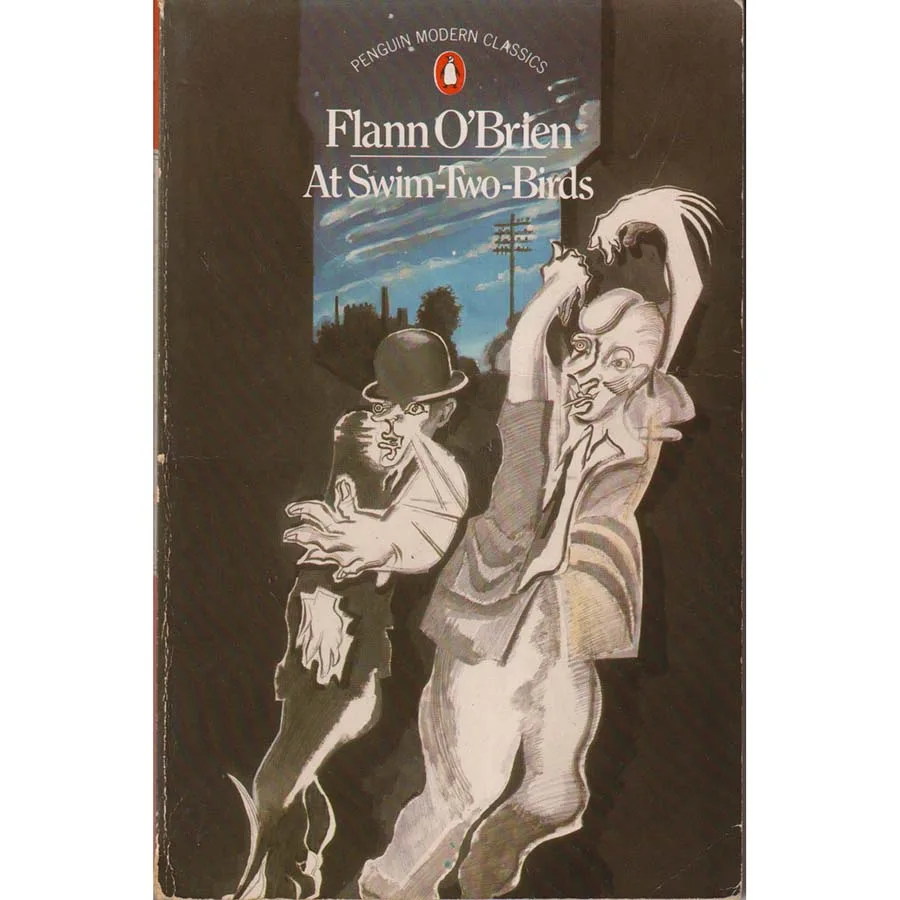
Publisher: Penguin
Format: Paperback
ISBN: 9780140026368
Most novelists are content to create a few characters, arrange their adventures and maintain a reasonable degree of control over what happens next. Flann O’Brien, however, considered this arrangement unnecessarily authoritarian. Why shouldn’t fictional characters rebel against their authors, write their own stories and generally demonstrate that literary creations can be every bit as troublesome as the people who invented them?
At Swim-Two-Birds (1986), by Flann O’Brien and published by Penguin, is one of the most gloriously eccentric, inventive and thoroughly Irish novels ever written. First published in 1939, it cheerfully dismantles the conventions of storytelling, throws the pieces into a literary washing machine and produces something simultaneously bewildering, hilarious and remarkably ingenious.
The novel follows an unnamed Dublin student whose principal interests include drinking stout, avoiding lectures, remaining in bed and pursuing literary ambitions that require considerably less physical exertion than conventional employment.
He decides to write a novel about a writer named Dermot Trellis, who himself creates fictional characters for his own literary purposes. Unfortunately, Trellis treats his creations rather badly, and they eventually begin plotting against him.
The characters, understandably dissatisfied with their working conditions, take advantage of their author’s absence to pursue independent lives, invent additional complications and organise what amounts to a literary rebellion. It is an extraordinary development, suggesting that the average novelist might benefit from negotiating proper employment contracts with the people inhabiting his imagination.
Meanwhile, the narrative becomes increasingly crowded with figures from Irish mythology, legendary heroes, cowboys, supernatural personalities and assorted individuals whose presence in the same story would normally require a very convincing explanation.
O’Brien makes little attempt to provide one.
Instead, he constructs a magnificent comic experiment in which stories exist inside other stories, characters refuse to respect their fictional boundaries and the author appears positively delighted by the resulting confusion.
The book is also a wonderfully sharp satire of literary pretension, academic life, Irish culture and the human tendency to become excessively impressed with one’s own intellectual achievements.
Its humour ranges from dry understatement to extravagant absurdity, with passages of mock scholarship, improbable conversations and elaborate narrative detours demonstrating O’Brien’s extraordinary command of language.
There is something deliciously ironic about a novel that questions the authority of the novelist while remaining such a brilliantly controlled piece of literary invention.
Condition: Fair. This 1986 Penguin edition is a well-used, previously owned copy showing noticeable signs of age, reading and handling. It is a serviceable reading copy rather than a pristine collector’s specimen, although its slightly battered condition seems entirely appropriate for a book whose characters have spent much of their existence attempting to overthrow the established order.
Offered by Crappy Old Books, where we admire literary experimentation, appreciate Irish humour and strongly discourage our own books from developing independent personalities or organising rebellions against the management.
A wonderfully anarchic modern classic for readers who enjoy James Joyce, Samuel Beckett and literature that cheerfully refuses to behave itself.
After all, why should a novel proceed sensibly from beginning to end when it could spend several hundred pages demonstrating that the whole idea was ridiculous?
Keep browsing: See more Fiction books Other books by Flann OBrien