Bread - SIGNED
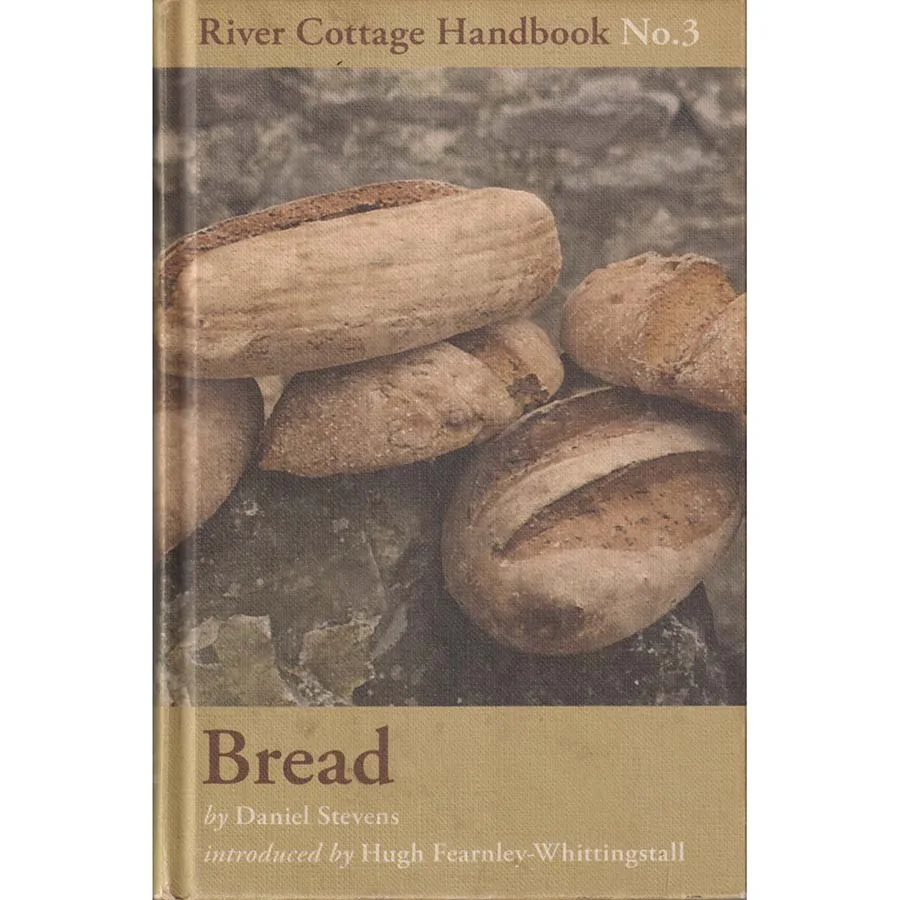
Publisher: Bloomsbury
Format: Hardback
ISBN: 9780747595335
Bread is one of humanity’s greatest achievements. For thousands of years, people have combined flour, water, yeast and a little optimism to produce something that has sustained civilisations, inspired religious symbolism and provided the essential foundation for the British sandwich. Unfortunately, modern society has managed to transform this wonderfully simple food into an industrial product containing seventeen ingredients, several mysterious additives and a shelf life that occasionally seems longer than that of the person eating it.
Bread (2009), by Daniel Stevens and published by Bloomsbury, is a splendidly practical and enthusiastic guide to the ancient art of baking proper bread, written by someone who clearly believes that a loaf should contain more character than the average supermarket offering.
Part of the celebrated River Cottage Handbook series, this beautifully illustrated volume takes readers through the satisfying business of transforming a few ordinary ingredients into something warm, fragrant and considerably more impressive than anything emerging from a plastic supermarket wrapper.
Stevens, an experienced baker associated with the River Cottage philosophy of traditional food production, approaches his subject with infectious enthusiasm. His aim is to demonstrate that making excellent bread is not some mysterious professional achievement requiring industrial machinery, expensive equipment or an ancestor who operated a bakery in rural France.
From understanding flour, yeast and dough to mastering kneading, proving and baking, the book explores the essential principles of breadmaking with practical advice and an appreciation of the pleasures involved.
There are recipes for everyday loaves, traditional breads, sourdoughs and other baked delights, offering plenty of opportunities for readers to develop their skills and discover that producing a respectable loaf is considerably more rewarding than purchasing one.
Naturally, breadmaking has its hazards. Dough can refuse to rise, crusts can become alarmingly solid, and the enthusiastic beginner may discover that the kitchen has acquired a thin coating of flour extending well beyond the immediate preparation area.
Yet Stevens makes a persuasive case that these minor difficulties are worth enduring. Few domestic achievements can compete with the satisfaction of removing a freshly baked loaf from the oven, particularly when the result actually resembles bread rather than an archaeological discovery.
There is something wonderfully reassuring about a cookbook devoted to an activity that has remained fundamentally unchanged for centuries. While modern kitchens fill with electronic gadgets and increasingly elaborate appliances, bread continues to depend upon simple ingredients, patience and a little understanding of how dough behaves.
Condition: Good – Appears Signed. This 2009 Bloomsbury edition is a previously owned copy showing ordinary signs of age, reading and handling. The book appears to bear the author’s signature, although this has not been independently authenticated. An appealing additional feature for collectors and admirers of Daniel Stevens.
Offered by Crappy Old Books, where we admire traditional craftsmanship, appreciate freshly baked bread and recognise that the only thing more satisfying than producing a perfect loaf is selling a good book explaining how to do it.
A delightful practical volume for home bakers, River Cottage enthusiasts and anyone who suspects that the finest things in life occasionally involve flour, water and a considerable amount of kneading.
And unlike most modern technological achievements, a successful loaf can be eaten with butter.
Keep browsing: See more Food books Other books by Daniel Stevens