The Importance Of Living
Publisher: William Heinemann
Format: Hardback
ISBN: none
Humanity has spent thousands of years attempting to discover the meaning of life, generally arriving at conclusions involving hard work, moral discipline, spiritual improvement and an impressive determination to make existence considerably more complicated than necessary. Lin Yutang, the celebrated Chinese writer and philosopher, had a rather different suggestion: perhaps life is something to be enjoyed, preferably while sitting comfortably with a cup of tea and absolutely no intention of doing anything particularly important.
The Importance of Living (1947), published by William Heinemann, is a wonderfully witty, thoughtful and delightfully unconventional exploration of the art of being alive. Originally published in 1937, it became an international bestseller by advancing the positively scandalous proposition that happiness might have more to do with simplicity, humour and appreciation than ambition, efficiency and the relentless pursuit of achievement.
Lin Yutang draws upon Chinese philosophy, literature and centuries of accumulated wisdom, combining the ideas of Taoism, Confucianism and traditional Chinese culture with his own mischievous observations about human behaviour.
His subjects range from the pleasures of idleness, friendship and conversation to the importance of food, nature, domestic comfort and the occasional opportunity to do absolutely nothing without feeling obliged to apologise.
There is something wonderfully refreshing about a philosopher who regards loafing as an accomplishment rather than a moral failing. While Western civilisation has devoted enormous energy to persuading everyone to work harder, become more productive and improve themselves continuously, Lin suggests that a leisurely afternoon spent contemplating the world may be a perfectly respectable achievement.
He is particularly suspicious of excessive solemnity. Human beings, he argues, have a remarkable tendency to take themselves far too seriously, developing elaborate ambitions and anxieties that frequently prevent them from appreciating the simple pleasures already available.
His writing combines humour, philosophical insight and a profound appreciation of ordinary existence. A comfortable chair, good company, attractive scenery and the freedom to enjoy one’s thoughts become important ingredients in a life well lived.
Naturally, this philosophy presents certain difficulties for modern economic arrangements. A society in which everybody occasionally stopped working to appreciate the afternoon sunshine might produce considerably fewer spreadsheets, although the general improvement in human contentment could prove difficult to measure.
Published in 1947, this Heinemann edition also possesses considerable historical charm, appearing in post-war Britain when the pleasures of peace, domestic comfort and ordinary living had acquired a particularly powerful significance.
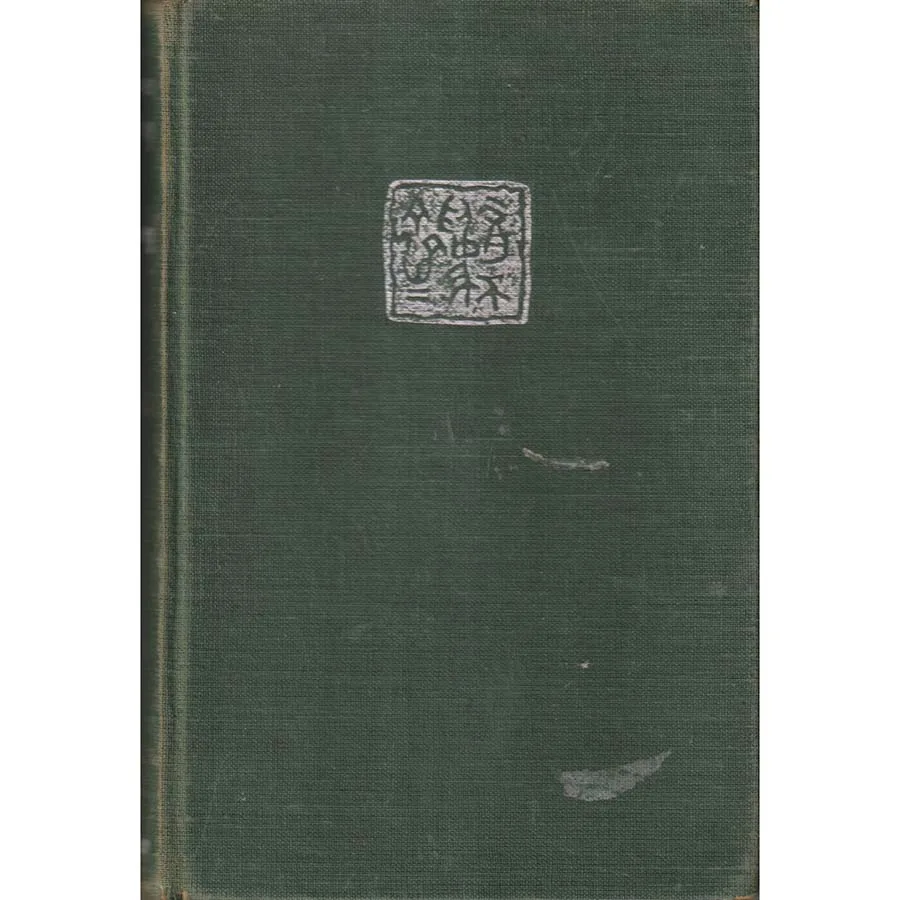
Condition: Good. This 1947 William Heinemann edition is a worn but still good-condition copy, showing the accumulated signs of age, reading and handling expected of a book approaching eighty years old. It has clearly experienced a substantial portion of life itself, which seems entirely appropriate given the subject matter.
Offered by Crappy Old Books, where we wholeheartedly approve of Lin Yutang’s philosophy of enjoying the simple things, although the practical requirements of running a business occasionally interfere with our ambitions to spend entire afternoons doing nothing.
No ISBN, naturally. In 1947, books managed perfectly well without numerical identification.
A charming, humorous and intellectually rewarding classic for readers interested in philosophy, Eastern thought and the revolutionary idea that existence need not be treated as an endless list of tasks requiring completion.
After all, life is rather short. Spending all of it trying to become more productive seems a particularly inefficient way of enjoying it.
Keep browsing: See more Academic books Other books by Lin Yutang