The Penguin Encyclopedia Of Places
Publisher: Penguin
Format: Paperback
ISBN: 0140510478
The world is an enormous place, filled with countries, cities, mountains, rivers, islands and obscure little settlements whose inhabitants are generally astonished when anyone from elsewhere has heard of them. Keeping track of all this geography is a considerable undertaking, particularly when governments insist upon changing national boundaries, renaming cities and occasionally abolishing entire countries without consulting the publishers of reference books.
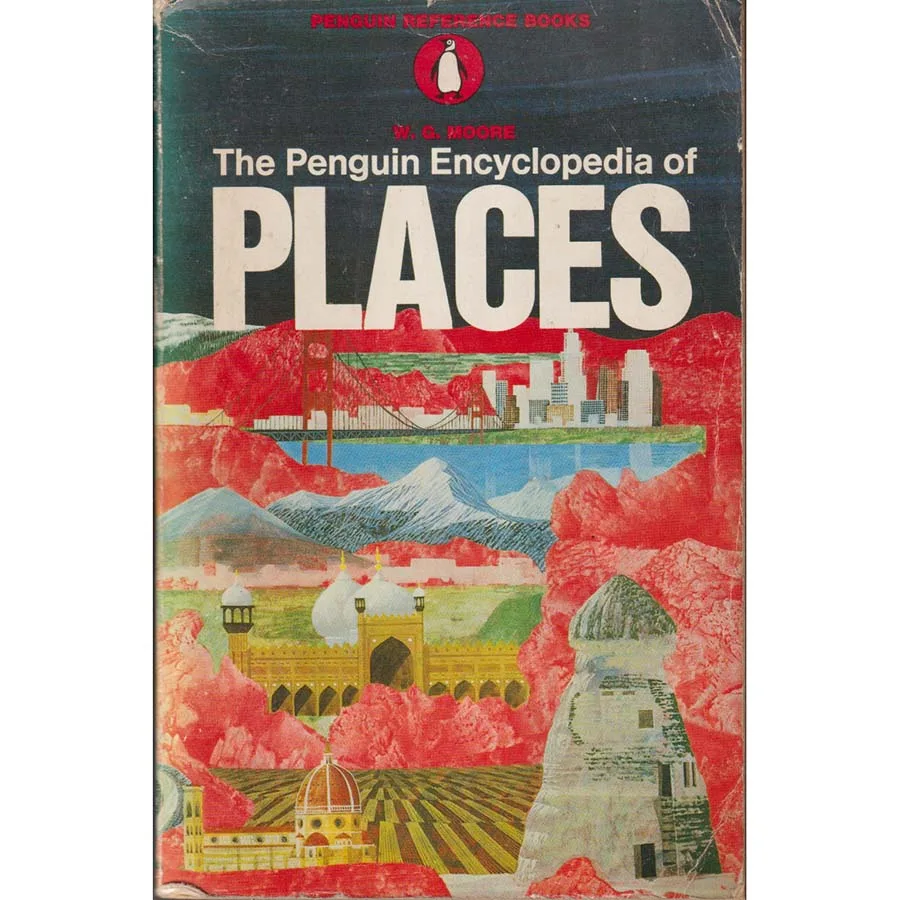
The Penguin Encyclopedia of Places (1971), by W. G. Moore and published by Penguin, is a splendid attempt to impose some alphabetical order upon the geographical chaos of planet Earth. Long before internet searches made it possible to locate an obscure village in Uzbekistan while waiting for the kettle to boil, reference books such as this were indispensable companions for the geographically curious.
Here is the world organised into conveniently manageable entries, allowing readers to investigate places near and far without purchasing an entire library of atlases or developing an intimate acquaintance with every railway timetable in existence.
The encyclopedia belongs to that magnificent tradition of compact reference publishing in which an extraordinary quantity of information was squeezed between two covers, then entrusted to readers who were expected to possess both curiosity and reasonably good eyesight.
Published in 1971, however, this particular volume offers something modern geographical databases cannot quite reproduce: a snapshot of the world at a fascinating moment in its political and historical development.
The Soviet Union still occupied an enormous portion of the map, Czechoslovakia remained a single country, Yugoslavia was firmly established, and countless geographical names reflected a political order that subsequent decades would rearrange with considerable enthusiasm.
Many African and Asian nations were still navigating the consequences of decolonisation, while cities and territories across the globe retained names and administrative identities that would later disappear into the historical record.
For modern readers, this transforms the encyclopedia into something more than a conventional reference book. It is a geographical time capsule, recording not merely where places were, but how the world was understood and described in the early 1970s.
There is something wonderfully entertaining about consulting an old encyclopedia and discovering that an entire country has vanished, a capital has moved or a familiar city has acquired a completely different name. Geography, supposedly one of the more dependable school subjects, turns out to have been quietly reinventing itself while nobody was paying attention.
Naturally, the book should not be relied upon for current political boundaries, population figures or travel arrangements. Nearly six decades have given humanity ample opportunity to rearrange its administrative geography.
Condition: Good. This 1971 Penguin edition is a previously owned copy showing ordinary signs of age, reading and handling, but remains an appealing vintage reference work with considerable historical interest.
Offered by Crappy Old Books, where we appreciate old maps, forgotten countries and the reassuring days when discovering the capital of somewhere obscure required opening a book rather than arguing with a search engine.
A fascinating addition to the shelves of geography enthusiasts, collectors of vintage Penguin reference books and anyone who enjoys exploring a world that no longer exists in quite the same form.
Proof that the Earth may remain approximately the same size, but humanity is apparently determined to keep changing the labels.
Keep browsing: See more Non-Fiction books Other books by WG Moore