The Collected Poems Of Wilfred Owen
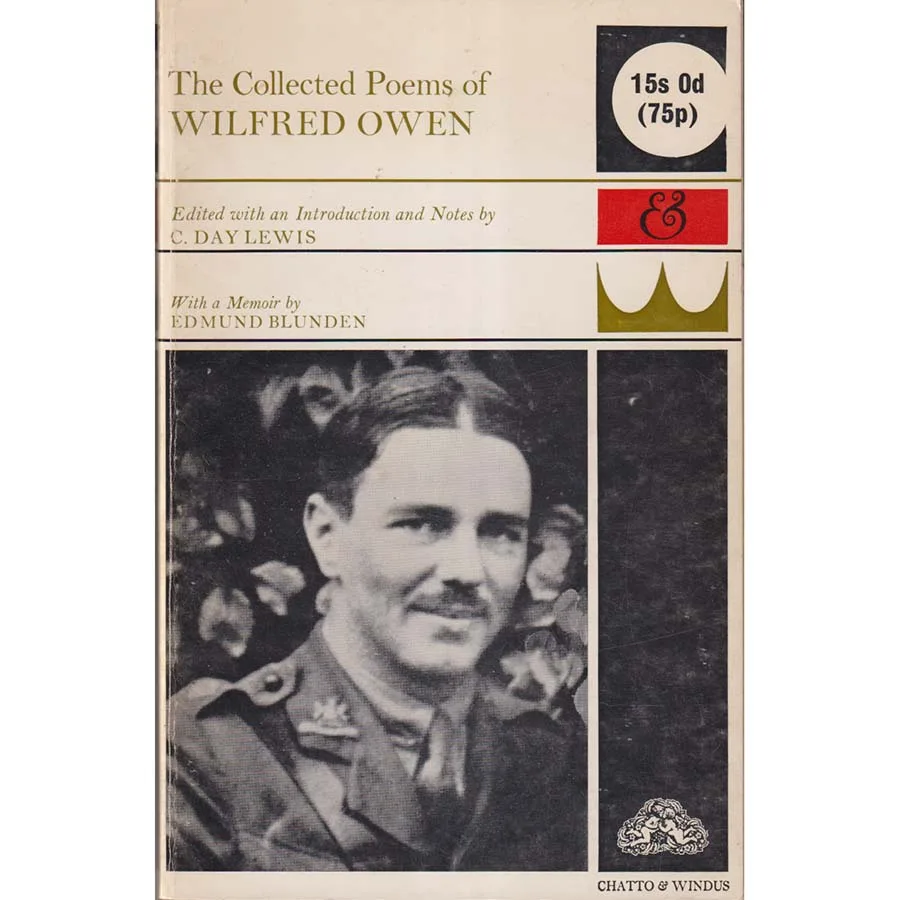
Publisher: Chatto and Windus
Format: Paperback
ISBN: 070111293X
War, according to the more enthusiastic patriotic literature of the early twentieth century, was a splendid opportunity for courage, honour, glory and the occasional heroic death in a conveniently picturesque setting. Unfortunately, Wilfred Owen had actually been to war, and his observations suggested that the experience involved considerably more mud, terror, mutilation and industrialised slaughter than the recruiting posters had thought necessary to mention.
The Collected Poems of Wilfred Owen (1971), published by Chatto and Windus, brings together the extraordinary poetic achievement of one of the First World War’s most powerful and enduring literary voices. It is a collection that strips away the comfortable illusions surrounding warfare and replaces them with something altogether more difficult to ignore: the experience of the men who actually had to fight it.
Born in 1893, Owen became an officer in the British Army and served on the Western Front, where he encountered the appalling conditions of trench warfare. His experiences transformed his poetry, replacing conventional patriotic sentiment with an uncompromising examination of suffering, fear, comradeship and the enormous gulf between official rhetoric and battlefield reality.
In poems such as Dulce et Decorum Est, Anthem for Doomed Youth, Strange Meeting and Futility, Owen captures the physical and psychological devastation of modern warfare with extraordinary precision. His language is vivid, musical and frequently devastating, demonstrating that poetry can be considerably more effective than a political speech when it comes to exposing an unpleasant truth.
Owen was not interested in presenting soldiers as decorative figures in a grand national pageant. His men are exhausted, terrified, wounded and painfully human. They inhabit a world of gas attacks, artillery bombardments, shattered landscapes and the constant awareness that survival may depend upon circumstances over which they have practically no control.
Yet his poetry is not simply an exercise in horror. There is compassion, tenderness, bitter irony and a profound respect for the men whose lives were consumed by the conflict. Owen’s achievement lies partly in his ability to preserve their humanity amid circumstances apparently designed to destroy it.
His friendship with fellow poet Siegfried Sassoon helped develop his distinctive poetic voice, and together they contributed to a literary legacy that fundamentally changed how subsequent generations understood the First World War.
Tragically, Owen was killed in action on 4 November 1918, just seven days before the Armistice. He was twenty-five years old. The timing was so cruelly ironic that even a novelist might have considered it unnecessarily melodramatic.
Condition: Good. This 1971 Chatto and Windus edition is a previously owned copy showing ordinary signs of age, reading and handling, but remains a worthwhile addition to any collection of English poetry or First World War literature.
Offered by Crappy Old Books, where we generally prefer our history without the accompanying bloodshed, although we recognise that humanity has demonstrated a remarkable reluctance to organise its affairs accordingly.
A powerful, moving and essential collection from a poet who understood that the true subject of war was not glory, conquest or the ambitions of politicians, but the terrible human cost paid by those sent to carry out their decisions.
Nearly a century after these poems were written, their message remains depressingly relevant. Which is perhaps the most uncomfortable irony of all.
Keep browsing: See more Poetry books Other books by Wilfred Owen