The Tenant Of Wildfell Hall
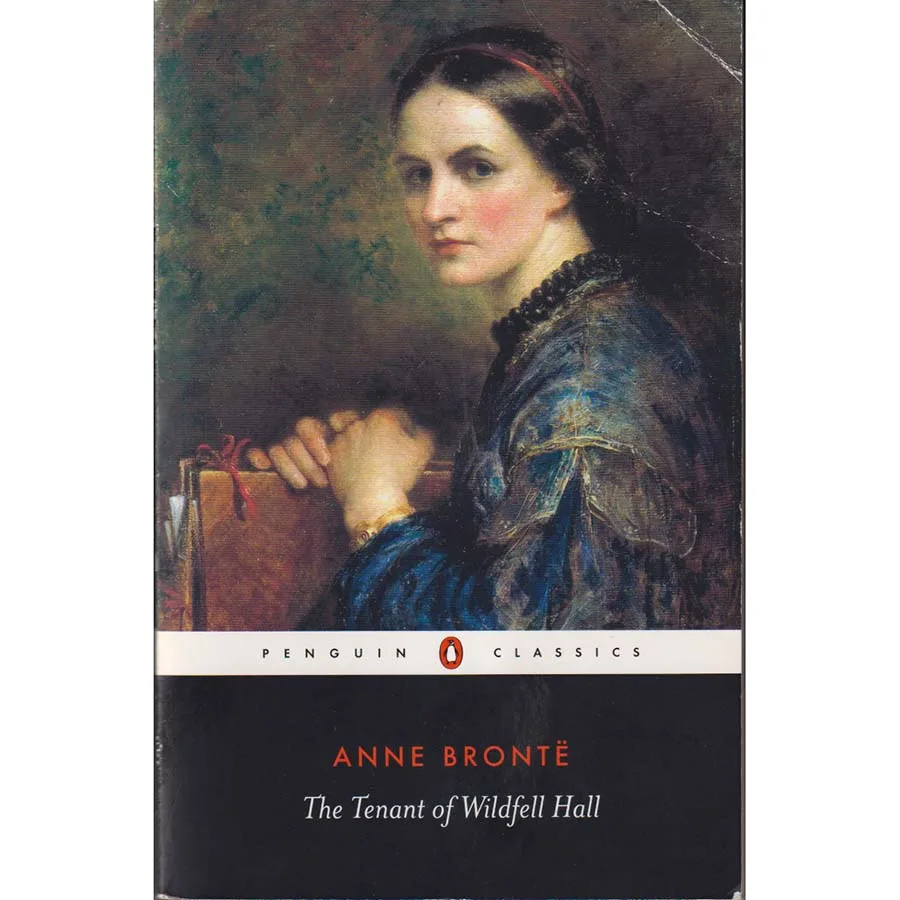
Publisher: Penguin
Format: Paperback
ISBN: 9780140434743
Victorian England was a wonderful place, provided you were a respectable gentleman with a comfortable income, a reasonably obedient wife and no particular objection to women being treated as decorative household possessions. Unfortunately for such gentlemen, Anne Brontë had been paying attention, and she was not especially impressed.
The Tenant of Wildfell Hall (1996), published by Penguin, is one of the most powerful, provocative and gloriously inconvenient novels of the nineteenth century. First published in 1848, it caused considerable consternation among readers who apparently believed that literature should concern itself with respectable courtship, agreeable marriages and the comforting assumption that husbands were always right.
The story begins with the mysterious arrival of Helen Graham, a young widow who takes up residence at the rather gloomy Wildfell Hall with her small son. Naturally, the local community responds with the traditional British combination of curiosity, suspicion and an almost supernatural determination to interfere in somebody else’s private affairs.
Helen is independent, reserved and apparently uninterested in explaining herself to every passing busybody. This, in Victorian society, amounts to behaviour bordering on the revolutionary. Gilbert Markham, a neighbouring farmer, becomes increasingly fascinated by her, although his efforts to understand her circumstances are complicated by gossip, jealousy and the inconvenient discovery that appearances can be thoroughly misleading.
As Helen’s history gradually emerges, the novel reveals a far darker story involving marriage, alcoholism, cruelty, moral corruption and a woman’s struggle to protect herself and her child from a destructive husband. Anne Brontë tackles these subjects with remarkable honesty, refusing to disguise unpleasant realities beneath the usual romantic decorations.
What makes the novel particularly extraordinary is its uncompromising treatment of female independence. Helen refuses to accept that marriage requires a woman to surrender her conscience, dignity and personal safety. At a time when married women’s legal and financial rights were severely restricted, such ideas were sufficiently alarming to make respectable Victorian society reach nervously for the smelling salts.
Brontë also provides a wonderfully sharp portrait of provincial gossip, religious hypocrisy and the peculiar satisfaction people derive from condemning the behaviour of others while remaining magnificently oblivious to their own shortcomings.
The novel combines romance, psychological insight, social criticism and moments of biting irony, demonstrating that Anne Brontë was every bit as capable of literary audacity as her more celebrated sisters, Charlotte and Emily.
Condition: Good. This 1996 Penguin edition is a previously owned copy showing ordinary signs of reading and handling, but remains perfectly capable of disturbing conventional assumptions nearly two centuries after the novel first appeared.
Offered by Crappy Old Books, where we have no objection whatsoever to independent women, mysterious tenants or Victorian scandals, particularly when they produce literature of this quality.
A brilliant, unsettling and surprisingly modern novel that proves the Brontë sisters were not simply sitting around the Yorkshire moors composing romantic fantasies. Some of them were quite deliberately causing trouble, and thank goodness for that.
Keep browsing: See more Literary Classics books Other books by Anne Bronte