


AC Two-litre Saloons And Buckland Sports Cars
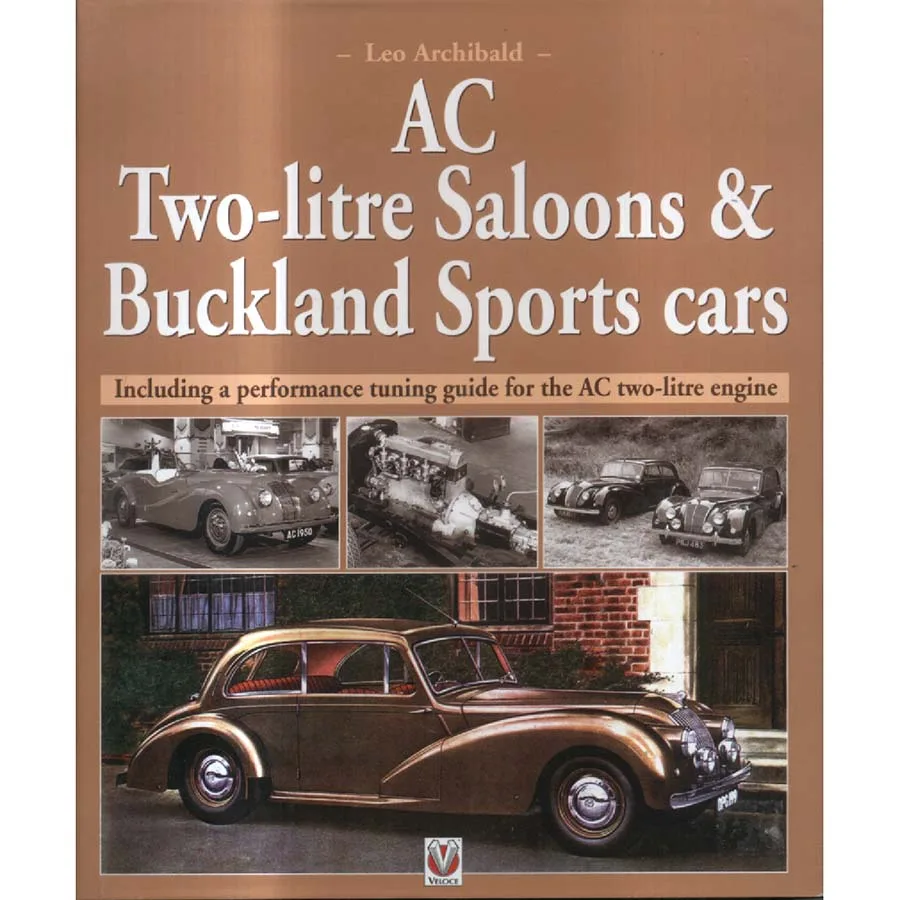
Publisher: Veloce Publishing
Format: Hardback
ISBN: 9781903706244
There was a time when British motor manufacturers believed that a proper car should combine elegant styling, fine engineering, polished wood and enough individual character to ensure that nobody would ever mistake it for anything manufactured in Birmingham by the thousand. Among the more distinguished practitioners of this philosophy was AC Cars, a company whose products demonstrated that automotive excellence could be achieved without necessarily troubling the mass market.
In AC Two-litre Saloons and Buckland Sports Cars (2002), Leo Archibald celebrates a fascinating and frequently overlooked chapter in British motoring history. Published by Veloce Publishing, this specialist volume explores the elegant AC Two-litre saloons and their sporting relatives, the distinctive Buckland Sports Cars, recalling an era when craftsmanship, individuality and mechanical refinement were considered perfectly reasonable reasons to manufacture a motor car.
The AC Two-litre was a wonderfully civilised machine, intended for motorists who appreciated graceful coachwork, a sophisticated six-cylinder engine and the comforting knowledge that their vehicle was unlikely to appear in every other driveway. Developed around the company’s celebrated overhead-camshaft engine, these cars represented a distinctly traditional approach to post-war motoring, combining engineering heritage with the restrained elegance expected of a respectable British gentleman’s automobile.
The Buckland Sports Cars offered a more adventurous interpretation of the same mechanical foundations. With their distinctive open bodywork and sporting character, they appealed to drivers who appreciated AC engineering but preferred to experience the British climate directly, rather than through a windscreen accompanied by a reassuringly substantial roof.
Archibald’s account brings these unusual machines into focus, exploring their development, construction and place within AC’s remarkable history. It is a story of modest production, specialist craftsmanship and the determined survival of a manufacturer operating in an industry increasingly dominated by enormous factories and economies of scale.
Of course, producing beautifully engineered cars in relatively small numbers was never the easiest route to commercial prosperity. While larger manufacturers concentrated on selling thousands of practical family vehicles, AC continued creating machines for customers who valued exclusivity, traditional engineering and the pleasure of owning something that might require a lengthy explanation whenever an interested stranger asked what it was.
These cars also deserve recognition beyond their connection with the later and considerably more famous AC Cobra. Long before enormous American V8 engines transformed the company’s international reputation, AC had already established a tradition of distinctive engineering and sporting elegance.
Condition: Good. This is a previously owned copy dating from 2002, showing ordinary signs of age and handling. Unlike the rare vehicles it describes, it should not require specialist restoration, painstaking mechanical adjustment or a prolonged international search for an unobtainable replacement component.
Published by Veloce Publishing in 2002. ISBN: 9781903706244.
Offered by Crappy Old Books, where we appreciate the magnificent British tradition of manufacturing exquisite automobiles in quantities just sufficient to make finding spare parts an absorbing lifelong hobby.
An excellent addition to any collection of AC motoring history, classic British saloons or specialist sports cars. Particularly recommended for enthusiasts who appreciate that British automotive individuality existed long before somebody decided to install a colossal American engine beneath an otherwise perfectly respectable bonnet.
Keep browsing: See more Transport books Other books by Leo Archibald
