


The Autobiography Of Benvenuto Cellini
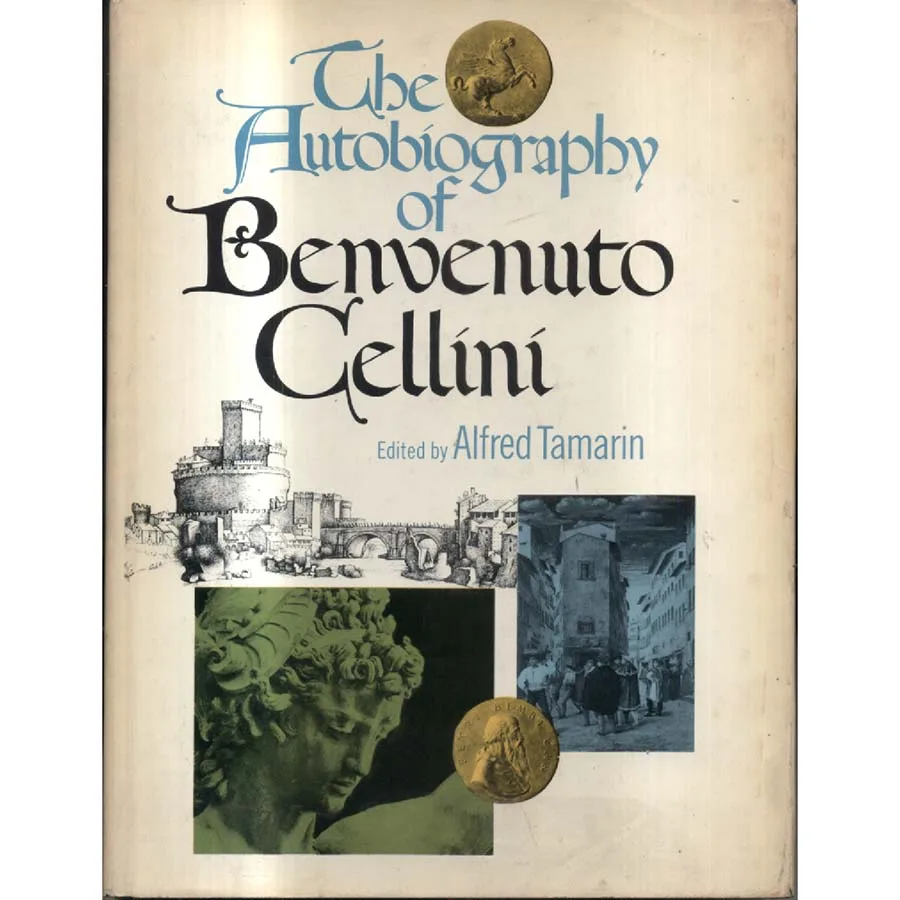
Publisher: Macmillan
Format: Hardback
ISBN: none
The Autobiography of Benvenuto Cellini (1969) – Benvenuto Cellini, Alfred Tamarin Edition
Macmillan | ISBN: None
Condition: Good | Sold by Crappy Old Books
The Italian Renaissance. An extraordinary period of artistic brilliance, architectural magnificence, philosophical discovery and an apparently inexhaustible supply of men who believed that being exceptionally talented entitled them to behave like complete lunatics. Among this remarkable collection of painters, sculptors, princes and assorted homicidal egomaniacs, few possessed a more spectacular opinion of themselves than Benvenuto Cellini.
And, unlike most people with an inflated sense of personal importance, he decided to write an autobiography explaining precisely why everyone else was wrong.
Welcome to The Autobiography of Benvenuto Cellini, one of the most entertaining, outrageous and gloriously self-congratulatory memoirs ever produced by a man who could create masterpieces of Renaissance art while simultaneously finding himself embroiled in feuds, scandals and occasional acts of violence.
Born in Florence in 1500, Cellini became one of the Renaissance’s outstanding goldsmiths and sculptors. His artistic achievements included exquisite metalwork, remarkable decorative objects and the celebrated bronze sculpture Perseus with the Head of Medusa.
Unfortunately, his professional brilliance was accompanied by a temperament that made the average Renaissance warlord appear positively reasonable.
Cellini’s autobiography recounts an astonishing succession of adventures involving powerful patrons, jealous rivals, romantic entanglements, imprisonment, accusations of murder and disputes in which the possibility of calmly discussing one’s differences appears never to have occurred to anybody.
Popes, princes and aristocrats populate his extraordinary narrative, frequently demonstrating that immense wealth and political influence were no guarantee of intelligence, generosity or basic interpersonal competence.
Cellini, naturally, emerges from practically every disagreement as the misunderstood hero.
When things go well, it is because he possesses extraordinary genius. When things go badly, it is generally because somebody else is incompetent, malicious, jealous or insufficiently appreciative of his extraordinary genius.
His modesty is positively breathtaking.
Among the most memorable episodes are his experiences during the Sack of Rome in 1527, his dealings with influential Renaissance patrons and his imprisonment in Castel Sant’Angelo. His accounts are vivid, dramatic and occasionally so spectacular that historians have understandably approached certain details with caution.
But that is part of the book’s irresistible charm. Cellini is not merely describing Renaissance life; he is performing it, presenting himself as an artist, adventurer, warrior and perpetually aggrieved genius whose extraordinary existence deserves the undivided attention of posterity.
And, remarkably, posterity has largely obliged.
The result is an invaluable and frequently hilarious portrait of Renaissance society, revealing the personalities, artistic ambitions, political intrigues and spectacularly fragile egos behind some of Europe’s greatest cultural achievements.
This 1969 Macmillan edition, associated with Alfred Tamarin and offered in Good condition by Crappy Old Books, is an excellent acquisition for admirers of Renaissance history, classical autobiography, art history and literary personalities whose behaviour would make modern celebrity scandals seem positively restrained.
A magnificent account of artistic achievement, personal ambition and the considerable dangers of possessing an enormous ego in an age when everybody carried a sword.
Because while the Renaissance produced some of humanity’s greatest masterpieces, it also produced Benvenuto Cellini.
A man who could turn precious metal into immortal works of art.
And almost any conversation into an international incident.
Keep browsing: See more Biography books Other books by Alfred Tamarin
