


Roma Eterna
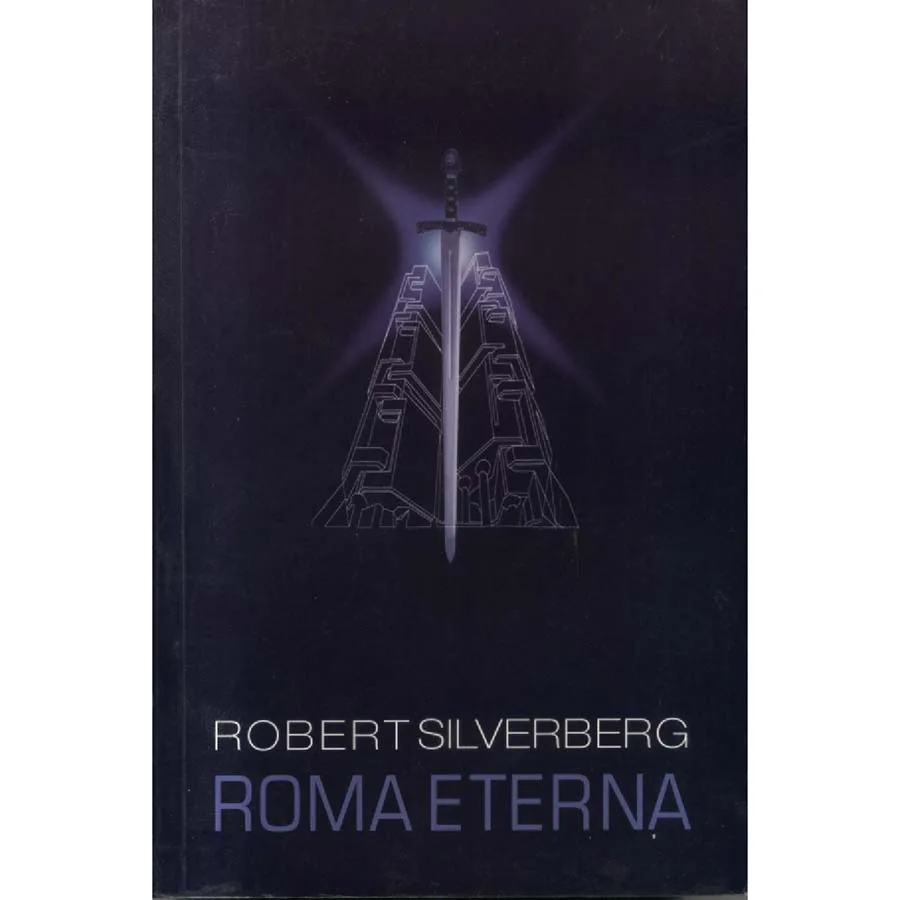
Publisher: Gollancz
Format: Paperback
ISBN: 9780575073548
Roma Eterna (2003) – Robert Silverberg
Gollancz | ISBN: 9780575073548
Condition: Very Good | Sold by Crappy Old Books
The Roman Empire. Two thousand years of history, extraordinary engineering, political intrigue, gladiatorial entertainment and an apparently inexhaustible supply of emperors who believed that the solution to every administrative difficulty involved either building a monument or having somebody assassinated. Eventually, of course, the Western Empire collapsed, leaving behind ruined temples, magnificent roads and the uncomfortable suspicion that civilisation might have taken a wrong turn somewhere.
But what if Rome had never fallen?
Welcome to Roma Eterna, Robert Silverberg’s magnificent exercise in alternative history, in which the Roman Empire survives the catastrophes that destroyed its historical counterpart and continues dominating the world for centuries beyond its traditional expiry date.
Silverberg, one of science fiction’s most accomplished and imaginative writers, takes the familiar historical question of Rome’s decline and cheerfully removes the decline altogether. Instead of medieval kingdoms, Renaissance republics and the familiar progression of European history, humanity finds itself living beneath the enduring shadow of Roman imperial power.
The result is an extraordinary reimagining of civilisation, politics, religion and technological development, stretching across generations in a world where Roman authority remains the organising principle of international affairs.
Through a series of interconnected episodes, Silverberg explores different periods of this alternative history, showing how an empire founded upon conquest, administration and an almost religious faith in its own importance might adapt to the changing centuries.
There are ambitious rulers, political conspiracies, military expeditions, social upheavals and the familiar imperial conviction that any territory not currently governed by Rome represents an unfortunate administrative oversight.
Naturally, an empire surviving for millennia is not necessarily an empire behaving sensibly.
The Romans may possess impressive roads, elaborate bureaucracies and considerable architectural ambition, but they remain entirely capable of indulging in jealousy, corruption, religious intolerance and the occasional disastrously conceived political adventure.
Silverberg’s great achievement is to make this invented history feel convincingly expansive. His alternative world is not merely modern society wearing togas. Its institutions, beliefs and cultural assumptions have developed along different paths, creating a civilisation simultaneously recognisable and wonderfully unfamiliar.
One of the novel’s most intriguing elements is its treatment of religion and the historical consequences of events that never occur. Without the familiar development of Christianity and medieval Europe, the ideological foundations of Western civilisation become radically different.
Published originally in 2003, Roma Eterna is a fascinating blend of speculative fiction, historical imagination and political satire, examining the seductive dream of permanent imperial greatness while questioning whether humanity would actually behave any better under a civilisation that never learned when to retire.
This 2003 Gollancz edition, offered in Very Good condition by Crappy Old Books, is an excellent acquisition for admirers of alternative history, Roman civilisation and intelligent speculative fiction.
A wonderfully ambitious novel for readers who have ever gazed upon the ruins of Rome and wondered what might have happened if the legions had simply refused to go home.
Because empires, like unwanted houseguests, occasionally struggle to recognise when their time has come.
And in Silverberg’s alternative universe, Rome has apparently decided that the appropriate duration of an empire is forever.
A splendid arrangement for emperors.
Perhaps rather less splendid for everybody else.
Keep browsing: See more Fiction books Other books by Robert Silverberg
