


MG - A Pictorial History
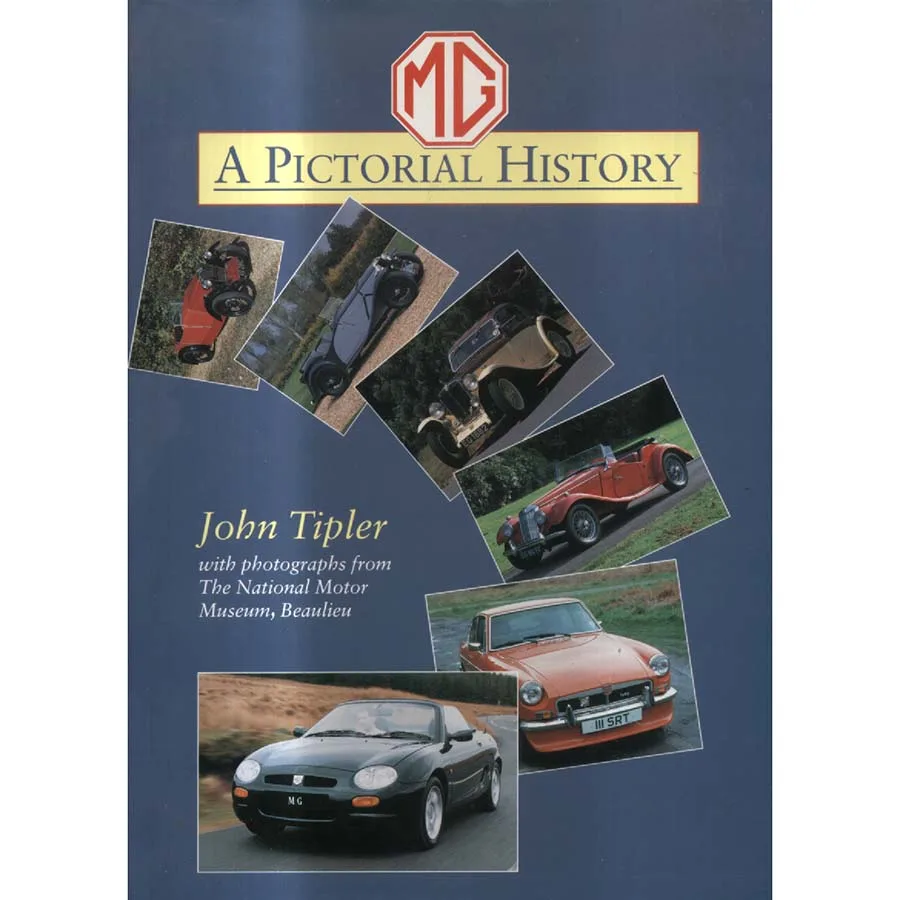
Publisher: Crowood
Format: Hardback
ISBN: 9781852239237
MG: A Pictorial History (1995) – John Tipler
Crowood Press | ISBN: 9781852239237
Condition: Very Good | Sold by Crappy Old Books
MG. Two little letters that have inspired nearly a century of enthusiasm, loyalty, mechanical frustration and the extraordinary British conviction that driving with the roof down in freezing rain is not merely acceptable but positively character-building. Few manufacturers have produced so many charming sports cars, inspired so many devoted owners or provided so many opportunities for otherwise sensible people to spend entire weekends lying beneath machinery with oil dripping into their hair.
Welcome to MG: A Pictorial History, John Tipler’s illustrated celebration of one of Britain’s most beloved motoring marques, tracing the cars, personalities and engineering developments that transformed Morris Garages from an Oxford business into an internationally recognised symbol of affordable sporting motoring.
The story begins in the 1920s with Cecil Kimber, whose enthusiasm for making ordinary Morris cars rather more exciting helped establish MG’s distinctive identity. While respectable motorists were content to travel sedately from one destination to another, Kimber recognised an important commercial opportunity among people who preferred to arrive with their hair dishevelled, their pulse elevated and the occasional suspicion that a component might have shaken loose along the way.
From the elegant pre-war Midgets and sporting machines of the 1930s to the celebrated post-war T-series, MGA, MGB and later models, MG developed an extraordinary reputation for cars that combined attractive styling, lively handling and a sense of occasion entirely disproportionate to their modest size.
The MG TC, with its sweeping wings, wire wheels and upright radiator, helped introduce American enthusiasts to the peculiar delights of British sports cars after the Second World War. The MGA brought modern styling and improved performance, while the MGB became one of the most successful and recognisable British sports cars ever produced.
Naturally, the cars were not without their eccentricities.
Weather protection could be optimistic, electrical systems occasionally displayed independent personalities, and corrosion regarded certain parts of the bodywork as an especially welcoming environment. Nevertheless, enthusiasts remained devoted, arguing that such inconveniences were simply part of the authentic British motoring experience.
Tipler’s pictorial approach makes this volume particularly appealing, allowing the distinctive shapes and changing styles of MG cars to tell much of the story. From early sporting roadsters to increasingly sophisticated later designs, the marque’s evolution provides a fascinating record of Britain’s automotive ambitions, triumphs and occasional industrial misfortunes.
There is something wonderfully nostalgic about an illustrated history of MG. These were cars designed to be driven and enjoyed rather than insulated from the road by electronic systems and enough luxury equipment to furnish a respectable sitting room.
Published in 1995 by Crowood Press, this volume is an attractive addition to the literature of British motoring history, celebrating a manufacturer whose influence extended far beyond the number of vehicles it produced.
This 1995 edition, offered in Very Good condition by Crappy Old Books, is an appealing acquisition for MG owners, classic car enthusiasts, restoration devotees and collectors of illustrated automotive histories.
A splendid visual journey through the machines that helped make MG an enduring symbol of British sporting motoring.
Because while modern sports cars offer enormous horsepower, sophisticated electronics and climate-controlled comfort, the classic MG provides something arguably more rewarding.
The wind in your hair, the sound of the engine and the exhilarating uncertainty of whether you’ll reach your destination without opening the bonnet.
And if you don’t, at least you’ll have something to talk about at the next owners’ club meeting.
Keep browsing: See more Transport books Other books by John Tipler
