


The MG Collection - The Pre-War Models
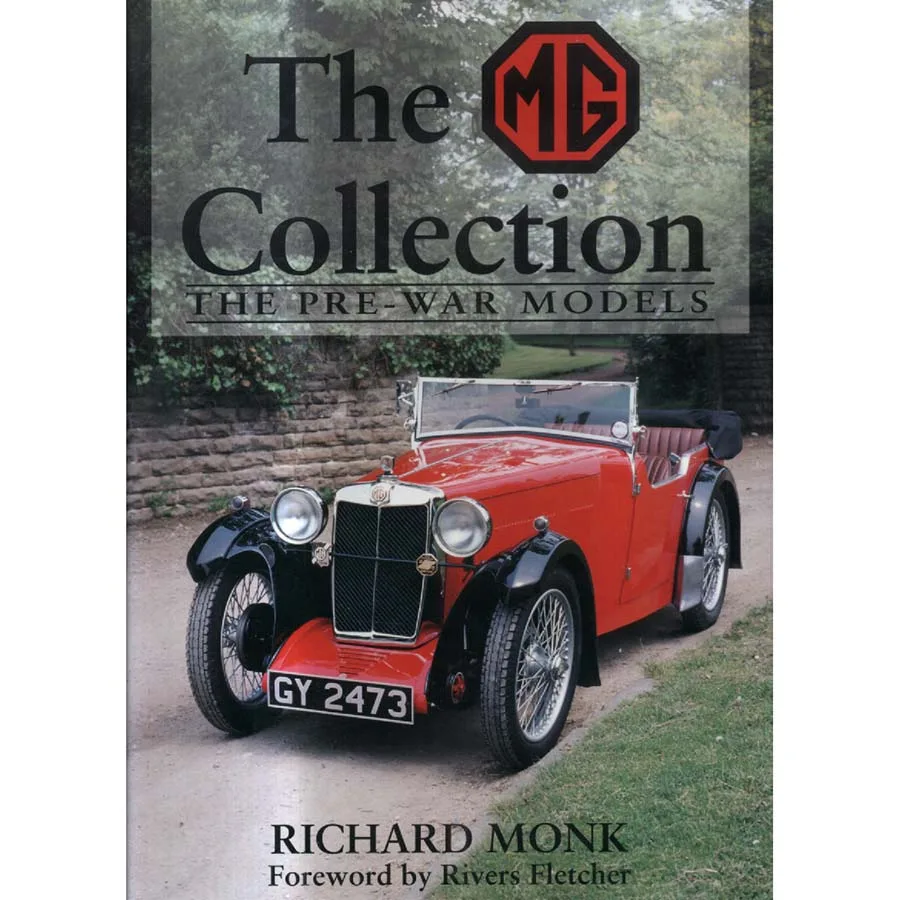
Publisher: Patrick Stephens Limited
Format: Hardback
ISBN: 9781852604967
The MG Collection: The Pre-War Models (1994) – Richard Monk
Patrick Stephens Limited | ISBN: 9781852604967
Condition: Very Good | Sold by Crappy Old Books
MG. Two little letters that have inspired generations of motoring enthusiasts to spend enormous sums of money on small British sports cars, usually while insisting that the resulting expenditure is perfectly reasonable because the vehicle represents an important piece of automotive history. Mention MG to the average enthusiast and visions immediately arise of long bonnets, exposed wheels, polished radiator grilles, open cockpits and the exhilarating possibility of arriving somewhere with one’s hair rearranged by the wind and one’s trousers slightly damp.
Welcome to The MG Collection: The Pre-War Models, Richard Monk’s celebration of the magnificent machines that established MG as one of Britain’s most admired sporting marques, long before the world became obsessed with electronic fuel injection, air conditioning and motor cars that require a computer technician whenever something starts rattling.
The MG story began in the 1920s, emerging from the activities of Morris Garages in Oxford under the energetic influence of Cecil Kimber. Where the ordinary Morris motor car provided respectable, practical transportation for the sensible British motorist, Kimber recognised that some customers wanted something a little more exciting.
And preferably something that looked as though it might win a race.
From these relatively modest beginnings, MG developed a formidable reputation for affordable sports cars, combining lively performance, attractive styling and a distinctly competitive spirit. Early models evolved into the celebrated M-types, J-types, P-types, K-types and T-types, machines whose very names now inspire reverence among enthusiasts and considerable anxiety among anyone responsible for financing a restoration.
The pre-war MG was a splendidly uncomplicated creature. Its occupants were exposed to the elements, its suspension provided an intimate appreciation of British road surfaces, and its mechanical arrangements demanded rather more attention than modern motorists might consider entirely reasonable.
Yet these cars possessed enormous character. Their narrow bodies, wire wheels, folding windscreens and distinctive radiator grilles created an unmistakable appearance, while their achievements in competition helped establish the company’s sporting credentials.
Richard Monk’s volume celebrates this formative era, offering an attractive opportunity to explore the designs, development and enduring appeal of MG’s early sporting machines.
There is something wonderfully romantic about pre-war motoring. Drivers wore goggles, mechanics wielded spanners, and the prospect of travelling fifty miles without incident could occasionally be regarded as a minor engineering triumph. Performance was measured not merely by speed but by courage, determination and an ability to distinguish a harmless mechanical noise from one announcing imminent financial catastrophe.
Published in 1994 by Patrick Stephens Limited, a respected name in specialist transport and motoring literature, this book is an appealing addition to any collection devoted to British automotive history.
This 1994 edition, offered in Very Good condition by Crappy Old Books, will delight MG enthusiasts, classic car collectors, restoration devotees and anyone fascinated by the days when British sports cars combined mechanical simplicity with enormous personality.
A splendid tribute to the little machines that helped establish one of Britain’s great motoring traditions.
Because while modern sports cars boast computer-controlled suspension, enormous horsepower and enough electronic assistance to practically drive themselves, the pre-war MG offered something refreshingly straightforward.
An engine, four wheels, a steering wheel and the exhilarating knowledge that whatever happened next was largely your responsibility.
Especially if it started raining.
Keep browsing: See more Transport books Other books by Richard Monk
