


Pamela
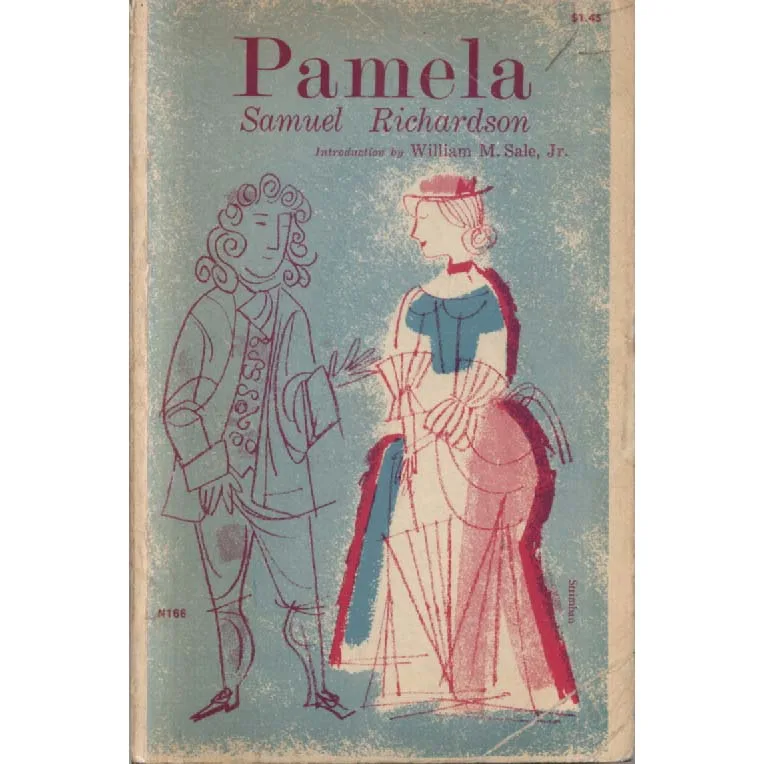
Publisher: Norton
Format: Paperback
ISBN: none
Pamela (1958) – Samuel Richardson
Norton | ISBN: None
Condition: Fair – A Small Number of Annotations and Minor Pen Marks Beside Paragraphs | Sold by Crappy Old Books
Virtue. That splendid eighteenth-century commodity which everybody claimed to possess, everybody expected young women to defend at all costs, and wealthy gentlemen occasionally regarded as an irritating obstacle to getting precisely what they wanted. In an age when marriage was a serious financial transaction, social advancement depended heavily upon one’s connections, and a servant girl’s prospects were generally restricted to working extremely hard for remarkably little reward, Samuel Richardson had the audacity to suggest that a young woman’s moral principles might be worth more than her employer’s entire fortune.
Naturally, this caused quite a sensation.
Welcome to Pamela, Richardson’s enormously influential 1740 novel, a literary phenomenon that helped establish the English novel as a respectable form of entertainment, despite containing enough romantic tension, questionable behaviour and moral controversy to keep eighteenth-century readers enthusiastically arguing over their breakfast tables.
Our heroine is Pamela Andrews, a young servant employed in a wealthy household whose comfortable existence takes an alarming turn when her master, the mysterious Mr B, develops an interest in her that extends considerably beyond whether the drawing room has been properly dusted.
Mr B is rich, powerful and accustomed to getting his own way. Pamela is young, socially vulnerable and determined to preserve her virtue in the face of his increasingly unwelcome attentions. The resulting struggle involves manipulation, attempted seduction, confinement, moral resistance and enough emotional correspondence to keep the eighteenth-century postal service magnificently occupied.
For Richardson tells his story largely through Pamela’s letters and journal entries, allowing readers to experience her fears, hopes, indignation and complicated feelings as events unfold. It’s an early triumph of the epistolary novel, demonstrating that people were perfectly capable of revealing their innermost thoughts at exhausting length long before the invention of social media.
The novel became a publishing sensation, inspiring admiration, criticism, imitations and outright parodies. Some readers celebrated Pamela as an example of feminine virtue, while others suspected that the boundary between moral steadfastness and calculated social advancement was rather more ambiguous than Richardson intended.
Modern readers may find the relationship between Pamela and her employer distinctly troubling, particularly the extraordinary imbalance of power and the novel’s eventual treatment of his behaviour. Yet these tensions also make the book a fascinating document of eighteenth-century attitudes towards gender, class, marriage and morality.
This 1958 Norton edition, offered in Fair condition by Crappy Old Books, contains a small number of annotations, mainly minor pen marks beside paragraphs. These are worth mentioning for collectors seeking pristine copies, although they also suggest that a previous reader was sufficiently engaged to leave occasional evidence of intellectual activity.
An important work of literary history, ideal for students of the early English novel, collectors of classic fiction and anyone curious about the extraordinary complications of courtship before the invention of dating apps.
A remarkable tale of virtue, power, social ambition and moral determination.
And proof that eighteenth-century romantic relationships could be every bit as complicated as modern ones.
They simply required considerably more stationery.
Keep browsing: See more Fiction books Other books by Samuel Richardson
