


A Primer Of Beijing Opera
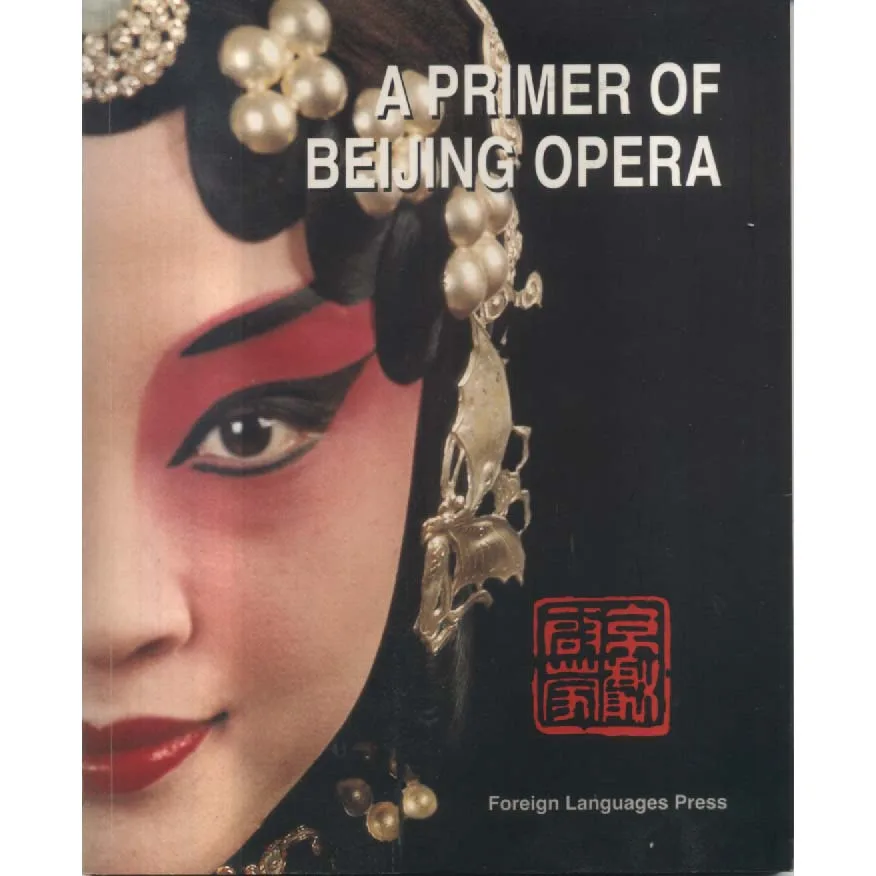
Publisher: Foreign Languages Press
Format: Paperback
ISBN: 9787119032887
A Primer of Beijing Opera (2003) – Liang Yan
Foreign Languages Press | ISBN: 9787119032887
Condition: As New | Sold by Crappy Old Books
Opera. In the Western imagination, it generally involves enormous people singing enormously loudly about love, betrayal, jealousy and the unfortunate consequences of falling in love with somebody who is almost certainly going to die before the final curtain. But travel to China, and the whole business becomes considerably more colourful, acrobatic and magnificently complicated.
Welcome to A Primer of Beijing Opera, Liang Yan’s introduction to one of China’s most distinctive and celebrated performing arts, where singing is merely the beginning, facial make-up can reveal an entire personality, and a performer may communicate more with the movement of a sleeve than the average politician manages in a three-hour speech.
Beijing Opera, also known as Peking Opera or Jingju, is an extraordinary combination of music, drama, dance, mime, martial arts and elaborate visual symbolism. Developed into its recognisable form during the Qing dynasty, it became one of the great traditions of Chinese theatre, bringing together centuries of artistic conventions into performances that can appear wonderfully bewildering to the uninitiated.
Fortunately, Liang Yan provides an accessible introduction to this richly layered world, helping readers understand the conventions, techniques and traditions that make Beijing Opera so unlike its European counterpart.
Here, characters are not simply distinguished by their costumes or the volume at which they complain about their relatives. They belong to established performance categories, including sheng (male roles), dan (female roles), jing (painted-face roles) and chou (comic characters). Each possesses distinctive conventions of movement, vocal delivery and appearance, developed through generations of rigorous theatrical training.
The elaborate facial designs are particularly fascinating. Colours and patterns communicate aspects of personality, loyalty, courage, cunning and moral character, allowing knowledgeable audiences to identify a character’s general disposition before the unfortunate individual has even had an opportunity to misbehave.
Then there are the gestures. A whip may represent an invisible horse. A few carefully arranged objects can suggest an entire room. A simple movement might convey a journey of considerable distance. It’s theatrical minimalism combined with extraordinary physical discipline, and proof that an imaginative audience can be considerably cheaper than an elaborate scenery department.
Published in 2003 by Foreign Languages Press, this volume offers an inviting introduction to the history, artistic language and cultural significance of a performance tradition that has entertained generations of Chinese audiences.
It is particularly appealing to readers interested in Chinese civilisation, traditional theatre, costume, music and the remarkable ways different cultures have developed their own conventions for representing human experience on stage.
This 2003 edition, offered in As New condition by Crappy Old Books, is an excellent addition to a collection of books on Asian culture, world theatre or the performing arts.
A colourful journey into a world of painted faces, embroidered costumes, stylised combat and extraordinary artistic discipline, where almost nothing is quite what it first appears to be.
And if you’ve ever complained that modern theatre relies too heavily on expensive special effects, Beijing Opera offers a persuasive alternative.
Give a talented performer a fan, a sleeve and an empty stage, and apparently there’s very little else required.
Apart from several decades of practice, naturally.
Keep browsing: See more Music books Other books by Liang Yan
