


Air Traffic Control
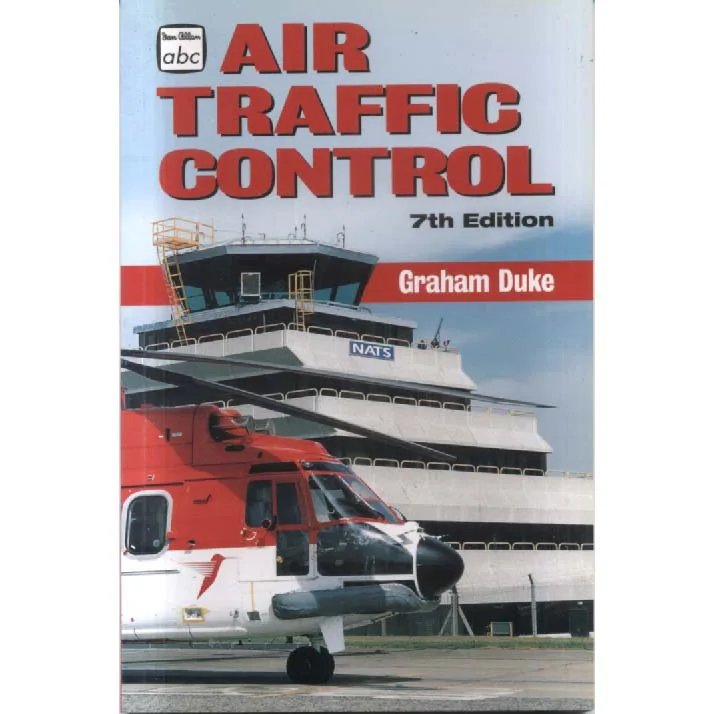
Publisher: Ian Allen
Format: Paperback
ISBN: 9780711025691
Air Traffic Control (1998) – Graham Duke
Ian Allan Publishing | ISBN: 9780711025691
Condition: Good | Sold by Crappy Old Books
Air traffic control. One of those reassuringly invisible professions that allows millions of people to climb aboard enormous metal tubes, hurtle through the atmosphere at several hundred miles an hour, and arrive somewhere vaguely near their intended destination without encountering another enormous metal tube travelling in the opposite direction. It’s an extraordinary achievement, particularly considering that most motorists struggle to negotiate a supermarket car park without becoming involved in an argument.
In Air Traffic Control, Graham Duke lifts the lid on the fascinating, highly technical and occasionally nerve-racking business of managing the world’s increasingly crowded skies. Published in 1998 by Ian Allan, a name synonymous with serious transport and aviation literature, this volume explores an industry in which precision, communication and organisation are rather more important than the ability to look impressive in a uniform.
For the uninitiated, air traffic control might appear to involve sitting in a glass tower, staring at radar screens and occasionally telling pilots that they’re cleared for take-off. In reality, the business is considerably more complicated. Aircraft must be guided through controlled airspace, separated from other traffic, coordinated during arrivals and departures, and managed through a constantly changing combination of weather conditions, airport capacity and operational demands.
Unlike the average office worker, an air traffic controller cannot simply postpone an awkward problem until Monday morning. When several passenger jets are converging on the same patch of sky, suggesting that everyone hold a meeting next Thursday is unlikely to be received enthusiastically.
Duke’s subject encompasses the procedures, systems and specialised skills that make modern aviation possible. From the organisation of controlled airspace to the essential relationship between pilots and controllers, the world of air traffic management is one of carefully established rules, sophisticated technology and remarkably little room for improvisation.
The book is particularly interesting as a snapshot of aviation in the late 1990s, when radar displays, radio communications and increasingly sophisticated computer systems were transforming the profession, while the enormous technological developments of the twenty-first century were still on the horizon. This was an era when air travel was expanding rapidly, airports were becoming ever busier, and the need to organise aircraft safely and efficiently was growing more challenging by the year.
There is also something wonderfully appealing about a profession in which everyday conversation includes expressions such as flight levels, holding patterns, approach vectors and separation minima. Try using those at the dinner table and see how long it takes before somebody asks you to pass the potatoes in plain English.
This 1998 Ian Allan edition, offered in Good condition by Crappy Old Books, is an appealing addition to the shelves of aviation enthusiasts, transport historians, aspiring controllers and anyone who has ever gazed at a busy airport and wondered how the entire operation manages to function without descending into expensive chaos.
An absorbing look at the remarkable organisation required to keep the skies safe, the aircraft moving and the passengers blissfully unaware of just how much coordination is happening above their heads.
Because while pilots may receive the applause when an aircraft lands, somebody else made sure there wasn’t already another one parked on the runway.
Keep browsing: See more Transport books Other books by Graham Duke
