


Scotch Whisky
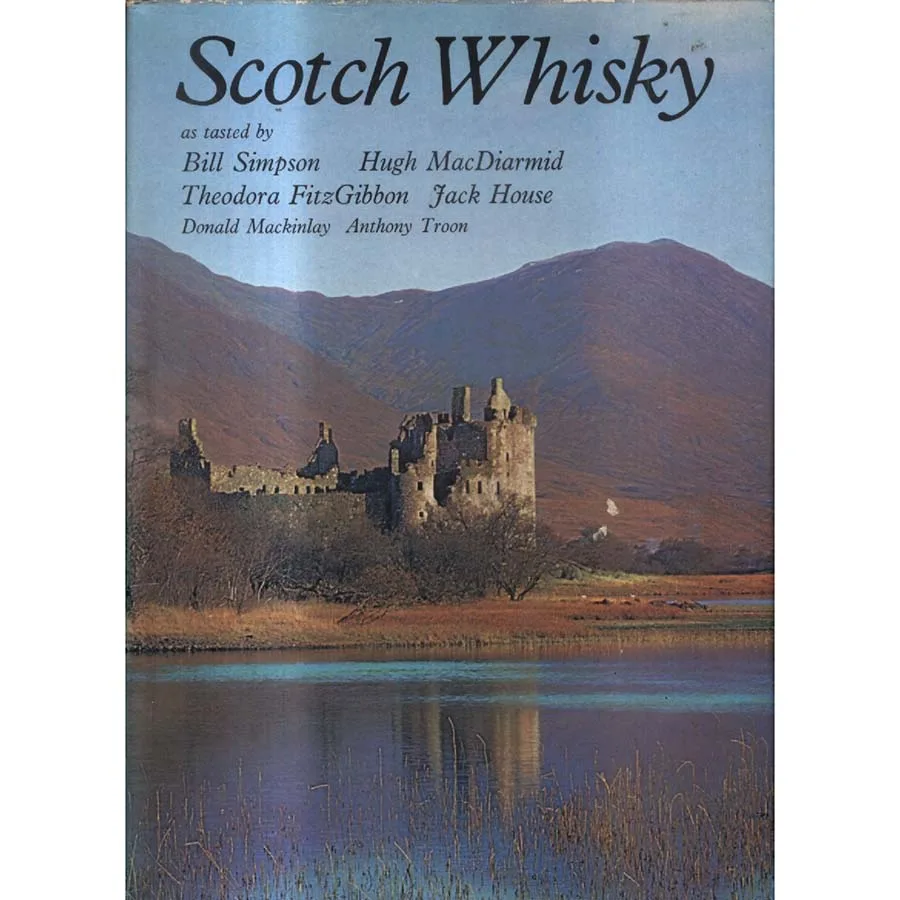
Publisher: Macmillan
Format: Hardback
ISBN: 0333172965
Scotch Whisky (1974) by Bill Simpson
Macmillan | ISBN: 0333172965 | Condition: Good
There are few things the Scots have given the world quite as enthusiastically as whisky, apart from perhaps golf, bagpipes and the conviction that the English are responsible for most of life’s disappointments. In Scotch Whisky, published by Macmillan in 1974, Bill Simpson turns his attention to Scotland’s most celebrated liquid export, a substance that has inspired poets, ruined marriages, financed governments and persuaded otherwise sensible gentlemen that they are suddenly excellent singers.
This is a book from an age when whisky was not yet quite so thoroughly surrounded by the modern vocabulary of luxury investment, limited editions and tasting notes involving freshly polished mahogany, distant bonfires and the breath of a Highland unicorn. Back in 1974, whisky was still something you poured into a glass and drank, preferably in agreeable company and without requiring a second mortgage to finance the experience.
Simpson explores the fascinating world of Scotland’s national spirit, a drink whose history is inseparable from the country’s landscape, traditions, industry and occasionally complicated relationship with the tax authorities. From the misty Highlands to the distilleries whose mysterious combinations of water, barley, yeast and considerable patience produce something rather more interesting than porridge, whisky has always occupied a peculiar position somewhere between agricultural product, national treasure and socially acceptable excuse.
Of course, whisky is an extraordinarily serious business, particularly to those who make it. Entire reputations rest upon the difference between one distillery’s output and another’s, distinctions that can sometimes be lost on the enthusiastic amateur after the third generous measure. The geographical, historical and technical aspects of whisky production offer a remarkable insight into the ingenuity of an industry devoted to transforming fairly ordinary ingredients into something people will cheerfully pay extraordinary sums to possess.
There is also something wonderfully appealing about encountering a whisky book published in the 1970s. The distilling industry has since experienced enormous changes, with global marketing campaigns, increasingly elaborate packaging and bottles that are apparently too valuable ever to open. This volume belongs to an earlier chapter of that history, making it an interesting period piece for whisky enthusiasts who prefer their appreciation of the spirit to extend beyond merely admiring the label.
One cannot help wondering what the whisky drinkers of 1974 would have made of today’s collectors, who spend thousands of pounds acquiring rare bottles only to imprison them permanently in glass cabinets. It seems an unnecessarily elaborate way of not having a drink. The original distillers, many of whom endured considerable hardship and occasional difficulties with excise officers, might have regarded the whole business with understandable bewilderment.
For the enthusiast, the curious newcomer or the individual who simply enjoys books about the more agreeable accomplishments of civilisation, Scotch Whisky offers an engaging journey into a particularly Scottish institution. It is also an attractive addition to a collection of older books about food, drink, traditional industries and the fascinating ways in which humanity has discovered to make ordinary existence a little more tolerable.
This 1974 Macmillan edition is offered in Good condition by Crappy Old Books, a bookseller whose enthusiasm for rescuing elderly volumes is matched only by its complete inability to resist a title involving a subject as civilised as whisky. Being a book of a certain vintage, it possesses the additional advantage of having survived more than half a century without being spilled into somebody’s glass.
An excellent acquisition for whisky lovers, collectors of vintage drinks literature, admirers of Scottish heritage or anyone seeking a thoughtful literary companion to a modest dram. The whisky itself is not included, which is probably just as well, since Royal Mail might have something to say about posting a fifty-year-old bottle along with a second-hand book.
Slàinte mhath! And remember, whisky may improve with age, but unlike this particular book, it generally achieves very little by remaining unopened on a shelf.
Keep browsing: See more Food books Other books by Bill Simpson
