


Aesops Fables
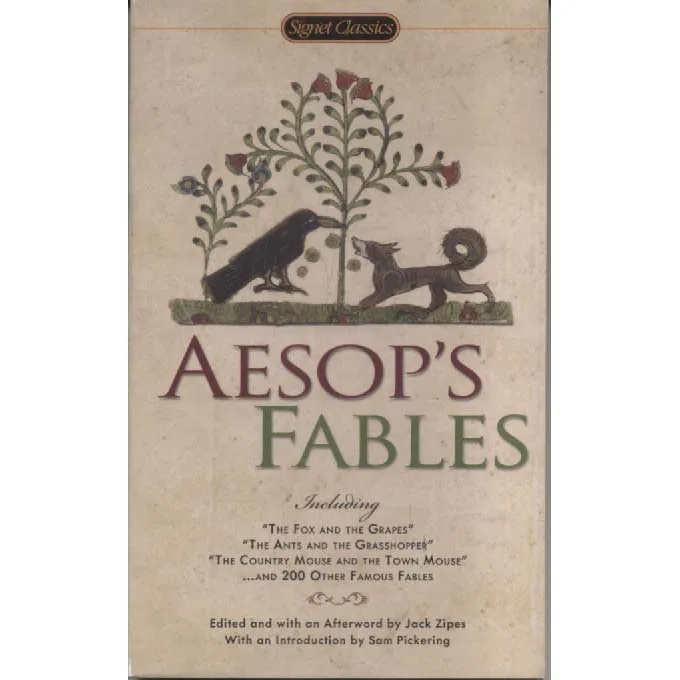
Publisher: Signet Classics
Format: Paperback
ISBN: 9780451529534
Aesop’s Fables (2004) by Jack Zipes
Signet Classics
ISBN: 9780451529534
Condition: Good
Aesop’s Fables is the sort of book that has been quietly judging human behaviour for more than two thousand years, usually by means of foxes, lions, tortoises, crows and other animals who appear to have a firmer grasp of consequences than most people.
This Signet Classics edition, edited by Jack Zipes, gathers together the famous tales traditionally attributed to Aesop: short, sharp little stories in which greed, vanity, laziness, pride, cleverness and stupidity are given legs, fur and occasionally feathers before being sent out to demonstrate exactly why certain decisions are a bad idea.
The formula is simple and almost suspiciously effective.
A fox wants something. A lion trusts the wrong creature. A tortoise is underestimated. A crow makes an error in judgement. Somebody becomes too confident, too greedy or too impressed with themselves.
Then comes the moral.
And remarkably often, the moral still applies.
That is perhaps the strangest thing about Aesop’s Fables. The stories belong to an ancient world, but the people they describe have apparently changed very little. We may now have smartphones, supermarkets and online banking, but there is still always somebody counting their chickens before they hatch.
The animals themselves are wonderfully direct. Aesop’s foxes are cunning, his wolves are dangerous, his donkeys are frequently unfortunate and his lions tend to behave exactly as you would expect creatures at the top of the food chain to behave when nobody has invented employment tribunals.
There are no elaborate backstories.
Nobody spends eighty pages discovering their true identity.
The hare is fast. The tortoise is slow. This is sufficient information to begin.
That economy is part of the charm. Each fable gets in, makes its point and leaves before anyone has time to complain that the plot needs another subplot involving a mysterious uncle.
And yet, beneath the simplicity, the stories deal with surprisingly complicated ideas: power, justice, self-deception, envy, loyalty, manipulation and the endless human tendency to ignore perfectly obvious warnings.
Children can enjoy them as stories about animals.
Adults can enjoy them as stories about everybody they have ever worked with.
Jack Zipes is well known for his work on folklore and fairy tales, and this edition helps place the fables within the wider tradition of storytelling and moral instruction. The result is not simply a collection of quaint little tales, but a reminder of how stories have been used for centuries to explain human behaviour without the inconvenience of naming actual humans.
Which was probably safer.
Many of the best-known sayings in English culture owe something to these stories. “Slow and steady wins the race,” “sour grapes,” “the boy who cried wolf” and countless other familiar ideas have their roots in the fable tradition.
It is difficult to think of many books whose contents have escaped so thoroughly into everyday speech.
You may not have read Aesop’s Fables.
But there is a very good chance Aesop’s Fables has already read you.
This 2004 Signet Classics edition is therefore ideal for readers of folklore, mythology, classics, philosophy, children’s literature or anyone who enjoys stories in which poor decisions are punished with admirable efficiency.
This copy is in Good condition, which suggests it has survived better than several of the characters inside, many of whom were eaten, tricked, embarrassed or otherwise converted into moral instruction.
Available from Crappy Old Books, where the moral of the story is usually that buying another old book was probably the right decision after all.
Keep browsing: See more Ancient Classics books Other books by Jack Zipes
