


Austin Seven
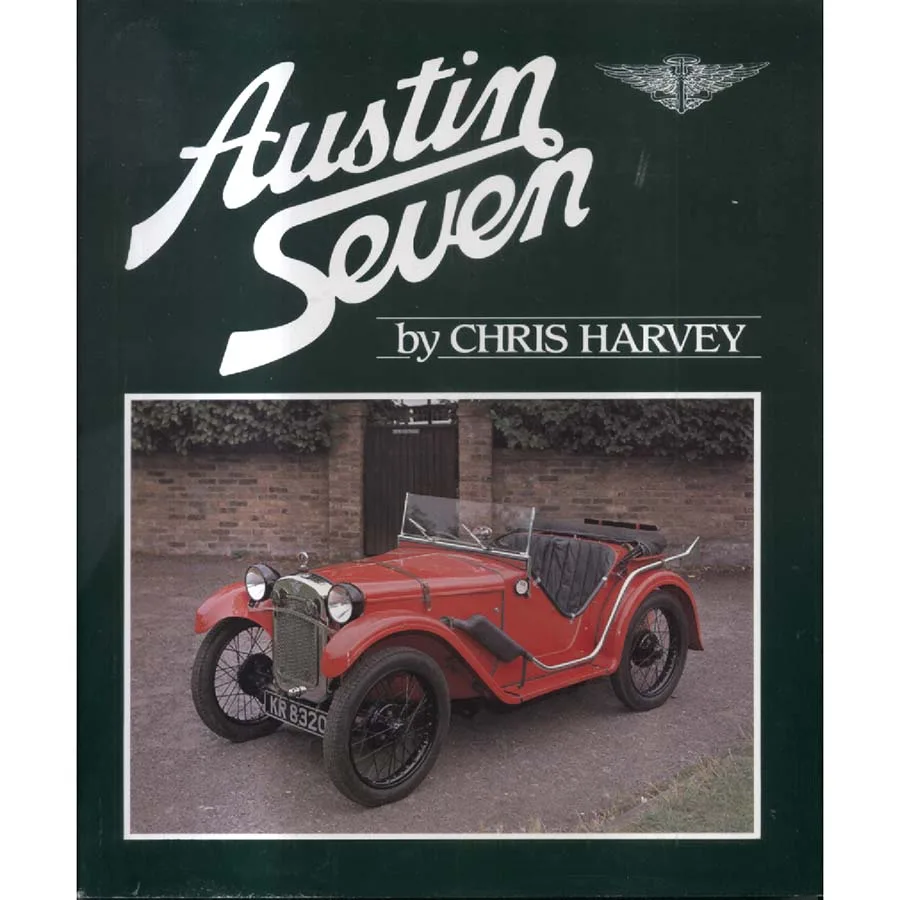
Publisher: Haynes
Format: Hardback
ISBN: 9780946609048
Austin Seven (1997) by Chris Harvey
Haynes
ISBN: 9780946609048
Condition: Very Good
The Austin Seven was small, economical, cheerful, mechanically straightforward and possessed roughly the aerodynamic properties of a garden shed. Naturally, it became one of the most important British cars ever made.
Chris Harvey’s Austin Seven is a lovingly illustrated look at the tiny machine that helped put Britain on wheels and demonstrated that motoring did not necessarily require immense wealth, a chauffeur, or a vehicle the size of a drawing room. Introduced in the 1920s, the Seven was modest in every possible sense, yet its influence was enormous. It became transport for ordinary families, a basis for racing cars, specials and home-built creations, and the starting point for countless people who discovered that owning a motor car was both liberating and an excellent new source of unexpected mechanical noises.
Harvey charts the development of the Seven through its many versions, showing how Austin managed to extract remarkable variety from a basic formula consisting largely of four wheels, a small engine and optimism. Saloons, tourers, sports models and assorted derivatives all appear, each displaying that wonderful early-motoring belief that if a car was approximately the right shape and capable of moving under its own power, almost anything was possible.
The book is packed with photographs and period detail, making it ideal for enthusiasts, restorers and anyone who enjoys the sight of an automobile designed before cup holders, touchscreen displays and lane-departure warnings became essential features of civilisation.
Instead, the Austin Seven offered steering, brakes, an engine and, on a good day, forward progress.
Its diminutive size was part of its appeal. Modern motorists may look at one and wonder where the rest of the car went, but in its day the Seven was a revelation. It was affordable, practical and economical, and it helped transform motoring from an expensive amusement into something approaching everyday transport.
It was also wonderfully adaptable. Owners raced them, modified them, rebuilt them, turned them into specials and occasionally constructed vehicles bearing only a philosophical resemblance to the machine that had originally left the Austin factory. The Seven became a favourite of amateur engineers, club racers and mechanically adventurous people who regarded a weekend beneath a car as recreation rather than evidence of poor life choices.
Chris Harvey gives the car the historical respect it deserves while preserving the charm that has kept the Austin Seven so popular with enthusiasts. There is plenty of technical and historical information, but the book remains highly browsable, particularly if you enjoy old photographs of people standing proudly beside cars that could probably fit inside the boot of a modern SUV.
The Seven’s legacy is extraordinary. It influenced manufacturers both in Britain and abroad, and versions or licensed derivatives appeared in several countries. BMW’s first car, for example, owed much to the Austin Seven design, proving that even the grandest automotive empires can begin with something that looks capable of being parked in a hallway.
This 1997 Haynes volume is therefore much more than a nostalgic collection of photographs. It is a portrait of an era when motoring was still becoming normal, when roads were quieter, cars were simpler, and motorists were expected to know what at least some of the mysterious objects beneath the bonnet actually did.
A splendid book for Austin enthusiasts, classic-car collectors, vintage motoring fans, amateur mechanics, automotive historians and anybody who believes modern cars would be improved by being approximately half their current size.
This copy is in Very Good condition, which is probably better condition than many actual Austin Sevens now sitting patiently beneath tarpaulins while their owners insist that the restoration is “nearly finished”.
Available from Crappy Old Books, where depreciation eventually stops and everything becomes collectable instead.
Keep browsing: See more Transport books Other books by Chris Harvey
