


Elizabeth Garrett Anderson
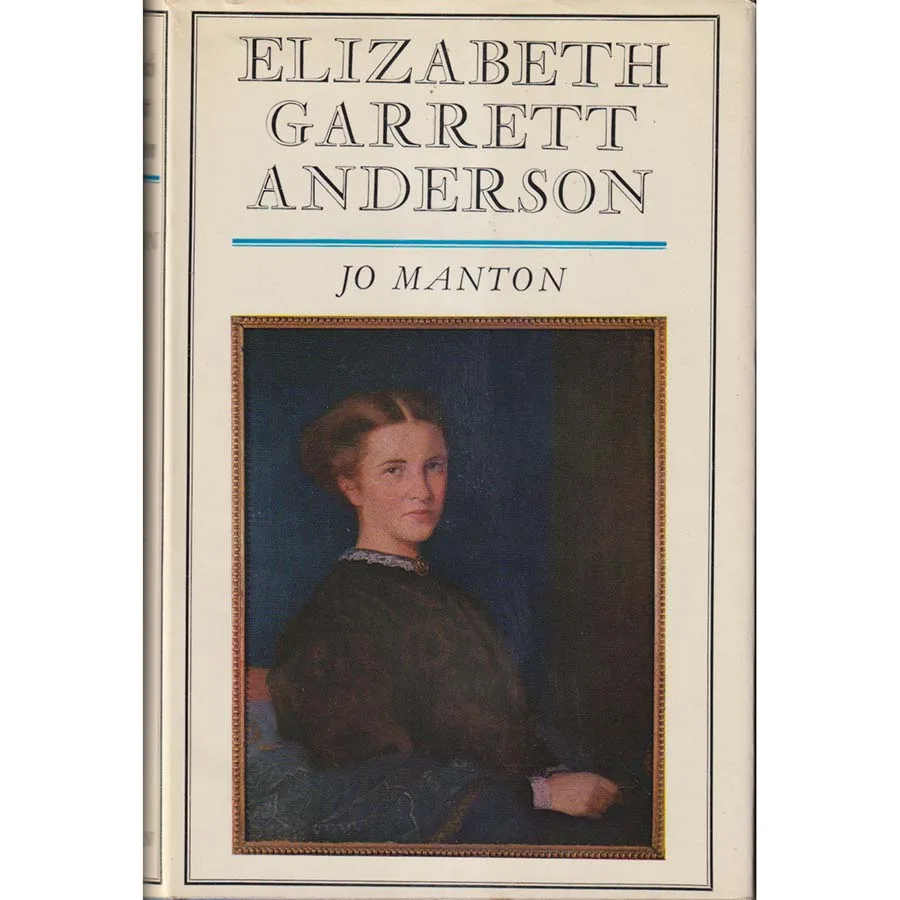
Publisher: Methuen
Format: Hardback
ISBN: none
Elizabeth Garrett Anderson (1966) by Jo Manton – Methuen
There are difficult career paths.
And then there is deciding to become a doctor in Victorian Britain when the medical profession has collectively decided that women absolutely should not.
Elizabeth Garrett Anderson, written by Jo Manton and published by Methuen in 1966, tells the remarkable story of one of the great pioneers of women in medicine.
Garrett Anderson was not merely interested in medicine.
She was determined to practise it.
Unfortunately, a considerable portion of nineteenth-century society regarded that as roughly equivalent to announcing an intention to become Archbishop of Canterbury, Prime Minister and commander of the Royal Navy simultaneously.
Women, apparently, were not supposed to be doctors.
They could be patients.
They could be nurses.
They could be concerned relatives standing anxiously beside the bed.
But actually becoming qualified physicians was another matter entirely.
Elizabeth Garrett Anderson responded to this obstacle in the traditional manner of determined reformers everywhere: she kept going until the obstacle became exhausted.
Her route into medicine was difficult, unconventional and frequently obstructed. Medical schools resisted admitting her. Professional organisations attempted to close loopholes. Existing institutions proved remarkably inventive when it came to explaining why something could not possibly be done.
Which, naturally, meant she did it anyway.
Her eventual qualification made her a pioneering figure in British medicine, and her career went on to encompass medical practice, hospital work, public service and campaigning for greater opportunities for women.
She became a symbol not merely of personal achievement but of the slow dismantling of assumptions that had been treated as self-evident for generations.
Jo Manton’s biography introduces readers to that life in an accessible and engaging way, setting Garrett Anderson’s achievements against the society in which she had to make them.
That context matters.
Becoming a doctor is difficult enough when the system is designed to train you.
It is rather more challenging when the system is actively wondering how to stop you getting through the front door.
There is also something satisfying about reading biographies like this from the 1960s.
By then, Garrett Anderson’s place in history was firmly established, but the changes she had fought for were still relatively recent in historical terms.
The book therefore sits in an interesting position: looking back at Victorian restrictions from a twentieth-century world that had changed considerably, while still being much closer to those struggles than we are today.
For readers interested in medicine, social history, women’s history or education, this is a particularly appealing little volume.
It is a story about professional ambition.
About persistence.
About institutional resistance.
And about the extraordinary amount of effort sometimes required to persuade society that an obvious idea is, in fact, obvious.
This copy is in Good condition, making it a pleasing vintage example of a biography devoted to someone who spent much of her life refusing to accept that “no” was a complete answer.
Ideal for readers interested in pioneering women, Victorian medicine, social reform, medical history or the development of professional opportunities for women.
Also suitable for anyone who has ever been told that something “simply isn’t done” and immediately taken that as encouragement.
Sold by Crappy Old Books, where obstacles are generally limited to finding shelf space and where determined women are allowed to buy as many old books as they please.
ISBN: None
Condition: Good
Keep browsing: See more Biography books Other books by Jo Manton
