


Rock Gardening
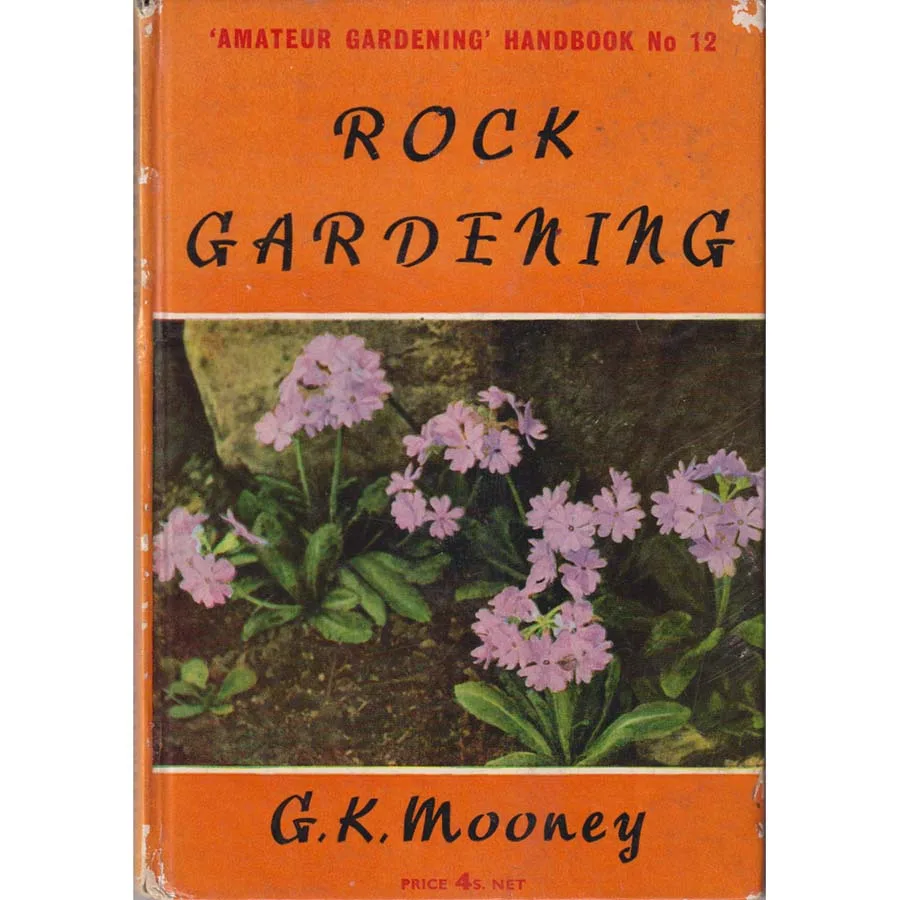
Publisher: Collingridge
Format: Hardback
ISBN: none
Rock Gardening (1957) by G. K. Mooney – Collingridge
There comes a point in every gardener’s life when ordinary soil is no longer enough.
You look at the lawn. You look at the flower beds. You look at a pile of stones.
And you think: yes, this could become a garden.
Rock Gardening, written by G. K. Mooney and published by Collingridge in 1957, is a practical guide to the noble art of arranging rocks, soil and carefully chosen plants in such a way that the final result looks beautifully natural rather than as though a small building project was abandoned halfway through.
Rock gardens occupy a curious corner of horticulture. Done well, they create miniature landscapes full of alpines, low-growing plants, crevices, slopes and carefully composed stonework. Done badly, they look like somebody tipped a wheelbarrow over and decided to leave it there.
Mooney’s task is to help you achieve the first version.
This is proper mid-century gardening literature, from an era when readers were expected to know one end of a spade from the other and nobody felt obliged to describe every garden as an “outdoor room”.
The book deals with the planning, construction and planting of rock gardens, helping the gardener understand which plants suit rocky conditions and how stone, soil, drainage and position all work together.
Because rock gardening is not simply a matter of buying three boulders and wedging a saxifrage between them.
The stones need placing properly. The plants need suitable conditions. Drainage matters. Scale matters. Aspect matters. And sooner or later you discover that creating something which looks naturally wild involves a remarkable amount of deliberate organisation.
Published in 1957, the book also captures a period when rockeries were a familiar feature of British gardening, appearing everywhere from suburban plots to grander gardens and public parks.
For decades, a respectable rock garden was almost a declaration that you had progressed beyond merely owning a lawn.
It showed ambition.
Possibly too much ambition.
There is something wonderfully earnest about older gardening manuals like this. They tend to approach their subject with the seriousness of civil engineering, which is not entirely unreasonable when the subject involves moving large pieces of stone around the garden.
Modern gardening advice might tell you to “create a naturalistic alpine feature”.
A 1950s gardener was more likely to be told what sort of stone to use, where to put it, how far to bury it and why getting it wrong would offend both horticulture and geology.
For anyone interested in vintage gardening practice, the book is also an appealing snapshot of its time.
The language, methods and plant choices reflect mid-century horticulture, when specialist gardening was a serious hobby and a person could devote extraordinary amounts of attention to a patch of ground measuring six feet across.
This copy is in Good condition, which seems rather fitting for a book about rocks, since one would hope for a certain degree of durability.
At nearly seventy years old, it has survived changing garden fashions, decades of weather, endless arguments over lawns versus paving and the rise of garden centres selling pre-bagged “alpine grit” at surprisingly ambitious prices.
Ideal for gardeners, collectors of vintage horticultural books, alpine enthusiasts, landscape-history buffs or anyone currently staring at an awkward slope and wondering whether it could be turned into something impressive.
Also useful for people who have acquired a heap of stones and need a respectable explanation for why they are still in the garden.
Sold by Crappy Old Books, where we admire any gardening project that can turn rubble into a feature and call it intentional.
ISBN: None
Condition: Good
Keep browsing: See more Gardening books Other books by GK Mooney
