


The Man With The Golden Gun
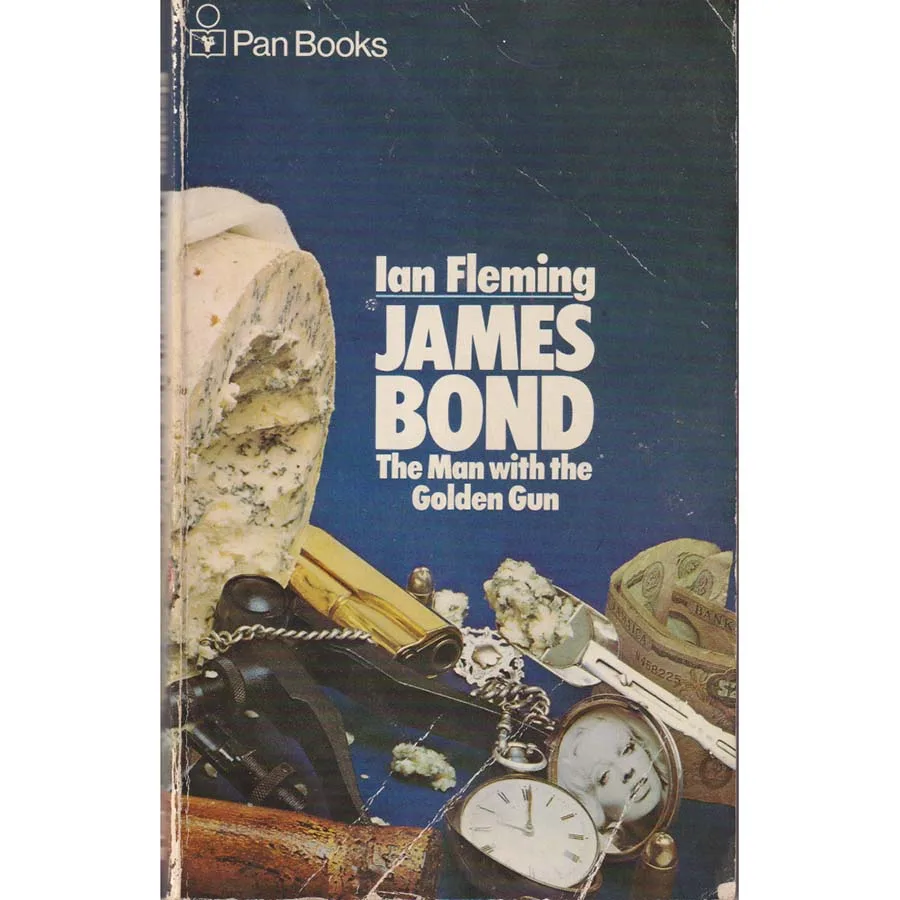
Publisher: Pan Books
Format: Paperback
ISBN: 0330105272
The Man with the Golden Gun by Ian Fleming, published by Pan Books in this 1973 edition, is the final full-length James Bond novel and a splendidly lean slice of Cold War espionage from the days when international crises could apparently be resolved by one unusually durable civil servant carrying a Walther PPK.
By this point in the series, Bond has been shot, poisoned, tortured, beaten, nearly drowned, emotionally damaged and generally treated in ways that would cause a modern HR department to request an urgent meeting.
Naturally, he remains employed.
The novel opens with Bond in distinctly unusual circumstances after his disappearance and experiences abroad, eventually returning to British intelligence in a condition that gives M rather more to worry about than the usual travel expenses.
Once matters have been sorted out — by methods that would probably now require several consent forms — Bond is given another assignment.
This time the target is Francisco Scaramanga, a dangerous professional killer known for his distinctive golden gun and his considerable confidence in using it.
Scaramanga is exactly the sort of man one expects to encounter in a Bond novel.
Elegant enough to be memorable.
Dangerous enough to justify the airfare.
And equipped with a signature weapon sufficiently theatrical that merely owning an ordinary pistol would clearly have felt disappointing.
Bond follows him into the Caribbean, where Fleming once again combines espionage with heat, hotels, dubious businessmen, organised crime and the general sense that somewhere beautiful is about to become extremely dangerous.
This is one of the enduring achievements of Bond.
Other people go to Jamaica and see beaches.
Bond goes to Jamaica and immediately discovers an international criminal operation.
It must make booking holidays exhausting.
The novel is shorter and more stripped-down than some of Fleming’s earlier Bond books, giving it a brisk, slightly hard-edged quality.
There is less time for elaborate villainous architecture.
More time for suspicion.
Observation.
Positioning.
And the ancient intelligence-service tradition of sending one man to deal with a problem that would ordinarily justify several government departments.
Fleming’s Bond on the page remains rather different from the increasingly spectacular cinematic version.
He is colder.
More tired.
More introspective.
Still capable of enormous confidence, certainly, but never entirely untouched by what the work has done to him.
This is espionage as a profession with consequences rather than merely an excuse to drive an expensive car through somebody’s fruit stall.
Published posthumously in 1965, The Man with the Golden Gun occupies a particularly interesting place in the Bond canon.
It was Fleming’s final completed Bond novel, giving the story an unavoidable sense of ending even though the character himself, inconveniently for mortality, continued very successfully without him.
Bond proved difficult to kill.
Commercial franchises often are.
This 1973 Pan Books edition belongs to the classic era of Bond paperbacks: compact, portable and designed to be carried in a coat pocket, suitcase or railway bag while the reader privately imagines their commute contains rather more international intrigue than it actually does.
There is something very satisfying about vintage Pan Bond editions.
They belong to the world in which these stories became mass-market phenomena, consumed by millions of readers long before Bond developed several decades of cinematic continuity and an apparently inexhaustible supply of replacement Aston Martins.
For readers of spy fiction, collectors of Ian Fleming, Bond enthusiasts or anyone who likes thrillers involving professional killers with unnecessarily distinctive equipment, The Man with the Golden Gun remains a thoroughly entertaining piece of twentieth-century popular fiction.
It is also a useful reminder that if someone in a Fleming novel has acquired a nickname based on their weapon, you should probably avoid doing business with them.
Condition: Good. A sound used copy with normal signs of age and handling. Published in 1973, it has survived more than half a century with rather less damage than Bond typically sustains before breakfast.
ISBN: 0330105272.
A sharp, atmospheric late Bond adventure involving assassination, Cold War intrigue and one of the most memorable firearms in spy fiction.
Sold by Crappy Old Books — where the gun is golden, the paperback is vintage, and fortunately nobody expects you to report to M afterwards.
Keep browsing: See more Thrillers books Other books by Ian Fleming
