


The Batsford Colour Book Of The Cotswolds
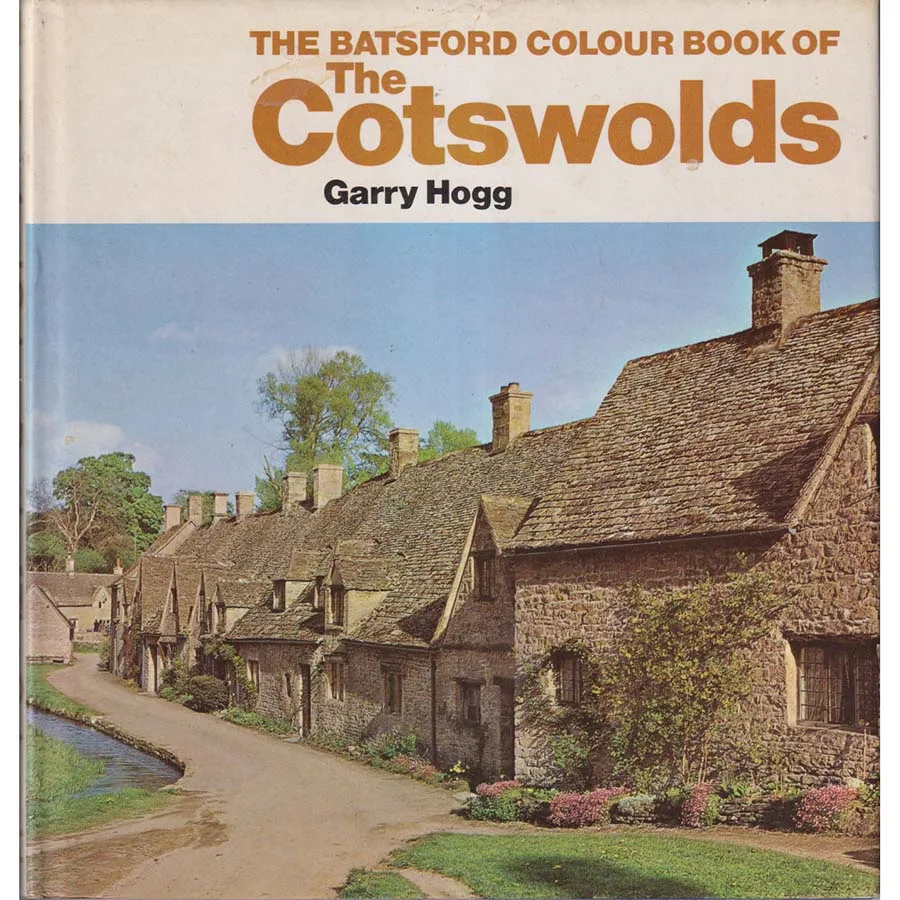
Publisher: BT Batsford
Format: Hardback
ISBN: 0713400242
The Batsford Colour Book of the Cotswolds by Gary Hogg, published by B. T. Batsford in 1973, is a wonderfully period portrait of the Cotswolds from the days when English travel books were full of stone villages, church towers, market crosses, rolling fields and the comforting assumption that somewhere nearby there would be tea.
The Cotswolds have always had an unfair advantage when it comes to looking picturesque.
Other regions have to work at it.
The Cotswolds simply put up a row of honey-coloured cottages, add a slightly crooked inn sign, scatter a few sheep in the distance and wait for someone with a camera.
Gary Hogg’s book captures that world in colour, presenting the villages, landscapes, churches, houses and streets that made the area one of the most instantly recognisable parts of rural England.
And because this was published in 1973, the photographs have acquired a second layer of interest.
You are not just looking at the Cotswolds.
You are looking at the Cotswolds as they appeared half a century ago.
The buildings may be centuries older, naturally, but the cars, clothes, signs and little incidental details belong unmistakably to the early 1970s.
That is one of the pleasures of old colour travel books.
They begin by documenting somewhere scenic.
Then enough time passes and suddenly they are also documenting parking habits, shop fronts, hairstyles and the alarming survival rate of brown clothing.
The Cotswold villages themselves remain the stars.
Broadway, Bourton, Stow, Chipping Campden and their many smaller neighbours have spent generations perfecting the art of appearing as though they were designed specifically for postcards.
Stone walls glow warmly in the right light.
Churches rise over clusters of roofs.
Streams behave decoratively.
Even the sheep seem to understand the aesthetic brief.
The photographs also catch the rural landscape around the villages, where dry-stone walls, wooded valleys and open farmland create that peculiar mixture of order and softness associated with the region.
It is countryside shaped by centuries of farming, building and settlement rather than some untouched wilderness.
Which is probably why it looks so good with a pub in the middle of it.
Batsford was particularly good at this kind of book.
The publisher produced generations of attractive volumes on British landscape, architecture, history and regional character, often with enough visual appeal to make perfectly ordinary readers develop unexpectedly strong opinions about church porches.
This volume fits that tradition nicely.
It is not merely a guidebook.
It is a visual record of place.
And like most good visual records, it becomes more interesting as the years pass.
A village street photographed in 1973 may look superficially familiar today, but small changes accumulate.
Shop names disappear.
Road signs change.
Cars vanish.
Buildings are restored, extended or converted.
Tourism arrives in greater force.
And somewhere along the way a cottage once occupied by somebody’s grandmother becomes worth £1.4 million.
Progress, apparently.
For readers interested in English landscape, local history, old travel books, photography, architecture or the Cotswolds themselves, this is a charming piece of regional publishing.
It also has obvious appeal to anyone who enjoys comparing old photographs with the present and discovering that the village green has barely changed while everything parked beside it has become completely unrecognisable.
Condition: Good. A sound used copy with normal signs of age and handling. Published in 1973, it has now become nearly as much a record of its own era as of the older landscape it set out to celebrate.
ISBN: 0713400242.
A colourful vintage portrait of the Cotswolds, full of villages, countryside, architecture and the sort of English rural scenery that has been making estate agents emotional for decades.
Sold by Crappy Old Books — where the cottages are old, the photographs are older than they look, and the tea shop is probably now a boutique hotel.
Keep browsing: See more Travel books Other books by Gary Hogg
