


Linux Answers
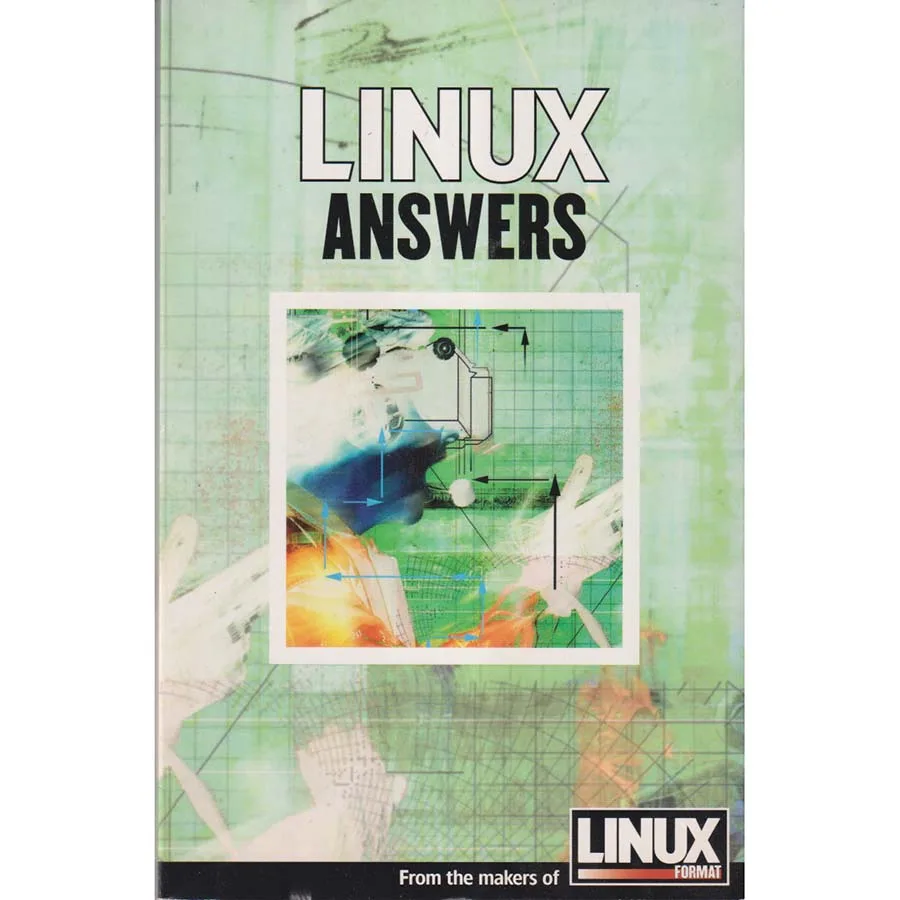
Publisher: Future Publishing
Format: Paperback
ISBN: 9781858700946
Linux Answers, published by Future Publishing in 2002, is a wonderfully period piece from the age when installing Linux could still feel less like using an operating system and more like entering into a prolonged negotiation with a computer that had recently decided it no longer respected you.
This was the era of distributions on CDs, mysterious hardware compatibility lists, command lines typed with great confidence, and the occasional discovery that your sound card had apparently become a philosophical problem.
Produced by Linux Answers and published by Future Publishing, this book was aimed at people who wanted practical help with Linux at a time when the operating system was rapidly growing beyond the realm of dedicated enthusiasts and beginning to attract ordinary users who had heard rumours that it was free, powerful and possibly less irritating than Windows.
Naturally, “free” did not necessarily mean “easy”.
Linux in 2002 had already come a very long way, but it still demanded a certain willingness to understand what the machine was actually doing. This could be deeply rewarding, provided one did not mind discovering that fixing a printer involved learning three new acronyms and editing a configuration file in a text editor one had never previously heard of.
The book offers answers, explanations, tips and practical guidance for users trying to get to grips with Linux systems, applications, setup and troubleshooting. It belongs to the very useful tradition of technical books whose main purpose was to sit beside the computer while the owner muttered something unprintable at the screen.
There is something particularly nostalgic about computer books from this period. Technology moves so quickly that they become accidental social history almost immediately.
A 2002 Linux guide takes us back to a world of CRT monitors, dial-up or early broadband, chunky beige towers, optical discs everywhere and computers that still made a meaningful selection of noises while starting up.
It was also a period when installing software often involved more ceremony than simply clicking an app store button. Packages had dependencies. Drivers were adventures. Forums contained people with usernames like KernelWizard72 explaining that the obvious solution was to recompile something.
And yet this was exactly why Linux developed such a devoted following.
It offered control, flexibility and an escape from proprietary systems, while encouraging users to understand their computers rather than merely accept whatever happened behind the interface. For many technically minded people, that was not a drawback but the entire point.
Read today, Linux Answers is therefore useful in two ways.
As a technical book, it provides a snapshot of Linux practice and thinking in the early 2000s.
As an historical object, it documents the moment when Linux was moving from specialist territory toward mainstream awareness, carrying with it the faint promise that everyone might eventually have a free, open and completely configurable computer.
We are still waiting for everybody else to catch up.
The book should appeal to Linux enthusiasts, retro-computing fans, collectors of old technology manuals, software historians and anyone who feels a strange warmth when confronted with screenshots containing KDE, GNOME or command prompts rendered in fonts last seen during the administration of George W. Bush.
It may also be useful for anyone restoring an older Linux system and wishing to recreate the authentic experience, although authenticity should perhaps stop before spending three hours configuring a modem.
Condition: Good. A sound used copy with normal signs of age and handling. Published in 2002, which in computing terms makes it approximately contemporary with the steam locomotive.
ISBN: 9781858700946.
A fascinating old-school Linux guide from a time when computers expected their users to know things, manuals were still printed on paper, and solving a problem usually began with the reassuring phrase:
“Open a terminal window.”
Sold by Crappy Old Books — where even obsolete operating systems get one more boot.
Keep browsing: See more IT books Other books by Linux Answers
