


Piranesi - The Imaginary Views
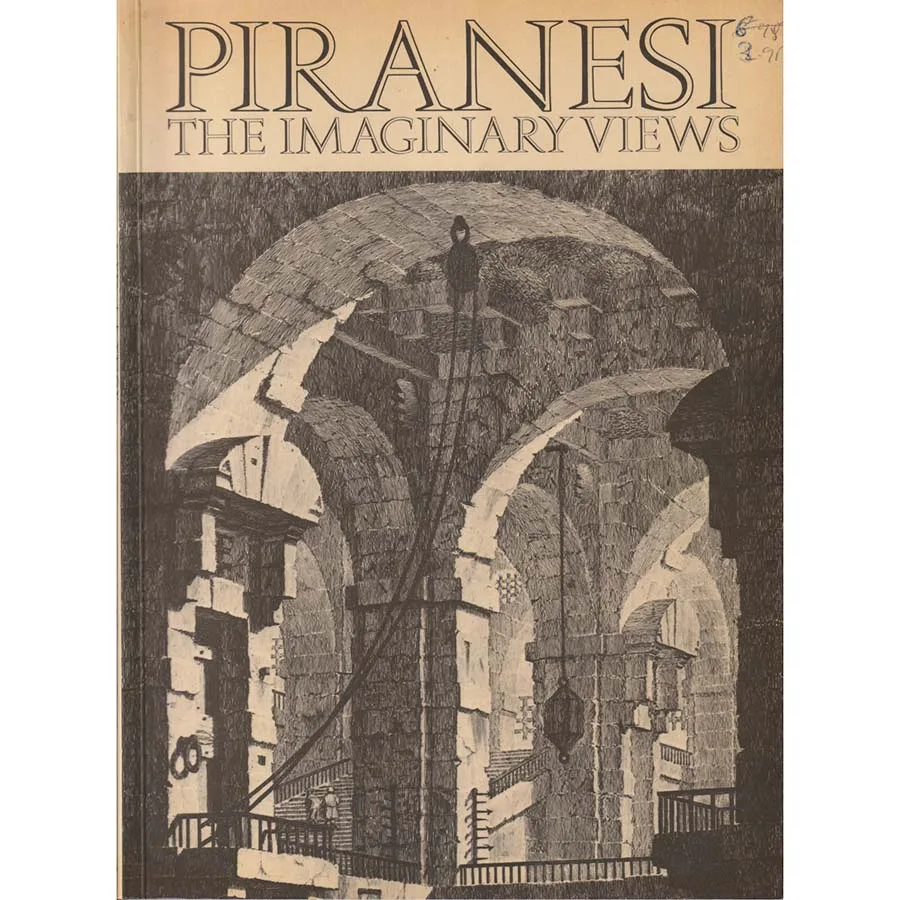
Publisher: Academy Editions
Format: Paperback
ISBN: none
Piranesi - The Imaginary Views by Miranda Harvey, published by Academy Editions in 1979, explores the extraordinary architectural fantasies of Giovanni Battista Piranesi, the eighteenth-century artist who looked at ordinary buildings and apparently decided they would be much improved if they were larger, darker, more impossible and contained enough staircases to defeat anyone attempting to find the exit.
Condition: Fair. The book remains a sound and usable copy, but part of the glossy surface layer on the back cover has been torn or peeled away, exposing the card stock underneath. Importantly, the back cover itself is not torn — the damage is to the outer gloss/printed surface rather than through the cover. There are also the normal signs of age and previous handling expected from a book published in 1979.
Piranesi is one of those artists whose work seems immediately familiar even if you cannot remember where you have seen it. His vast imaginary interiors, monumental ruins, bridges, arches, vaults and famously bewildering prisons occupy a strange territory somewhere between architecture, archaeology and nightmare.
The great Carceri, or imaginary prisons, are perhaps his most celebrated inventions: enormous shadowy structures filled with platforms, chains, stairways and architectural machinery whose actual purpose seems pleasingly uncertain. They resemble places designed by a committee consisting of an ancient Roman engineer, a theatrical set designer and somebody having a particularly elaborate anxiety dream.
Miranda Harvey’s book concentrates on these imaginary views and the remarkable visual world Piranesi created through his prints. His buildings often appear technically convincing until one attempts to understand how they could actually exist, at which point the architecture begins quietly ignoring the normal rules of space.
That is part of their fascination. Piranesi could take the vocabulary of classical architecture — columns, arches, vaults, masonry and monumental engineering — and push it into something almost fantastical. The results are simultaneously believable and impossible, making the viewer feel that somewhere beyond the next arch there may either be another magnificent hall or several hundred additional stairs leading nowhere useful.
His influence has been enormous. Architects, artists, designers and writers have repeatedly returned to Piranesi’s imagined spaces, and it is not difficult to see echoes of them in later fantasy art, film design and the sort of monumental fictional architecture that appears impressive until somebody asks where the fire exits are.
Published by Academy Editions in 1979, this is very much an art and architectural title, combining visual material with discussion of Piranesi’s extraordinary imagination and the historical context in which his work appeared. It should appeal equally to readers interested in printmaking, architecture, eighteenth-century art and the fascinating borderland where buildings stop being practical and start becoming ideas.
There is also something pleasingly appropriate about encountering Piranesi in book form. These are images made for prolonged looking. The more closely one examines them, the more details appear: tiny figures dwarfed by vast structures, staircases crossing other staircases, looming masonry and mysterious pieces of apparatus which presumably made perfect sense to Piranesi.
Or perhaps not. That may have been the point.
So this is not the copy for somebody seeking immaculate shelf perfection, but it is a perfectly respectable reading or reference copy of an interesting Piranesi title — and, given the subject matter, a slightly distressed exterior could almost be regarded as architectural atmosphere.
No ISBN stated.
An intriguing study of one of art history’s greatest creators of impossible spaces, suitable for collectors of Piranesi, architectural art, engraving, printmaking and anyone who has ever looked at a perfectly sensible staircase and thought it would be more interesting if it led somewhere inexplicable.
Sold by Crappy Old Books — where even the damaged surfaces have structural integrity.
Keep browsing: See more Art books Other books by Miranda Harvey
