


The Gentlemens Clubs Of London
Publisher: Bracken Books
Format: Hardback
ISBN: 0946495149
The Gentlemen’s Clubs of London by Anthony Lejeune, published in 1987, is a guided tour through one of Britain’s more peculiar social inventions: the private club, where generations of men could eat, drink, read newspapers, avoid domestic responsibilities and conduct important affairs beneath portraits of people who looked as though smiling had been prohibited by the committee.
Anthony Lejeune was ideally placed to explore this world, and the book takes the reader inside the great London clubs, particularly those clustered around St James’s and Pall Mall, where politics, diplomacy, military life, business, literature and extremely elaborate rules about lunch all managed to coexist.
These institutions were far more than expensive places to sit in leather chairs. For much of the nineteenth and twentieth centuries, London’s clubs acted as unofficial extensions of Parliament, Whitehall, the armed forces and the professions. Careers were advanced, alliances formed, gossip exchanged and national affairs quietly discussed over meals which presumably involved silver covers and somebody appearing whenever a bell was rung.
The clubs developed wonderfully distinct personalities of their own. Some attracted politicians, others soldiers, travellers, writers or members of particular professions. There were clubs of immense grandeur, clubs proud of their eccentricity and clubs where membership itself seemed designed to confirm that one already knew everybody worth knowing.
Naturally, the entire system operated according to rules. British society has always been at its most inventive when devising regulations for apparently unnecessary things, and the gentlemen’s club offered almost unlimited opportunities. Who could enter, where they could sit, what they could wear, which staircase they might use and whether anyone had committed the grave social offence of speaking too loudly could all become matters of institutional importance.
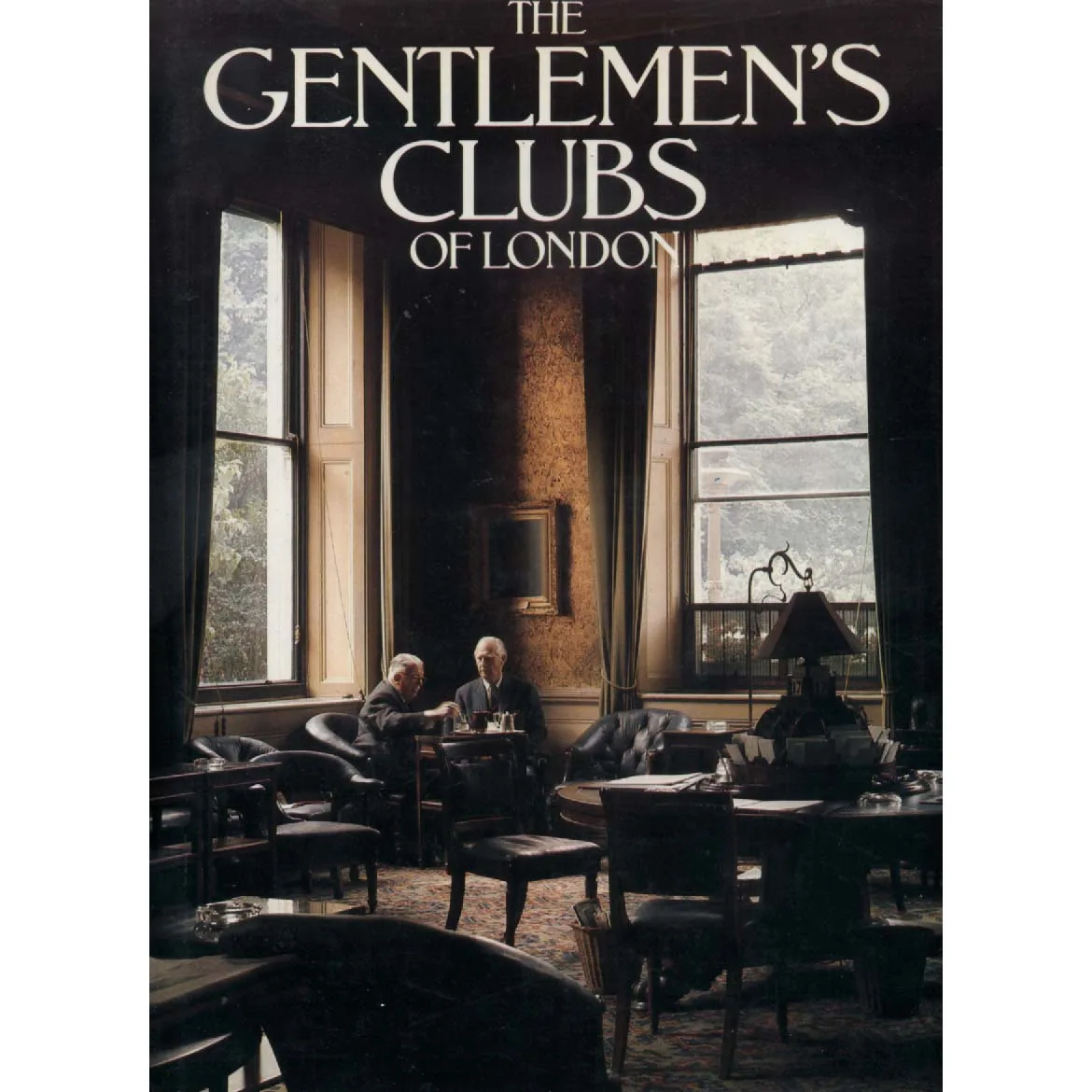
Lejeune’s book captures both the architecture and atmosphere of these places, many of which occupy some of London’s finest interiors. Behind discreet façades lie libraries, dining rooms, staircases, smoking rooms and lounges that seem specifically designed for people who intended to spend several hours doing very little while looking extremely established.
There is also a considerable amount of history wrapped up in these buildings. Prime ministers, generals, diplomats, writers and assorted grandees passed through them, and a surprising amount of British history was discussed in rooms from which most of the British population would have been politely excluded.
Read today, the book inevitably has an additional layer of fascination. The traditional gentlemen’s club belonged to a world of rigid class structures, male-only spaces and social networks that could exercise enormous influence without troubling themselves with anything as vulgar as transparency.
Some clubs have since changed their membership rules, others have adapted more cautiously, and a few appear determined to treat the twenty-first century as an administrative inconvenience that may eventually go away.
That tension between continuity and absurdity is part of what makes the subject so entertaining. At their best, these clubs preserve remarkable buildings, libraries and traditions. At their strangest, they seem like elaborate machines created to ensure that a particular sort of man could always find somewhere quiet to read The Times.
For anyone interested in London history, architecture, British institutions, political and social history, or the rituals of the upper and professional classes, this is a fascinating look behind doors that were historically rather good at remaining closed.
Condition: Used. This is a previously owned copy and therefore has the normal signs of having existed in the world rather than spending its life untouched in a glass case. Entirely appropriate for a book about clubs whose furniture has often been sat on continuously since the reign of Queen Victoria.
ISBN: 0946495149.
A wonderfully atmospheric survey of London’s private clubs and the people, traditions and magnificent interiors associated with them — part architectural history, part social history and part guide to a world where knowing the correct entrance was occasionally more important than knowing why you were there.
Sold by Crappy Old Books — no proposer, seconder or committee ballot required.
Keep browsing: See more History books Other books by Anthony Lejeune
