


Portrait Of A Village
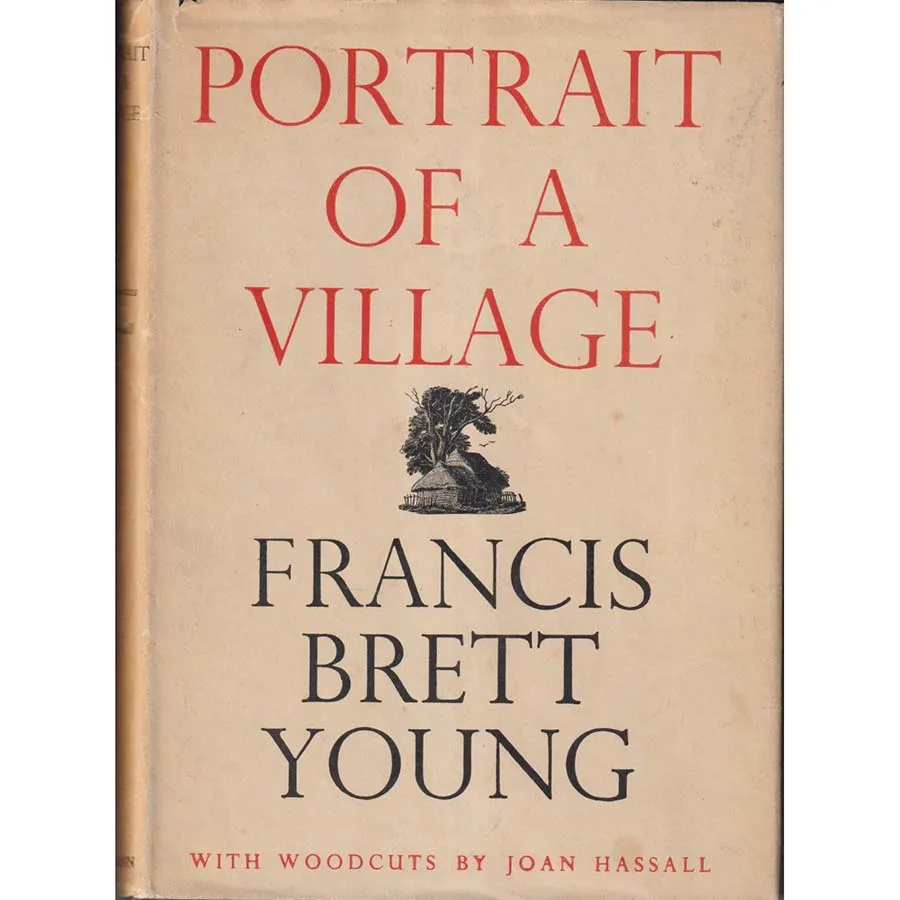
Publisher: Heinemann
Format: Hardback
ISBN: none
Portrait of a Village by Francis Brett Young, published by Heinemann in 1937, is exactly the sort of book title that immediately conjures up church bells, hedgerows, gossip over garden gates and at least one elderly resident who knows precisely what everybody else has been doing since 1894.
Francis Brett Young was a novelist, poet and physician with a particular gift for writing about English places and the people who inhabited them. Here he turns his attention to village life, producing not simply a geographical portrait but something much more interesting: a study of the personalities, habits, traditions and quiet dramas that make a small community function, or occasionally fail to function, while maintaining the outward appearance that absolutely nothing has happened.
Published in 1937, the book comes from a Britain that now feels both familiar and very distant. The village was still a world of local shops, parish loyalties, established families, agricultural rhythms and social hierarchies that everybody pretended not to notice while understanding them perfectly. The wireless was modern technology, motor traffic was becoming troublesome, and nobody had yet invented the phrase "commuter village", although the groundwork was doubtless already being laid.
The charm of books like this lies partly in what the author deliberately records and partly in what slips through unintentionally. Customs, attitudes and assumptions that would have seemed completely ordinary to a reader in the 1930s can now feel like fragments from another civilisation. Houses are occupied differently, work is organised differently, people know their neighbours, and village life has not yet been entirely reorganised around property prices, delivery vans and arguments on Facebook community groups.
Brett Young was well suited to the task. His writing has an eye for landscape but also for character, and Portrait of a Village belongs to that appealing tradition of English writing in which a relatively small patch of countryside can apparently contain enough human ambition, eccentricity, resentment, affection and mild scandal to sustain an entire social universe.
It is also a rather pleasing physical survivor. Published by Heinemann in 1937 and complete with its dustjacket, this is the sort of book that has somehow made it through nearly ninety years without being used to prop up a table, left in a damp shed or enthusiastically covered in wallpaper by a previous owner.
Condition: Very Good, complete with dustjacket. Inevitably there may be some light signs of age and handling consistent with a book published before the Second World War, but this is a particularly nice surviving copy and considerably better than the average elderly volume that has spent the best part of a century being moved from shelf to shelf.
There is no ISBN, because in 1937 books were still identified by their titles, authors and publishers rather than strings of numbers long enough to resemble railway timetables.
A very attractive copy for collectors of Francis Brett Young, English social history, village studies, inter-war literature or simply old books about places where everybody knows everybody else and nobody admits to knowing anything.
Sold by Crappy Old Books — because sometimes the nicest old books are the ones that have survived long enough to become historical evidence by accident.
Keep browsing: See more Fiction books Other books by Francis Brett Young
