


The De Havilland DH-60 Moth
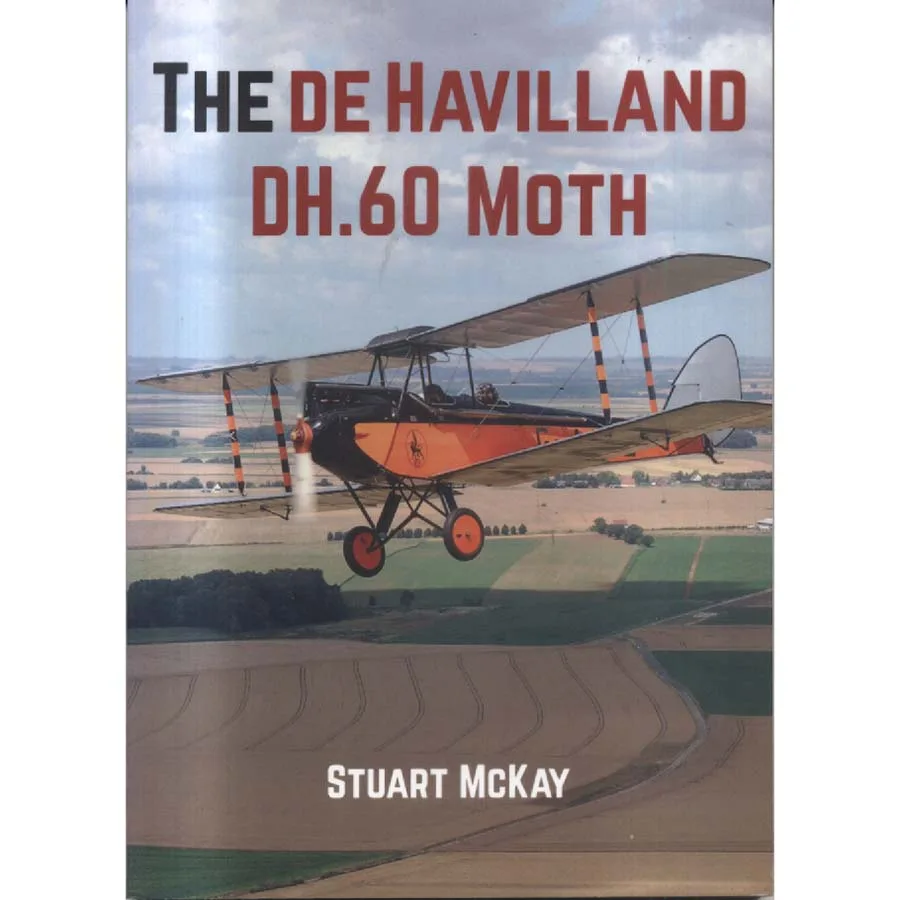
Publisher: Amberley Publishing
Format: Paperback
ISBN: 9781445657233
The de Havilland DH.60 Moth is the story of the little aeroplane that helped persuade interwar Britain that flying need not be reserved exclusively for war heroes, aristocrats and men called Squadron Leader Biffy Fortescue. All one really required was a flying club, a pair of goggles, a tolerant bank manager and a willingness to sit in an open cockpit while the British weather attempted to enter through one’s collar.
First flown in 1925, the DH.60 was a light two-seat biplane with folding wings, an admirably uncomplicated manner and the sort of delicate, wire-braced appearance that suggests it might be assembled from matchsticks and optimism. Yet this was no decorative airborne garden chair. Affordable by the standards of aviation—which is rather like saying a tiara is inexpensive by the standards of crown jewels—the Moth became one of the most important British aircraft of its age.
Stuart McKay charts the complete development of the type, beginning with the Cirrus-powered original and proceeding through the Gipsy Moth, Metal Moth, Moth Trainer, Moth Major and assorted specialist variants. This was an aeroplane endlessly adapted by people who looked at a perfectly serviceable flying machine and asked whether it might also race, break records, land on snow, take off from water, carry bombs or appear in a film. The answer, with a few alterations and another length of wire, was generally yes.
The Moth’s success was helped enormously by Britain’s network of subsidised light aeroplane clubs, which brought flying within reach of people who did not own an ancestral estate, although owning a respectable overcoat remained advisable. Pilots learned their craft in its tandem cockpits, instructors developed nerves of polished steel, and civilians discovered that the countryside looked wonderfully peaceful from above—largely because they could no longer hear anyone complaining about the noise.
It also attracted record-breakers, adventurers and the magnificently unreasonable. Amy Johnson flew her Gipsy Moth, Jason, alone from England to Australia in 1930, thereby demonstrating that distance, weather and conventional expectations were merely administrative inconveniences. Other Moths competed in rallies, attempted altitude records and crossed places that sensible people preferred to examine on maps.
McKay follows the aircraft into military service too, where its pleasant club-flying character acquired machine guns, wireless equipment and bomb racks. It is one of aviation history’s recurring peculiarities that no machine, however charming, is permitted to remain charming for long before somebody in uniform asks whether explosives can be attached to it.
Across 128 generously illustrated pages, including around 100 photographs in colour and black and white, the book examines the Moth’s design, engines, construction, many variants and extensive international career. Floats and skis appear. Wings are folded. Engines become more powerful. Fuselages become metallic. Pilots continue to pose beside their aircraft with the composed expression of people who have absolutely not just survived an alarming landing.
The DH.60 would also help establish an entire dynasty of insect-named de Havilland aircraft and contribute directly to the development of the Tiger Moth. This was evidently a period when naming an aeroplane after something that eats one’s clothes was considered both dignified and commercially persuasive.
There is plenty here for the serious aviation historian, the vintage-aircraft enthusiast, the modeller seeking visual detail and anyone who believes modern flying has been diminished by enclosed cabins, safety briefings and the regrettable absence of silk scarves. It is a compact but comprehensive tribute to a machine that made private aviation seem almost attainable and adventure seem merely a matter of filling the tank.
This copy is in As New condition, looking remarkably fresh for a book about aircraft whose natural habitat included muddy grass fields, draughty hangars and pilots carrying spanners in their pockets. The pages are clean, the binding is sound and the whole thing appears to have remained safely grounded since publication.
From Crappy Old Books—bringing you distinguished aviation history without expecting you to start an engine by swinging a propeller and shouting “contact.”
Keep browsing: See more Transport books Other books by Stuart McKay
