


The Strange Death Of David Kelly
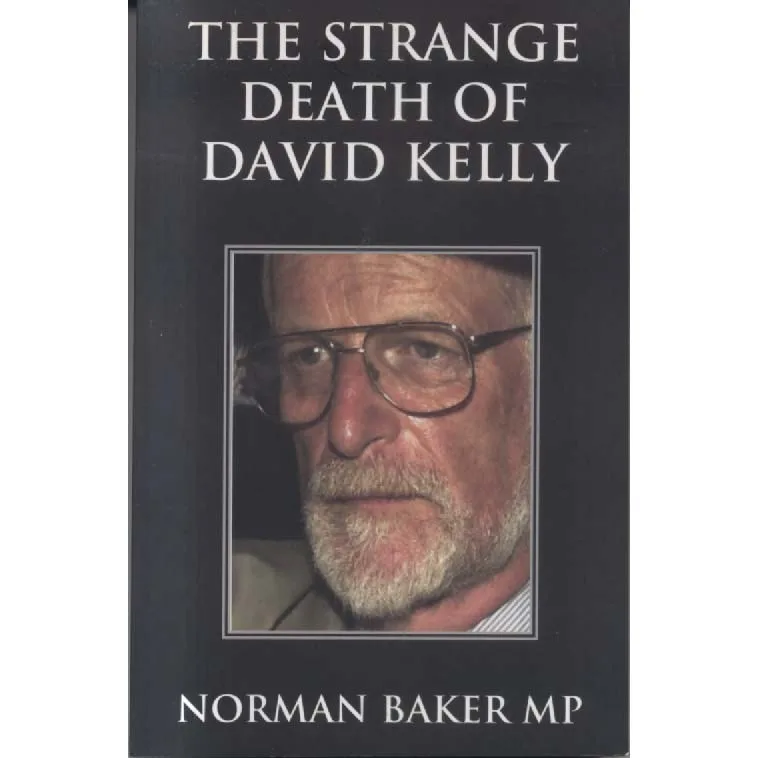
Publisher: Methuen
Format: Paperback
ISBN: 9781842752173
The Strange Death of David Kelly is for anyone who watched the Hutton Inquiry, listened carefully to the official explanation and was left with the nagging feeling that several important pages had been stapled together. Liberal Democrat MP Norman Baker takes those pages apart, places them beneath a very bright parliamentary lamp and asks why the death of Britain’s leading weapons expert was investigated with rather less curiosity than a disputed parking ticket.
Dr David Kelly was a microbiologist, former United Nations weapons inspector and one of Britain’s foremost authorities on biological warfare. He knew an inconvenient amount about Iraq’s weapons capabilities at precisely the moment Tony Blair’s government was explaining that Saddam Hussein possessed weapons of mass destruction which could be deployed within forty-five minutes. The invasion proceeded; the weapons failed to report for duty.
Kelly had spoken privately to BBC journalist Andrew Gilligan, whose subsequent report alleged that the government had “sexed up” its intelligence dossier. Whitehall began searching for Gilligan’s source, Kelly’s name entered the public domain and he was summoned before televised parliamentary committees. There he was questioned, contradicted and publicly displayed as the unfortunate human component in a struggle between Downing Street and the BBC.
Two days later, Kelly was found dead in woodland near his Oxfordshire home. The official conclusion was suicide, involving a cut wrist and an overdose of painkillers. Instead of a normal coroner’s inquest, the government established the Hutton Inquiry, which examined the circumstances of the death, cleared the government of wrongdoing and subjected the BBC to such criticism that its chairman and director-general resigned. Downing Street had survived; the BBC had been punished; and the dead man remained unavailable for further clarification.
Norman Baker is not persuaded. He examines the medical evidence, blood loss, toxicology, position of the body, missing fingerprints, witness accounts, police procedure and timings surrounding the discovery. Again and again he finds details which, in his view, do not fit comfortably inside the official box, however firmly the lid was pressed down.
Baker also looks at Kelly’s state of mind, professional background and the interests of governments, intelligence agencies and Iraqi political groups. He considers who might have wanted Kelly silenced and what further information he might have revealed. This produces a crowded waiting room of possible motives, though motives are not evidence and intelligence services are notoriously reluctant to provide customer references.
His conclusion is unequivocal: he does not believe Kelly killed himself and argues that the death was murder. That remains a disputed claim, rejected by the official inquiry, many commentators and members of Kelly’s own family. The book is therefore an investigation and prosecution case, not a universally accepted solution. Readers must decide whether Baker exposes fatal gaps in the official account or builds too much upon anomalies which possess less sinister explanations.
What cannot be disputed is the extraordinary political setting: a war launched upon intelligence that proved catastrophically unreliable, a government fighting for its credibility, a BBC defending its journalism and a quiet scientist suddenly placed beneath national scrutiny. Even readers unconvinced by Baker’s final verdict may find his questions uncomfortable, especially since “nothing to see here” is rarely improved by seventy-year restrictions on documents.
Dogged, detailed and written with the persistence of an MP who has located a locked filing cabinet and would like to know who has the key, The Strange Death of David Kelly revisits one of the darkest episodes arising from the Iraq War. It is political investigation with the atmosphere of a thriller, except that the death was real, the weapons were not found and no novelist would have dared make the official machinery quite so peculiar.
This 2007 Methuen edition is in As New condition—clean, fresh and apparently handled with considerably greater care than the evidence discussed inside. A compelling book for readers interested in modern British politics, the Iraq War, intelligence controversies and official explanations which arrive neatly typed but somehow fail to stop everybody asking questions.
Keep browsing: See more Crime books Other books by Norman Baker
