


Boudica
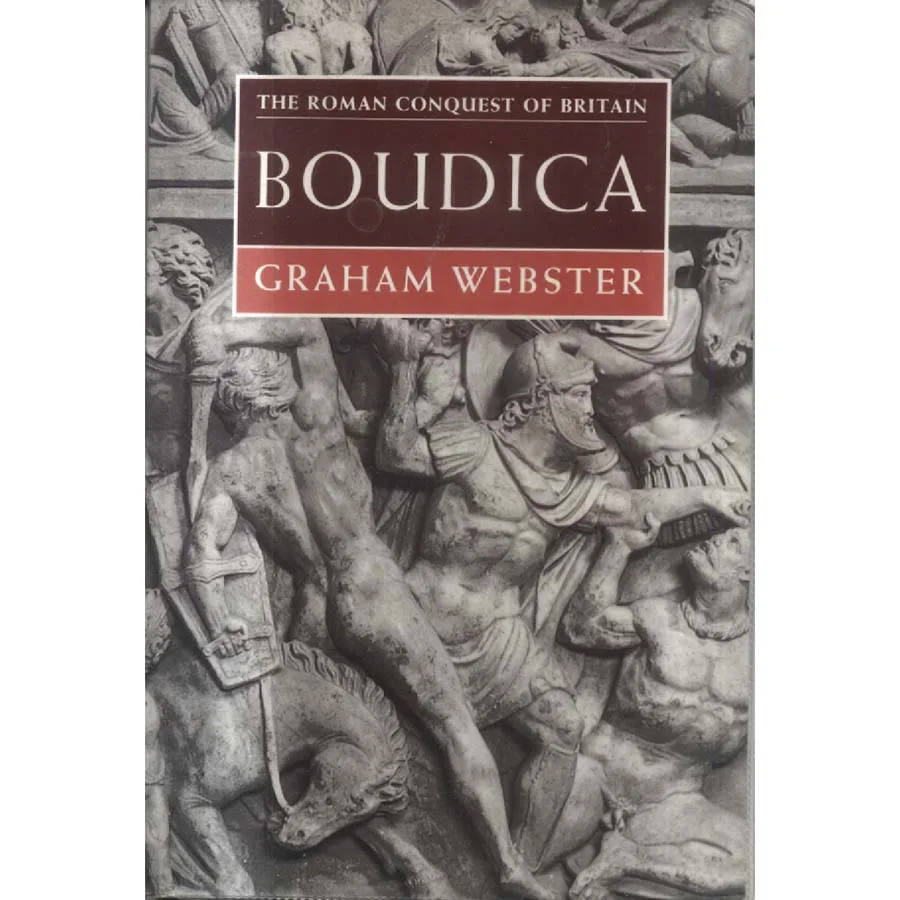
Publisher: BT Batsford
Format: Paperback
ISBN: 9780713472554
Boudica: The British Revolt Against Rome AD 60 examines the great uprising led by the queen of the Iceni against Roman rule in Britain—a campaign which began with an imperial administrative decision and ended with three Roman towns destroyed, thousands dead and the occupying authorities discovering that humiliating a warrior queen may not have been the smoothest route to provincial stability.
When Boudica’s husband, Prasutagus, died, he attempted to preserve his family and kingdom by leaving his wealth jointly to his daughters and the Roman emperor Nero. This was an optimistic piece of estate planning based upon the assumption that Rome would regard “jointly” as an instruction rather than an opening negotiating position. Roman officials instead annexed the territory, confiscated property, flogged Boudica and raped her daughters.
The Iceni responded by rebelling, joined by the neighbouring Trinovantes and other Britons with grievances against Roman rule. There was no shortage of volunteers. Taxation, land seizure, debt, military occupation and the conduct of Roman veterans had ensured that the benefits of civilisation were becoming difficult to distinguish from organised extortion, although the Romans had provided roads on which complaints could travel more efficiently.
Boudica’s forces first attacked Camulodunum, modern Colchester, a Roman colony dominated by former soldiers and crowned by a vast temple to the emperor Claudius. The town was poorly defended and thoroughly destroyed. The temple’s surviving defenders held out briefly before being overwhelmed, demonstrating that monumental architecture is not an adequate substitute for reinforcements.
The rebels then moved against Londinium and Verulamium, modern London and St Albans. Both settlements were burned, and archaeological layers of destruction still provide physical evidence of the revolt. London’s future as an expensive building site was temporarily interrupted, but not permanently discouraged. Roman residents and supporters caught by the advancing Britons were killed in enormous numbers, and what had begun as resistance became a campaign of vengeance without much interest in taking prisoners.
Meanwhile, the Roman governor Gaius Suetonius Paulinus hurried back from campaigning against the druids on Mona, now Anglesey. With a much smaller but disciplined force, he selected a strong defensive position and waited for Boudica’s vast army. The precise location of the final battle remains uncertain, allowing numerous modern towns to claim it with a confidence unavailable to the evidence.
The Romans won decisively. Their training, armour and formation tactics turned the British numerical advantage into chaos, while the rebels’ own wagons and watching families obstructed retreat. Boudica either poisoned herself or died from illness, depending upon which Roman account one accepts. Her grave has never been found, although imaginative tradition has placed it beneath King’s Cross station, presumably because even a defeated warrior queen deserves convenient transport connections.
Archaeologist Graham Webster reconstructs the revolt from the surviving literary sources—principally Tacitus and Cassius Dio—and from archaeological evidence. He examines the political background, tribal society, Roman occupation, military operations and possible route of the rebellion, carefully separating what can be supported from the splendid additions supplied by later legend. There are fewer flowing red wigs and scythed chariots here than popular culture might prefer, but considerably more historical substance.
This revised 1993 Batsford edition offers a concise, illustrated study of Boudica and the crisis that nearly destroyed Roman control in southern Britain. It presents her neither simply as a patriotic national heroine nor as the barbarian monster of Roman propaganda, but as the leader of a revolt born from colonial arrogance, personal outrage and the Roman Empire’s temporary failure to understand cause and effect.
The book is in Very Good condition and comes in a plastic protective sleeve, giving it more effective external defence than Camulodunum received in AD 60. A strong choice for readers interested in Roman Britain, archaeology, ancient warfare and the historical consequences of treating a queen’s inheritance as available office stationery.
Keep browsing: See more History books Other books by Graham Webster
