


William Blake - The Complete Poems
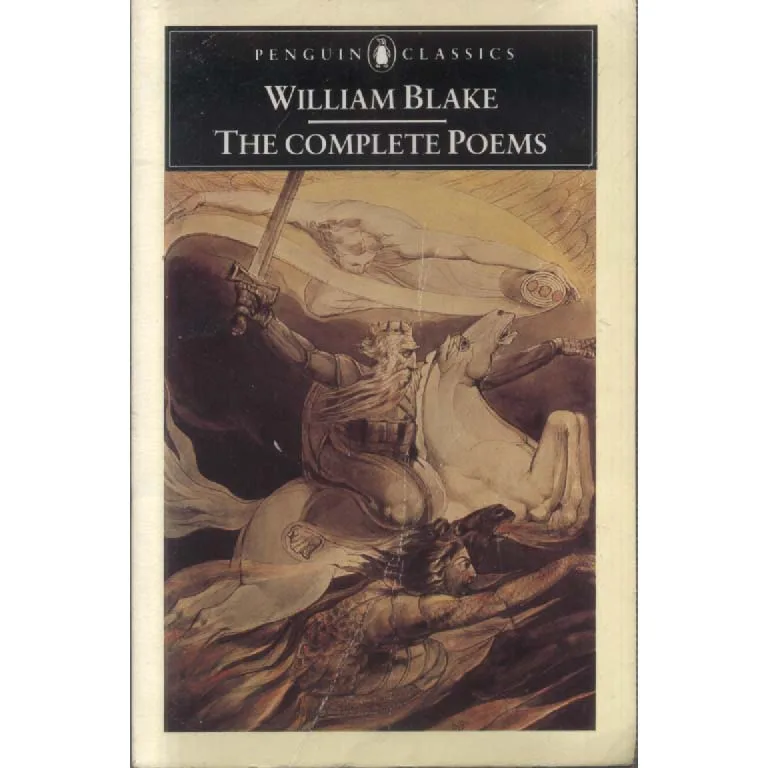
Publisher: Penguin Classics
Format: Paperback
ISBN: 9780140422153
William Blake: The Complete Poems gathers the poetic works of England’s visionary engraver, mystic, radical and professional observer of angels in trees. Blake lived from 1757 to 1827, during which time he wrote poems, produced illuminated books, challenged organised religion, distrusted industrial civilisation and developed a private mythology sufficiently complicated to make Greek mythology look like a neighbourhood WhatsApp group.
The collection includes the deceptively simple Songs of Innocence and of Experience, where lambs, children and chimney sweeps inhabit a world poised between divine wonder and social cruelty. Familiar poems such as The Lamb, The Tyger, London and The Chimney Sweeper appear here in their proper surroundings, reminding us that Blake’s apparently nursery-like verses frequently contain politics, theology and enough suppressed fury to alarm a bishop.
Blake’s innocent world is full of joy, imagination and spiritual possibility; his experienced world contains poverty, repression, hypocrisy and institutions busily converting human life into something more manageable. Churches preach charity beside starving children, governments celebrate liberty while maintaining chains, and adults explain that everything is regrettable but necessary. Blake was never persuaded. Where respectable society saw order, he often saw people who had become accustomed to the prison furniture.
Beyond the famous shorter poems lie the great prophetic books, including The Marriage of Heaven and Hell, The Book of Urizen, Milton and Jerusalem. Here Blake unleashes his own cosmic cast—Urizen, Los, Enitharmon, Orc and numerous other beings whose family arrangements would benefit from both a diagram and professional mediation. They struggle across spiritual landscapes representing reason, imagination, repression, revolution and the divided human self.
These longer works are magnificent, bewildering and fiercely individual. Blake did not wait for an existing mythology to express his ideas; he manufactured one himself and declined to include a convenient instruction manual. The reader may therefore experience revelation, confusion or the strong suspicion that everyone else in the seminar is pretending to understand more than they do. This is entirely normal and possibly part of the design.
Throughout the poems, Blake attacks what he called the “mind-forged manacles”: the mental habits and social systems that restrict human freedom. He opposed tyranny in politics, cold rationalism in philosophy and joyless authority in religion, believing that imagination was not an ornamental luxury but the divine faculty within humanity. He also distrusted conventional morality whenever it appeared excessively interested in preventing other people from enjoying themselves.
This complete collection reveals far more than the author of a few anthology favourites. Blake was lyrical and apocalyptic, tender and furious, accessible in one poem and magnificently ungovernable in the next. His work ranges from songs a child can understand to vast prophetic visions that generations of scholars have approached with pencils, concordances and an expression of controlled concern.
This 1977 Penguin Classics edition is in Very Good condition—well preserved and ready to open the doors of perception without requiring the reader to encounter an archangel on Peckham Rye. Essential for students of English poetry, admirers of Romanticism and anyone who has ever looked at a tiger and felt that “quite stripy” was not an adequate critical response.
Keep browsing: See more Poetry books Other books by William Blake
