


The Rape Of Nanking - The Forgotten Holocaust Of World War II
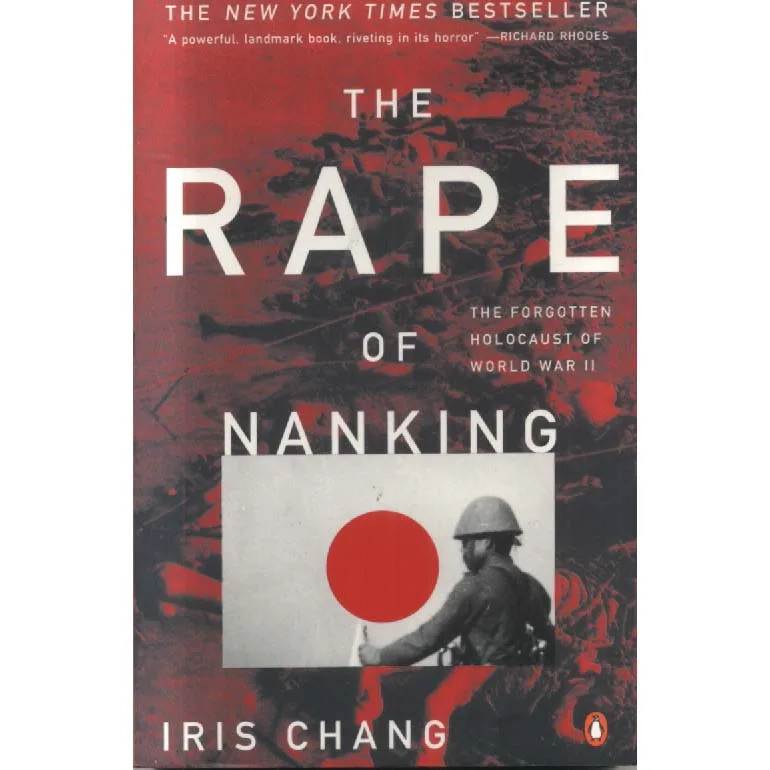
Publisher: Penguin Books
Format: Paperback
ISBN: 9780140277449
Iris Chang’s The Rape of Nanking is not the sort of Second World War book that allows history to sit comfortably behind dates, maps and military arrows. It concerns the Japanese capture of Nanking in 1937 and the massacre, rape, torture and destruction that followed: one of the most appalling atrocities of the twentieth century, and one that for decades was too often pushed to the edge of Western memory while other horrors took up the available space.
The subtitle, The Forgotten Holocaust of World War II, is doing exactly what it means to do. Chang’s book is an act of recovery, accusation and refusal. It looks at what happened to Chinese civilians and disarmed soldiers after the fall of the city, drawing on survivor testimony, diaries, documents and the accounts of foreign residents who witnessed the violence and, in some cases, tried desperately to protect those they could. It is not a comfortable book, and comfort would be a grotesque ambition.
There is a bitter historical irony here. Nanking was not hidden because it was small, ambiguous or somehow lacking in horror. It was hidden because memory is political, archives are selective, victors and defeated nations alike prefer usable stories, and the world has a long record of looking away when looking directly would demand too much moral labour. Atrocity does not disappear by accident. It is misplaced, softened, disputed, minimised, filed badly, or left to survivors to carry until someone finally asks to see the evidence.
Chang writes with urgency because the subject requires it. This is a book about violence, but also about denial; about massacre, but also about remembrance; about what human beings did, and what later human beings preferred not to discuss. The facts are terrible enough, but the afterlife of the facts matters too. What is remembered? What is disputed? Who is believed? Who is made to prove suffering that should never have required a second hearing?
The book also records courage in the middle of ruin: the foreigners who established the Nanking Safety Zone, the witnesses who documented events, the survivors who endured and later spoke, and the fragile efforts to preserve truth against time, politics and exhaustion. None of this redeems the horror, because horror of this kind is not redeemed. But it does matter that the record exists, and that the dead are not left entirely to the convenience of silence.
For readers of Second World War history, Asian history, war crimes, genocide studies, Japanese imperial history, survivor testimony and the politics of historical memory, this is a major and deeply disturbing work. It belongs on the shelf where history is not allowed to become tidy simply because tidiness is easier to sell.
As New copy, as sold by Crappy Old Books. A clean, sharp Penguin copy of a book about events that were anything but clean, sharp or bearable. The condition is excellent; the contents are not for the faint-hearted, nor should they be.
Keep browsing: See more War books Other books by Iris Chang
