


Blacketts War - The Men Who Defeated The Nazi U-Boats And Brought Science To The Art Of Warfare
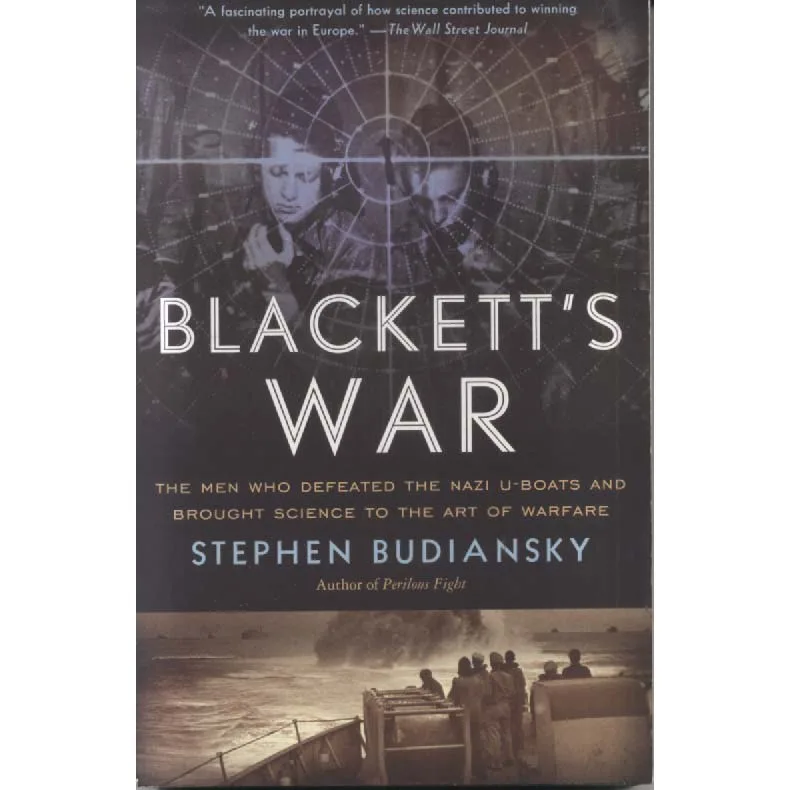
Publisher: Vintage Books
Format: Paperback
ISBN: 9780307743633
Stephen Budiansky’s Blackett’s War is about the deeply satisfying moment in the Second World War when clever people with pencils, statistics and insufficient reverence for tradition began making warfare less romantic and more effective. At the centre is Patrick Blackett, physicist, Nobel laureate, former naval officer, scientific bruiser, and one of the key figures in operational research: the art of looking at what the military was doing, counting what actually happened, and then gently implying that everyone might stop guessing quite so expensively.
The great problem here is the U-boat war. German submarines were sinking Allied shipping at a terrifying rate, and the Atlantic had become a vast, cold accounting exercise in lives, tonnage, escorts, aircraft, convoys, fuel, radar, depth charges and bad weather. The old way of fighting was full of courage, instinct, rank and doctrine, all admirable things unless they are wrong. Blackett and his colleagues brought in data, probability, analysis, experiment and the rude habit of asking whether cherished assumptions survived contact with evidence.
This is the story of scientists being let loose on war, which sounds neat until one remembers that the armed services are not always delighted when civilians arrive with graphs and suggest the admirals may have misunderstood the sea. Blackett’s teams studied convoy tactics, anti-submarine warfare, radar use, aircraft patrols, depth-charge settings, loss rates and all the grim little variables by which ships either reached port or became coordinates. They did not make the war clean; they made parts of it less stupid, which in wartime is no small moral achievement.
The irony is magnificent. The U-boat battle conjures images of grey seas, wolf packs, destroyers, periscopes and men listening tensely in darkened rooms. Behind that drama, Budiansky shows another battlefield: tables, calculations, reports, arguments, chalkboards and awkward scientists proving that heroism works better when aimed correctly. A single change in tactics, derived from analysis rather than tradition, could save ships and lives. The pencil, properly sharpened, became an anti-submarine weapon.
Blackett himself makes a fine central figure because he was not merely clever, but usefully difficult. War loves hierarchy; science loves evidence; operational research forced them into the same room and waited to see which would blink first. The result was a quiet revolution in how decisions were made. Instead of asking what sounded plausible, Blackett’s people asked what the numbers said. This is a very dangerous question in any institution, because the numbers often have appalling manners.
For readers of Second World War history, U-boat warfare, science in war, operational research, radar, convoy battles, military innovation and the long overdue humiliation of guesswork, this is splendid material. It is not a book of glamorous charges or flag-waving thunder. It is about the colder, stranger victory of thought over habit, and the discovery that even in war, perhaps especially in war, being wrong confidently is still being wrong.
Good copy, as sold by Crappy Old Books. A solid Vintage paperback about the men who brought mathematics to the Atlantic fight and helped make Nazi submarines regret several statistical developments. Ideal for anyone who likes their war history with ships, science, arguments, and the excellent spectacle of boffins quietly improving the odds.
Keep browsing: See more War books Other books by Stephen Budiansky
