


The Art Of Pencil Drawing
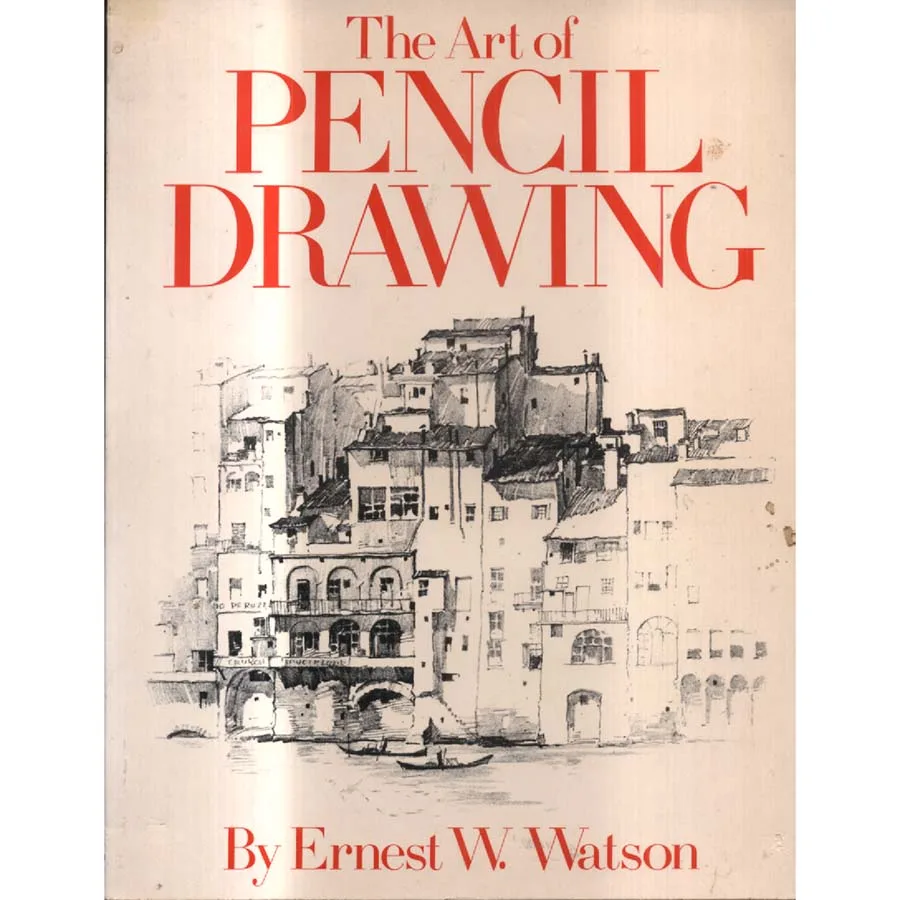
Publisher: Watson-Guptill
Format: Paperback
ISBN: 0823002764
Ernest W. Watson’s The Art of Pencil Drawing is a book about that most dangerous of humble objects: the pencil. It looks innocent enough, sitting there in the pot between a dead biro and a ruler nobody uses, but in the right hands it becomes line, shadow, texture, form, light, atmosphere, architecture, landscape, figure, expression and the quiet humiliation of everyone who still cannot draw a chair without making it look medically unusual.
This is a practical art book from the old school, the sort that assumes drawing is not a mystical accident but a discipline involving looking, measuring, practising, correcting, shading, observing edges, understanding tones, and resisting the modern temptation to call every wonky mark “expressive.” Watson takes the pencil seriously because the pencil deserves it. It is cheap, portable, erasable, versatile and brutally honest. Paint may occasionally flatter. A pencil line usually tells the truth and then sits there looking at you.
The book explores the craft of pencil work: line control, tone, composition, texture, light and shade, drawing from life, handling different subjects and getting the hand to behave in some civilised relationship with the eye. There is pleasure here in the simplicity of the medium. No solvent, no palette, no glamorous tubes of colour, no heroic studio drama. Just graphite, paper, patience and the dawning realisation that a shadow is not merely “the dark bit,” but an entire moral education.
There is a lovely irony in instructional drawing books. They make drawing look calm. The examples sit on the page with quiet authority: roofs recede, trees have bark, bottles are round, cloth folds properly, and everything appears to have made peace with perspective. Then the reader tries it and discovers that the hand is a treacherous animal. This is why books like Watson’s are useful. They do not promise instant genius. They offer method, which is less glamorous but much more likely to survive contact with a sketchbook.
For beginners, improvers, returning artists, art students, hobbyists, draughtsmen, and anyone who has ever bought pencils in a fit of optimism and then avoided eye contact with them for six months, this is a solid, encouraging guide. It belongs on the shelf beside sketchpads, sharpeners, erasers, and that one drawing you keep because it nearly worked.
Good copy, as sold by Crappy Old Books. A decent Watson-Guptill art manual, ready to assist in the ancient struggle between intention and wrist. No guarantee that your first drawing will resemble the object, but it will at least fail in a more informed and graphite-rich manner.
Keep browsing: See more Crafts books Other books by Ernest W Watson
