


Air Power And The Ground War In Vietnam - Ideas And Actions
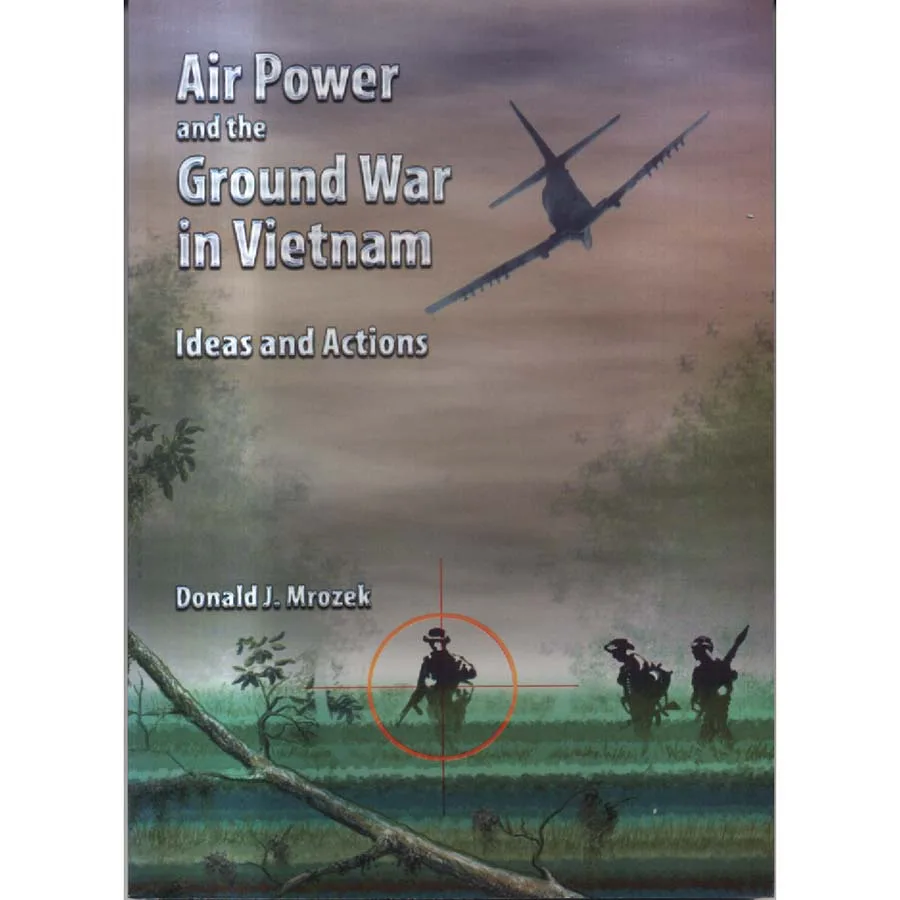
Publisher: Air University Press
Format: Paperback
ISBN: 1585660159
Donald J. Mrozek’s Air Power and the Ground War in Vietnam is about the uncomfortable meeting point between aircraft, theory, jungle, politics and people on the ground who had a rude habit of not behaving like targets in a briefing room. Vietnam was supposed to prove many things about modern air power, most of them confidently stated by men near maps. What it actually proved was that ideas can fly very high and still land badly.
This is a study of how American air power was conceived, argued for, organised and used in relation to the ground war in Vietnam. The subtitle, Ideas and Actions, does a great deal of quiet work. Ideas are where air power always looks cleanest: speed, reach, pressure, interdiction, mobility, fire support, strategic effect, the elegant promise that technology can make war more manageable. Actions are where the helicopters get shot at, the weather closes in, the enemy disperses, the jungle absorbs the violence, and the whole tidy concept has to explain itself to infantrymen.
Mrozek examines doctrine, command, close air support, interdiction, mobility, strategy and the tangled relationship between what airmen believed air power could do and what the war actually demanded. Vietnam was not a neat conventional battlefield waiting politely to be serviced from above. It was villages, trails, forests, politics, guerrilla forces, regular units, supply routes, sanctuaries, shifting objectives and a great deal of ambiguity. Dropping ordnance on ambiguity has rarely been a complete solution, though it has certainly been attempted with enthusiasm.
The irony of the subject is that air power in Vietnam was both astonishingly capable and profoundly frustrated. The machines were real, the courage was real, the logistical achievement was real, the firepower was real. Yet the war kept escaping the logic imposed on it. Aircraft could move men, evacuate wounded, strike targets, scout, support, intimidate and destroy, but they could not by themselves make political purpose coherent or turn a contested society into a solved equation. This is the sort of point that tends to be more obvious after the bombs have been dropped.
There is a whole drama here between institution and terrain. Air forces like doctrine, categories, missions and measurable effect. Vietnam offered mud, canopy, hidden movement, uncertain intelligence, civil-military friction, and enemies who understood that not being visible is a useful military policy. The ground war needed air power constantly, yet also exposed its limits constantly. It was indispensable, and not enough. History enjoys that sort of cruelty.
For readers of Vietnam War history, air power theory, military doctrine, close air support, counterinsurgency, and the repeated human experiment of sending expensive machines to solve problems invented by politics, this is a serious and valuable volume. It is not a cockpit memoir or a heroic air-war album. It is the colder thing: an examination of what people thought air power meant, what they tried to make it do, and what happened when Vietnam answered back.
Good copy, as sold by Crappy Old Books. A solid Air University Press study, ready for the military-history shelf where theories, aircraft and ground realities can continue their long, awkward conversation without anyone pretending the map ever had the final word.
Keep browsing: See more War books Other books by Donald J Mrozek
