


North American F-86 Sabre
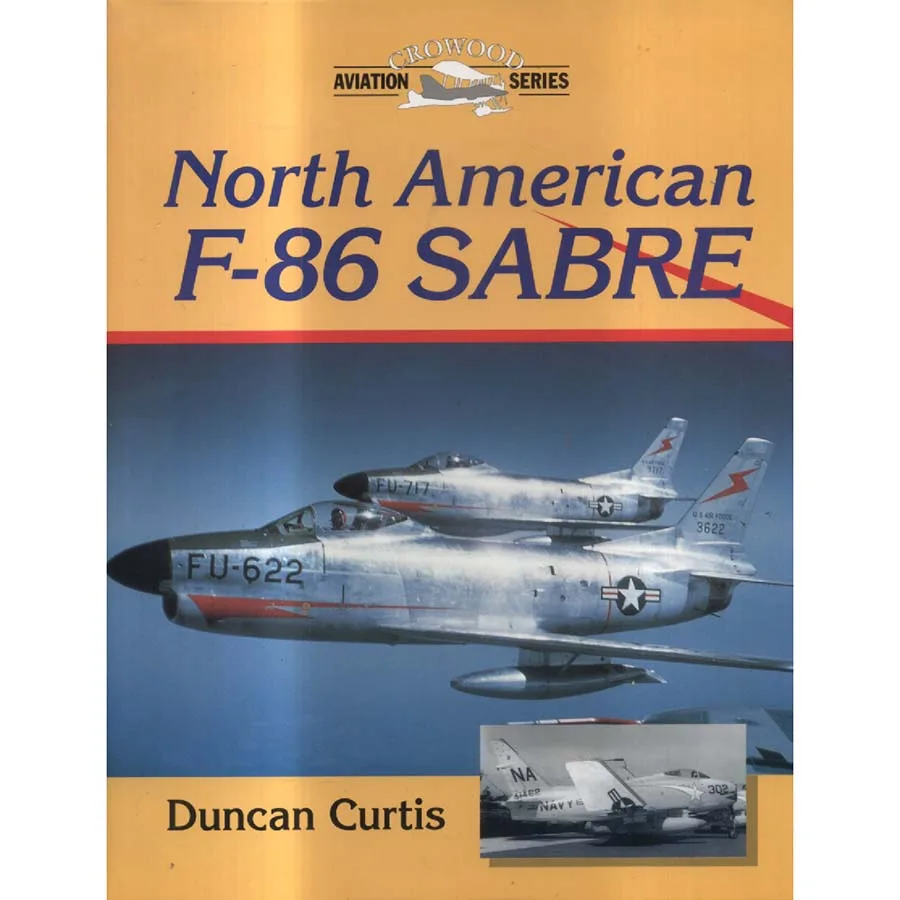
Publisher: Crowood Press
Format: Hardback
ISBN: 9781861263582
Duncan Curtis’s North American F-86 Sabre is about the jet fighter that managed to look both elegant and dangerous, like a polished cigarette case with machine guns. The Sabre arrived in the early jet age when everyone was still discovering that propellers had become socially awkward, swept wings were the coming thing, and the sky over Korea was about to become a very serious argument in aluminium.
The F-86 Sabre is most famous for its duels with the MiG-15 in the Korean War, where two swept-wing jets circled one another in the thin air and the future of air combat stopped being theoretical. The Sabre had speed, agility, guns, visibility, handling, pilots with nerve, and the immense advantage of being on the right side of several good design decisions. Against the MiG it became the West’s great Cold War fighter icon: sleek, silver, fast and photogenic enough to make danger look properly tailored.
Curtis gives the aircraft the Crowood treatment: development, variants, production, service history, operators, technical detail, photographs and that pleasingly granular aircraft-book territory where every mark, intake, wing change and national user gets its moment in the hangar light. The Sabre’s career was not just Korea. It served widely, evolved repeatedly, crossed borders, joined air forces around the world and became one of those aircraft whose silhouette can still make enthusiasts pause with the solemnity usually reserved for churches and well-kept sheds.
There is a fine irony in the Sabre’s beauty. It looks so clean, so balanced, so almost gentle in profile, and yet its job was to chase other aircraft through the sky and make holes in them at enormous speed. Early jets often had a certain experimental awkwardness, as if designers were trying to invent the future using slide rules and courage. The Sabre, by contrast, looked as though the future had finally combed its hair. It was not just functional; it had style, which is always useful when one is helping to define an era.
The Sabre also sits at that fascinating hinge point in aviation history: after the piston fighter mythology, before missiles took over the conversation, when air combat still meant guns, turning fights, pilot judgement and the alarming intimacy of seeing the other aircraft properly. It belongs to the last great age when fighter combat could still look, in outline, like the old duels, though now performed at jet speed by men in pressure suits rather than silk scarves and bad ideas.
For readers of Korean War aviation, Cold War fighters, North American aircraft, jet development, model building, or silver aircraft with enough glamour to make museum lighting nervous, this is excellent shelf material. It has the sensible Crowood balance of readable history and enthusiast detail, all devoted to a fighter that earned its reputation in the hard way, which is apparently the only way aircraft reputations are allowed to count.
As New copy, as sold by Crappy Old Books. Crisp, clean and far less battle-worn than the subject, which spent its finest hours turning the Korean sky into a swept-wing examination room. A very smart copy of a very smart jet-book, ready for the aviation shelf without so much as a scuff in its flight log.
Keep browsing: See more War books Other books by Duncan Curtis
