


English Electric Lightning
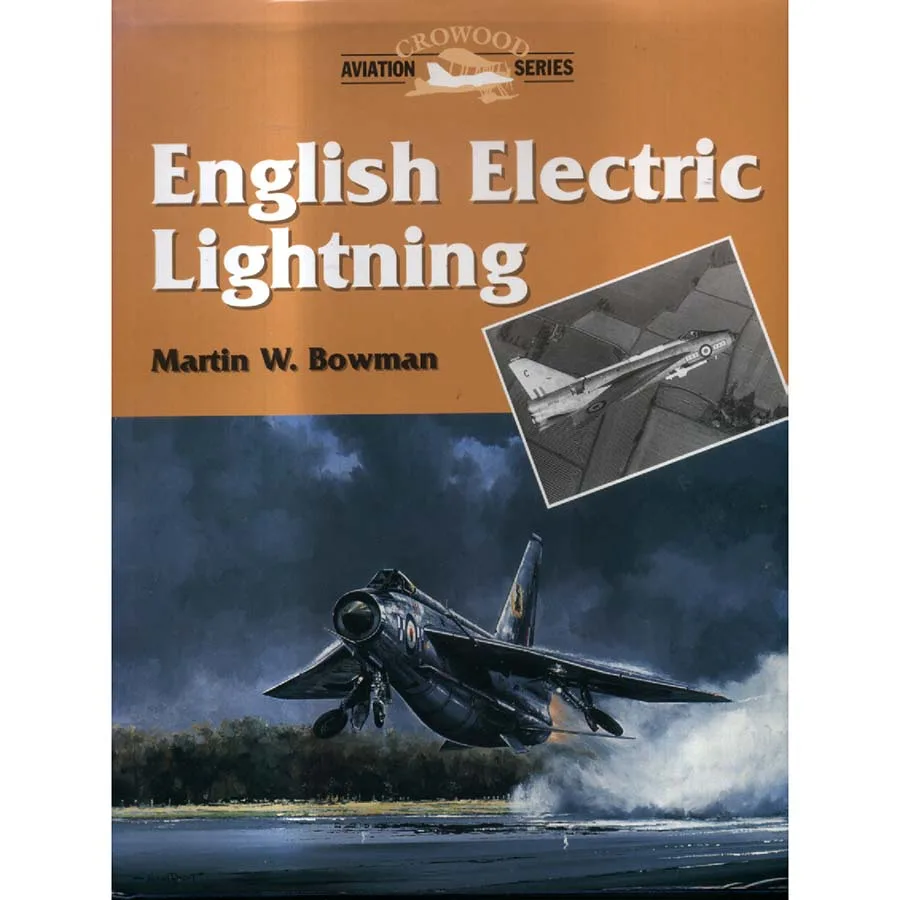
Publisher: Crowood Press
Format: Hardback
ISBN: 9781861260994
Martin W. Bowman’s English Electric Lightning is about Britain’s supersonic interceptor, an aircraft that seems to have been designed by people who looked at the sky and decided it was taking too long. The Lightning was not a gentle negotiation with altitude. It was two Avon engines, a sharp nose, swept wings, very little patience, and a national air-defence policy that involved going upwards at an indecent rate before anyone on the ground had fully finished their tea.
This Crowood volume gives the Lightning the serious treatment: design, development, variants, squadron service, pilots, performance, weapons, export use, photographs and the sort of technical detail that makes aircraft enthusiasts quietly happy and normal readers realise they have wandered into a very specialised weather system. The Lightning deserves that attention because it was never a generic Cold War jet. It was unmistakably itself: stacked engines, belly tank, overwing tanks on later marks, short endurance, ferocious climb, and a silhouette that still looks as though it is late for an interception.
The great Lightning paradox is that it was both brilliant and faintly absurd, which is often where the best British machines live. It could climb with astonishing violence, intercept high and fast, and give RAF pilots the kind of performance that turned anecdotes into lifelong facial expressions. It could also run short of fuel with the brisk confidence of a machine that considered endurance someone else’s department. A Lightning did not loiter. A Lightning arrived, dealt with matters, and then expected everyone to have arranged a runway.
Bowman traces the aircraft through its operational life, from Cold War alert duties to later service, as the RAF used it to guard the skies during a period when unidentified radar contacts were not treated as conversation starters. The Lightning sat waiting in QRA sheds like a polished argument, ready to be thrown into the air at Soviet bombers, wandering aircraft, exercises, alarms and all the other nervous little rituals of the age. It was a machine built for a world where minutes mattered and subtlety had been cancelled.
There is a peculiar sadness in books about the Lightning, because every photograph seems to carry the same message: we really made this, and then eventually we stopped. Modern aircraft may be cleverer, smoother and more economical, but the Lightning had theatre built into its bones. It looked fast when parked. It made verticality seem patriotic. It was the sort of aircraft that turned children into aviation people and aviation people into men who can identify marks from tank arrangements at a troubling distance.
For RAF collectors, Cold War aviation readers, Lightning devotees, model makers and anyone who thinks the best aircraft are those with both engineering genius and personal flaws, this is proper shelf material. It has the reliable Crowood mixture of readable history, photographs and detail, all devoted to a jet that made restraint look like a foreign concept.
Near Fine copy, as sold by Crappy Old Books. A sharp, tidy example of a book about a sharp, untidy-in-principle machine. No obvious wear, no need for reheat, and ready to sit proudly among the aviation books while silently judging anything with a sensible fuel range.
Keep browsing: See more War books Other books by Martin W Bowen
