


English Electric Lightning
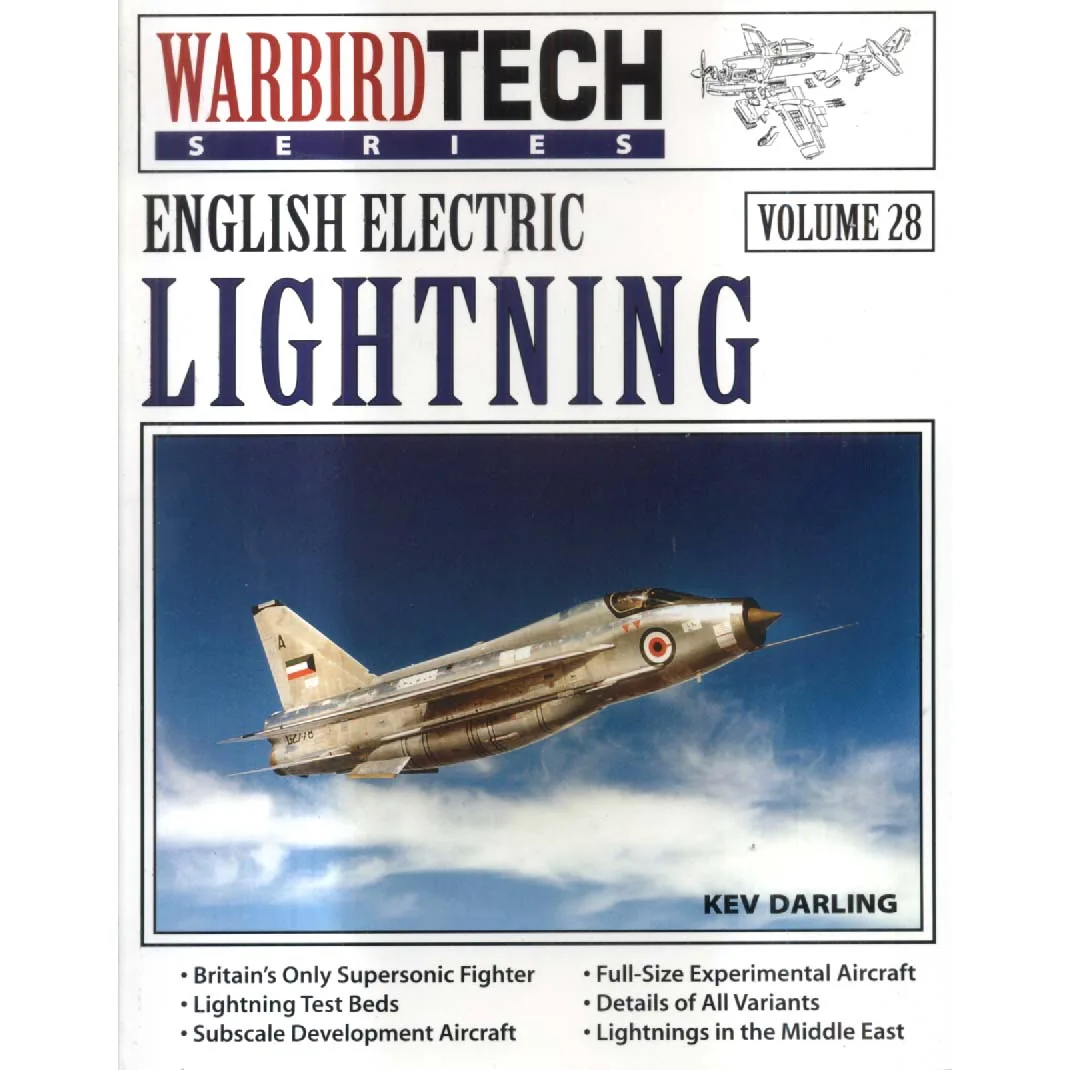
Publisher: Specialty Press
Format: Paperback
ISBN: 9781580070287
Kev Darling’s English Electric Lightning is devoted to Britain’s great supersonic interceptor, an aircraft that seemed to have been designed after someone in a committee room said, “Can we make it go up very quickly?” and nobody sensible was invited back. The Lightning was sleek, brutal, vertical, thirsty, alarming and faintly miraculous: two engines stacked like an engineering dare, wings sharp enough to look impatient, and a mission profile that amounted to spotting trouble on radar and climbing at it as if personally offended.
This is not an aircraft that crept into aviation history. It arrived with noise, vapour, reheated fury and a fuel consumption habit that must have made accountants stare into the middle distance. Built for the Cold War air-defence role, the Lightning was intended to intercept fast, high-flying threats before they could become something much worse than an interesting radar return. It was the RAF’s silver shout into the upper atmosphere, a machine that could make altitude look less like a measurement and more like a challenge.
Darling’s book gives the type a proper illustrated and technical treatment: design, development, marks, service use, operators, changes, performance, weapons, photographs and the many small distinctions that cause aircraft enthusiasts to lean forward with dangerous focus. The Lightning went through variants, upgrades and operational lives with the usual mixture of official logic and mechanical personality. Every mark had its details, every squadron its memories, every photograph its little invitation to mutter appreciatively about intakes, fins, tanks and paint.
The irony of the Lightning is that it was both a superb answer and a slightly ridiculous one. It could climb like a homesick missile, accelerate ferociously and look magnificent doing it, but endurance was never going to be its best subject. It was a sprinter asked to guard the realm, a highly polished national reflex with wings. In peacetime it waited on readiness; in crisis it would have gone up fast, found the problem, and hoped everyone had done the sums properly on fuel, distance and diplomacy.
Yet that is exactly why people love it. Sensible aircraft are useful; unreasonable aircraft become legends. The Lightning belongs to the glorious British tradition of machines that are brilliant, compromised, distinctive and impossible to replace emotionally. It was not generic. It could not be mistaken for anything else. Even parked, it looked as though it was suppressing the urge to leave vertically through the nearest cloud.
For RAF collectors, Cold War aviation readers, interceptor enthusiasts, model builders, Lightning loyalists and anyone who thinks aircraft should have a proper silhouette and a mild disregard for restraint, this is a very satisfying volume. It has enough detail for the specialist and enough sheer Lightning presence for anyone who simply wants to admire one of the loudest arguments ever made by English Electric.
Good copy, as sold by Crappy Old Books. A solid Specialty Press volume on a machine that was never especially interested in moderation. Suitable for shelves already carrying jets, Cold War nerves, technical diagrams and the faint smell of imaginary kerosene.
Keep browsing: See more War books Other books by Kev Darling
