


English Electric Canberra And Marin B-57
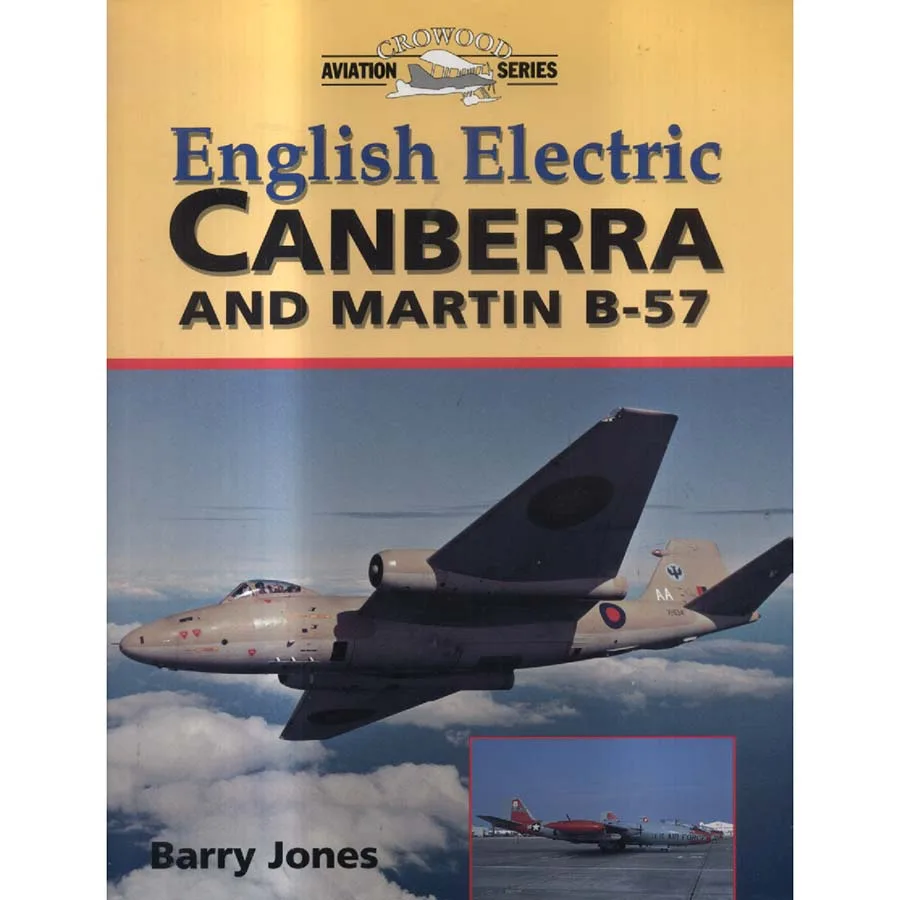
Publisher: Crowood Press
Format: Hardback
ISBN: 9781861262554
Barry Jones’s English Electric Canberra and Martin B-57 is a book about that rare aviation creature: an aircraft so fundamentally useful that even the Americans looked at it, paused, and decided they would quite like their own version, thank you. The Canberra began as a British jet bomber from the early Cold War, sleek in that slightly severe post-war way, all purpose and altitude and “please don’t ask how much the Empire has left in the bank.” Then across the Atlantic it became the Martin B-57, because if a design works, the sensible thing is to rebuild it, rename it, and give it a new set of national habits.
The Canberra was not one of those aircraft that relied on theatrical menace. It had a clean, high-flying confidence: bomber, reconnaissance platform, trainer, test aircraft, target tug, electronic odd-jobber and general aerial servant of governments who had discovered that the jet age came with a long list of errands. It flew high, stayed useful, adapted repeatedly, and hung around far longer than many machines that arrived later with more swagger and worse manners.
This Crowood volume follows both the British Canberra and its American B-57 cousin through development, variants, service use, operators, technical changes and that splendid aviation-history territory where one airframe becomes less a single aircraft than a family argument with wings. Bombers become reconnaissance aircraft. Reconnaissance aircraft become specialists. Specialists become survivors. Survivors become beloved by people who can identify a nose shape at fifty yards and have strong views about paint schemes.
The irony of the Canberra is that it was born into the nuclear jet-age drama of the 1950s, yet much of its greatness lay in simply being adaptable and dependable. While other aircraft arrived like manifestos, the Canberra got on with the job. It did not need to look like science fiction. It just needed to fly high, carry cameras or bombs or equipment, and keep finding reasons not to retire. Aviation history is full of glamorous failures; the Canberra had the quiet audacity to be useful.
The Martin B-57 adds the transatlantic twist: a British idea given American manufacture, American missions and American modifications, proving that even in the age of national pride, a good aircraft could still cross borders with less fuss than most politicians. In Vietnam especially, the B-57 found itself doing the sort of work no brochure writer would describe as elegant: night interdiction, bombing, reconnaissance, and the weary practical business of applying jet power to a war that resisted neat solutions.
For collectors of British aviation, Cold War bombers, reconnaissance aircraft, RAF types, US tactical aviation, Vietnam air-war history, or books where variant lists multiply like official paperwork, this is excellent shelf material. It has the satisfying Crowood seriousness: photographs, history, detail, development, service notes and enough aircraft lineage to make the casual reader nervous and the enthusiast quietly delighted.
Fine copy, as sold by Crappy Old Books. A very smart example of a book about an aircraft that made a career out of being sensible, adaptable and surprisingly hard to get rid of. No drama required; the Canberra brought its own altitude.
Keep browsing: See more War books Other books by Barry Jones
