


The Caves Of Steel
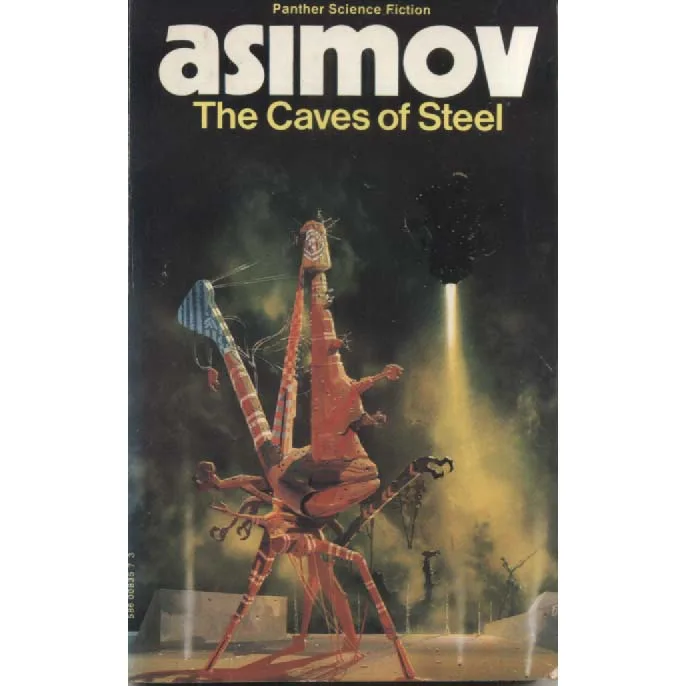
Publisher: Panther Science Fiction
Format: Paperback
ISBN: 0586008357
Isaac Asimov’s The Caves of Steel is what happens when the detective novel is quietly escorted into the future, fitted with a robot partner, and asked to solve a murder without upsetting several centuries of human neurosis. Earth is overcrowded, enclosed, anxious and bundled into vast domed Cities where people live indoors, avoid open spaces, distrust outsiders, and have turned urban life into a kind of municipal burrow with escalators.
Detective Elijah Baley is a human policeman with human prejudices, human habits, and a very human lack of enthusiasm for robots taking everyone’s jobs and standing around being annoyingly rational about it. Unfortunately, a Spacer has been murdered, and the investigation requires Baley to work with R. Daneel Olivaw, a robot so perfectly humanoid that one suspects the future has developed technology mainly to make people uncomfortable in more elegant ways.
The murder itself is only the beginning. Behind it sit Earth’s crowded Cities, the off-world Spacers with their long lives and superior airs, the political tension between stagnant Earth and outward-looking colonies, and the great question of whether humanity intends to remain packed inside its metal warrens forever, muttering about tradition, or risk the horror of going outside where there is sky and no ceiling.
Asimov has immense fun with the mismatch. Baley is sharp, stubborn and suspicious; Daneel is calm, precise and almost offensively reasonable. Together they form one of science fiction’s great odd couples: the detective and the machine, irritation and logic, instinct and programming, coffee-stained humanity and polished positronic patience. The result is a proper whodunit with future furniture, where clues matter, motives matter, and the robot is both suspect and colleague, which is frankly inconsiderate.
The irony of The Caves of Steel is that the future has solved many old problems by inventing new, claustrophobic ones. Earth has cities of staggering scale, advanced robotics, interplanetary contact and elaborate social systems, yet still struggles with fear, status, prejudice, panic and murder, because human beings are nothing if not committed to carrying their worst habits forward in attractive packaging. Progress, as ever, has remembered the machinery and misplaced the wisdom.
For readers of classic science fiction, robot stories, detective fiction, Asimov’s future history, or books where a locked-room mystery has been expanded until the locked room is basically the whole of New York, this is vintage material. It is clever, brisk, argumentative and pleasingly anxious: a story in which the crime must be solved, but so must the species, which seems a little much to ask of one detective before lunch.
Good copy, as sold by Crappy Old Books. A Panther Science Fiction paperback from 1973, ready to return to duty in the City corridors, the robot shelf, or any collection where murder, logic and mild anti-robot resentment are properly appreciated.
Keep browsing: See more Science-Fiction books Other books by Isaac Asimov
