


Driven To It
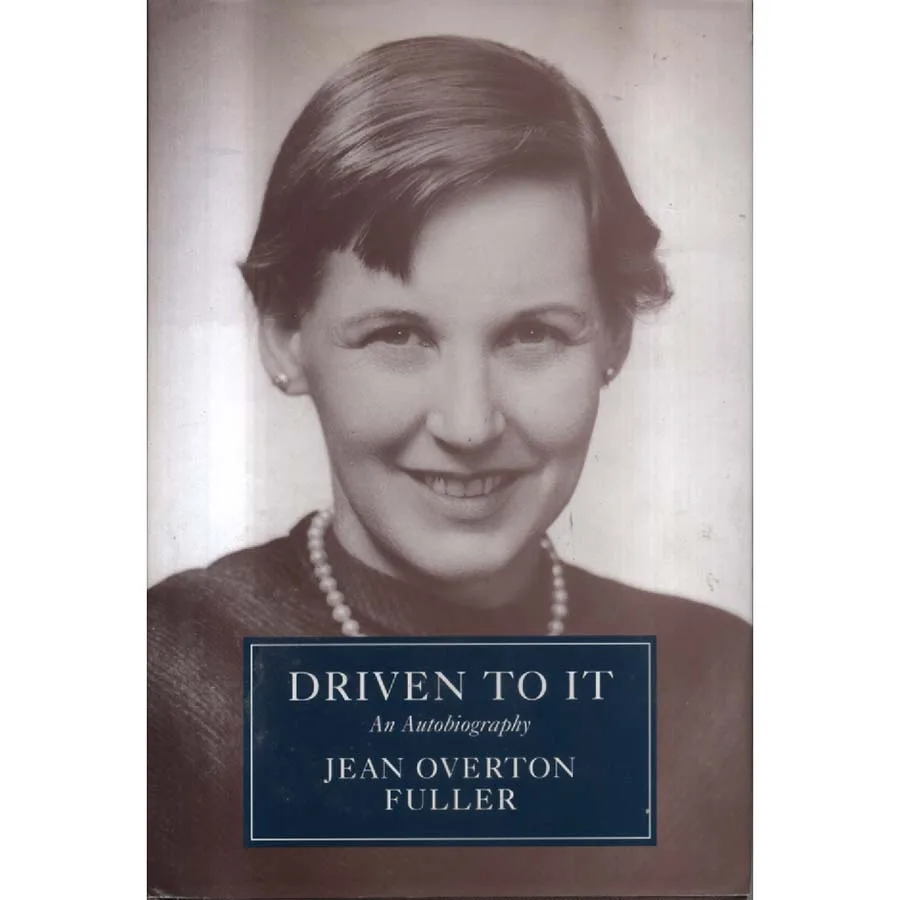
Publisher: Michael Russel
Format: Hardback
ISBN: 9780859553063
Some autobiographies begin with the comforting promise that a life has been tidied into chapters. Jean Overton Fuller’s Driven To It gives rather the opposite impression: that life kept throwing locked rooms, poets, spies, mystics, vanished documents, inconvenient truths, cats, conspiracies, dead heroes and literary obsessions at her until she was left with no civilised option but to write the whole thing down.
Fuller was not a writer who selected modest subjects and left the furniture undisturbed. She wrote about Noor Inayat Khan, SOE, wartime espionage, Shelley, Swinburne, Victor Neuburg, Francis Bacon, Blavatsky, Krishnamurti, Henri Déricourt, Walter Sickert and the Ripper crimes. This is not a bibliography so much as evidence of a mind with no intention of remaining in its assigned lane. Most people choose a specialism. Fuller appears to have chosen pursuit: following trails across archives, memory, metaphysics, literary history, intelligence work and those strange human borderlands where fact keeps bumping into rumour with a suspiciously meaningful expression.
Driven To It is her own account of that life, and the title feels exactly right. Not “gently inclined towards it.” Not “pleasantly encouraged.” Driven. There is a useful edge in that word: compulsion, necessity, irritation, destiny, stubbornness, perhaps even the sense that certain stories will not leave a person alone until they have been dragged into print and made to sit upright. Fuller’s life passed through the 20th century with an eye for hidden structures: wartime London, censorship, intelligence shadows, literary circles, theosophical searching, small press publishing, biography, investigation, friendship, solitude and the odd conviction that the visible world is only the top layer of the cake.
This is the memoir of someone who took both evidence and mystery seriously, which is a rarer combination than it should be. Too much evidence, and the world becomes a filing cabinet. Too much mystery, and one risks floating away on scented nonsense. Fuller’s territory was somewhere between: letters, archives, testimonies, memory, intuition, suspicion, pattern, the half-seen connection, the document that does not quite say what everyone insists it says. She had the biographer’s appetite for lives that resist closure and the investigator’s irritation with official neatness.
There is also the fine irony of an autobiography by a woman who spent so much of her career chasing other people through history. After years of reconstructing the lives of agents, poets, mystics and difficult men with interesting paper trails, she finally turns the light back on herself. The result is not likely to be a celebrity memoir in slippers. It is a record of a peculiar, driven, literary-intellectual life, full of causes, inquiries, enthusiasms, loyalties and arguments with the past. The past, to Fuller, was never safely dead. It was merely under-interviewed.
This Michael Russell copy is in Near Fine condition, which is quite impressive for a book about a life so heavily stocked with historical debris, spiritual weather and unresolved questions. Crappy Old Books offers it for readers of literary biography, wartime intelligence, SOE, theosophy, eccentric scholarship, small-press culture and anyone who likes an autobiography where the author has clearly spent decades refusing to leave awkward stories in peace.
Keep browsing: See more Biography books Other books by Jean Overton Fuller
