


What Do Women Want
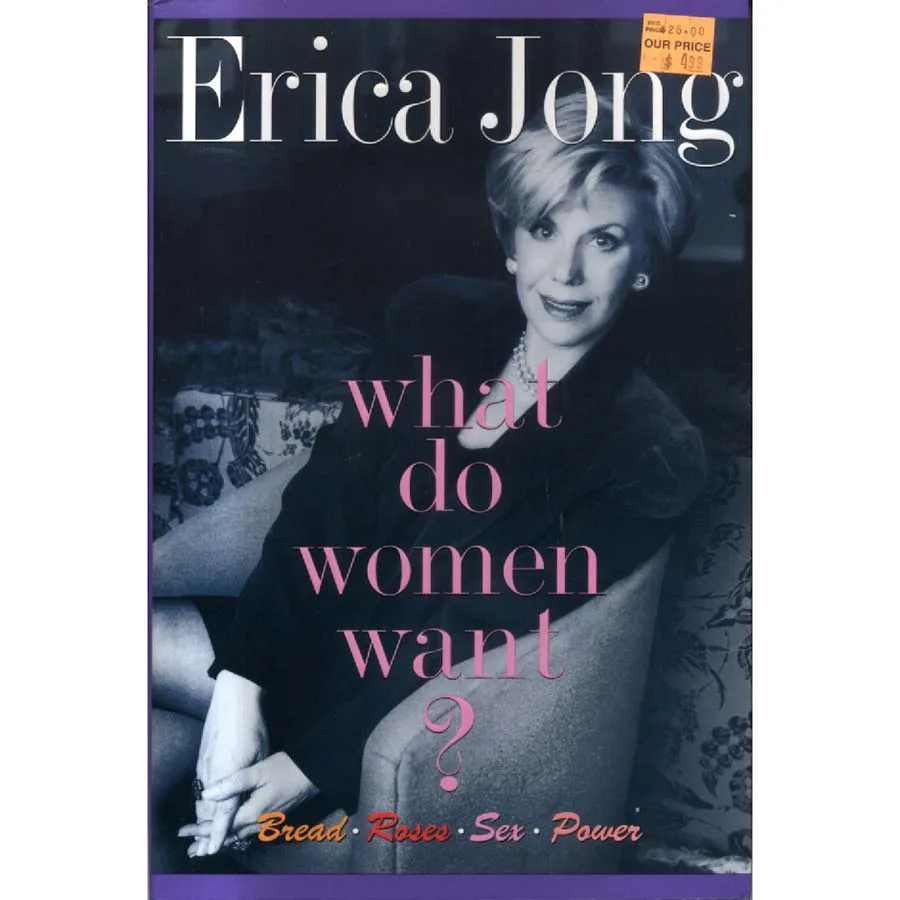
Publisher: HarperCollins Publishers
Format: Hardback
ISBN: 9780060183769
There are questions so large that civilisation keeps asking them mostly to avoid answering smaller ones honestly. What Do Women Want? is one of those questions, and Erica Jong arrives not with a clipboard, a committee report or a scented candle, but with opinions, appetite, memory, argument, literature, sex, mothers, daughters, feminism, and the faint sound of several respectable assumptions being dragged across the floor.
This is Jong in essay mode, which is to say alert, personal, combative, funny, literary and unwilling to pretend that desire becomes simple just because someone has put it in a serious font. She writes about women’s lives not as a tidy topic but as a crowded house: ambition in one room, motherhood in another, erotic freedom making noise in the hall, marriage checking the locks, ageing looking through the cupboards, and the ghost of every previous generation muttering that it had things worse and better in entirely different ways.
The title has a trapdoor in it. The lazy version of the question imagines “women” as a puzzle to be solved by men, magazines or advertising departments. Jong’s version is more dangerous because it turns the question back on culture itself. What are women allowed to want? What are they punished for wanting? What desires get celebrated when they are young, mocked when they are middle-aged, medicalised when they are inconvenient, and repackaged for sale as lifestyle choices? The wanting is never just personal. It is political, literary, bodily, comic, exhausting and very bad at staying in its assigned drawer.
Jong, of course, knows something about causing trouble in print. Ever since Fear of Flying, she has been treated as both writer and symptom, which is one of the special punishments reserved for women who say things too clearly. Men write about desire and are given careers, complexity and sometimes a very large chair. Women write about desire and are asked whether this is autobiographical, whether they are being responsible, and whether they might like to calm down. Jong, wisely, does not calm down.
These essays move through feminism, sexuality, creativity, power, literature and the ordinary absurdities of being a woman in a world that can turn liberation itself into another job. There is wit here, but it is not decorative wit. It is the kind that has had to pay rent, answer critics, live in a body, raise questions, raise children, and watch successive waves of public opinion rediscover the obvious as if it were a new coastal resort.
The pleasure of the book is its refusal to be polite in the dull sense. Jong can be brash, tender, contradictory, exuberant, irritating, wise and gloriously unretired from argument. She writes as though a woman’s inner life is not a side issue, not a private appendix to history, but one of the central battlegrounds of modern culture. Which, inconveniently for everyone who hoped feminism might be finished by now, it rather is.
This HarperCollins copy is in Very Good condition, which seems almost cheeky for a book so full of unrest, libido, argument and intellectual furniture being rearranged without permission. Crappy Old Books offers it for readers of feminist essays, literary provocation, sexual politics, Erica Jong, and anyone who suspects that the question “What do women want?” is usually asked by people hoping the answer will not require them to change anything.
Keep browsing: See more Womens books Other books by Erica Jong
