


Critical Lives - JRR Tolkien
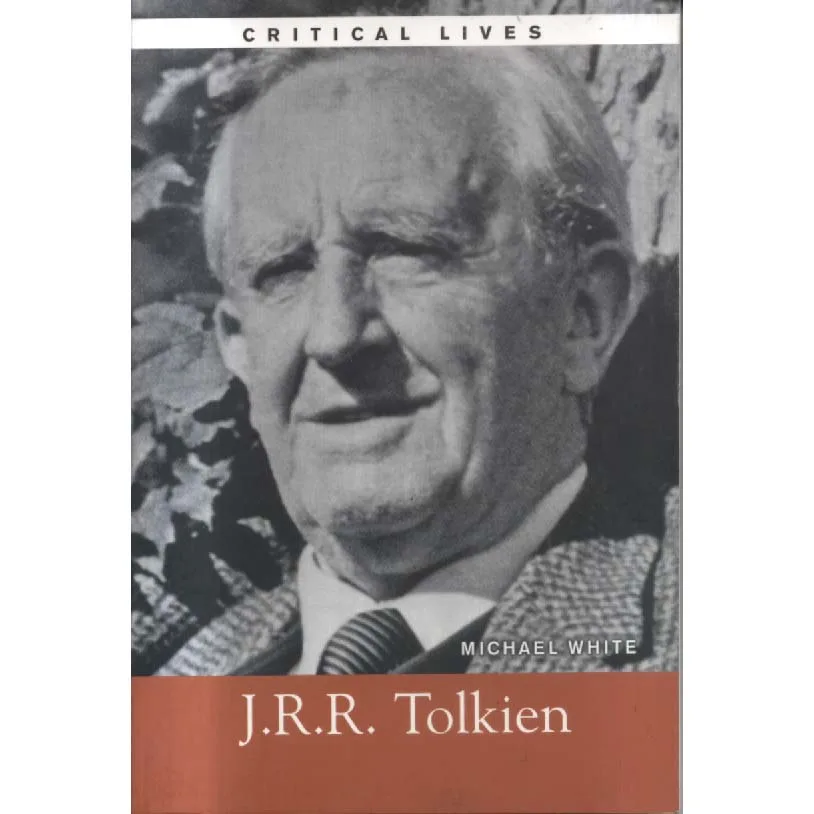
Publisher: Alpha
Format: Paperback
ISBN: 9780028642857
J. R. R. Tolkien is one of those inconvenient authors who built a world so large that the rest of literature has been trying to rent space in it ever since.
Michael J. White’s Critical Lives: J. R. R. Tolkien takes on the peculiar business of explaining a man who was, depending on where you stand, a professor of philology, a maker of myths, a Catholic moral imagination in tweed, a survivor of war, an inventor of languages, a creator of hobbits, and the person indirectly responsible for several million people learning the word “orc” before they could spell “allegory.” Tolkien’s life sounds quiet on the surface: Oxford, scholarship, books, lectures, family, pipes, papers. Then one notices that somewhere in the middle of this apparently respectable academic existence he produced Middle-earth, which is not so much a fictional setting as a secondary planet with footnotes.
This is the useful thing about a critical biography. It refuses to treat Tolkien as either a marble saint of fantasy or merely the old chap who gave the world elves with better cheekbones. It places him in context: the childhood losses, the First World War, the friendships, the languages, the medieval literature, the religious imagination, the Oxford rooms, the long labour of invention, and the strange fate of becoming a popular writer while remaining, spiritually, a scholar who would probably have preferred everyone to be more accurate about vowels.
Tolkien’s genius was not simply that he imagined dragons, rings, forests and dark lords. Plenty of people have imagined dragons. Some have done so after insufficient sleep. Tolkien’s achievement was depth: languages that seemed to have histories, histories that seemed to have songs, songs that seemed to have ruins behind them, and ruins that suggested someone had once written a grammar for the people who built them. His fantasy has weight because it behaves as if it existed before the reader arrived. Middle-earth does not feel designed for tourists. It feels discovered, and faintly annoyed by visitors.
White’s book offers a way into that life and work without requiring the reader to arrive already wearing a cloak or carrying a map of Beleriand. It looks at the man behind the mythmaking: the academic seriousness, the creative stubbornness, the long delays, the revisions, the friendships and frictions, the deep conservatism and the radical imaginative power. Tolkien was not simply escaping the modern world. He was building an older, stranger mirror in which the modern world could see its own machinery, loss and hunger for meaning looking back.
There is, of course, a tremendous irony in Tolkien becoming the father of modern fantasy, since fathers of genres are usually doomed to watch their descendants misunderstand them noisily. The man who cared so deeply about language and myth has been followed by armies of vaguely medieval things with apostrophes in their names. One suspects he would have had notes.
This Alpha paperback is in As New condition, which is almost indecent for a book about an author whose fictional manuscripts seem to have survived ages, wars, migrations, fires and editorial despair. Crappy Old Books offers it for Tolkien readers, fantasy scholars, biography browsers, and anyone who wants to know how a quiet academic managed to leave behind a world with better internal documentation than most governments.
Keep browsing: See more Biography books Other books by Michael J White
