


Hai Shuet Yeung - Innovation In Abstraction
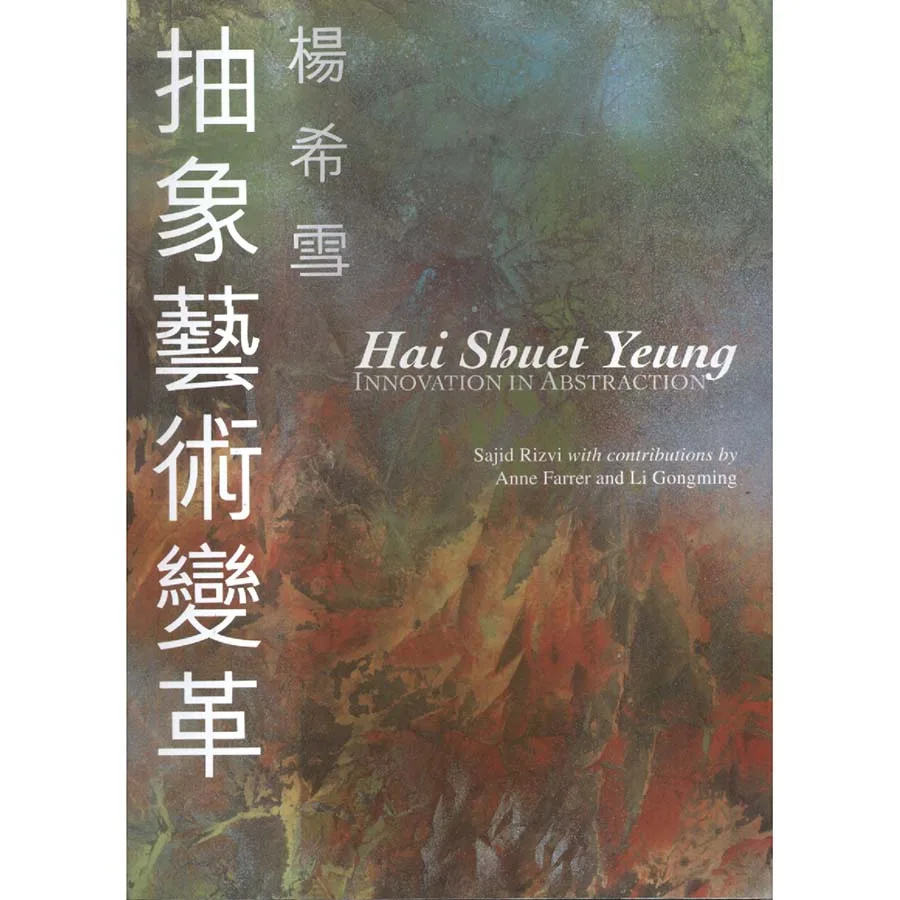
Publisher: Saffron Books
Format: Paperback
ISBN: 1872843115
Here is a book about abstraction, which is always reassuring, because abstraction is what happens when an artist looks at the visible world and says, quite reasonably, “Yes, but what if it was less obedient?”
Hai Shuet Yeung: Innovation in Abstraction is the kind of art book that refuses to behave like a polite catalogue of pretty things. It is not here merely to say, “Here is a painting, here is another painting, please nod with cultural seriousness.” It is here to prod at the whole business of looking: the brushstroke, the surface, the crumple, the suggestion of landscape without the tedium of actual hills standing around doing hill work. Yeung’s art belongs to that rewarding territory where Chinese visual traditions, modernist experiment, texture, space and an almost suspicious amount of intelligence all meet and decide not to explain themselves too quickly.
The title promises innovation in abstraction, and for once this does not sound like something invented by a committee after three biscuits and a funding deadline. Yeung’s work really does seem interested in pulling the picture away from the usual duties of representation. A painting need not point at a tree and say “tree.” It may instead offer pressure, movement, atmosphere, memory, weather, matter, the ghost of a landscape, or the feeling of having looked very closely at something until it stopped being a thing and became an event. This is much more useful than a tree, frankly. Trees are everywhere. Proper abstraction is rarer, and considerably less likely to shed leaves into the gutter.
Sajid Rizvi’s book gives the reader the satisfying sense of being invited into a serious artistic conversation without being forced to wear museum shoes. Hai Shuet Yeung’s work has that marvellous quality found in good abstraction: it can look ancient and new at the same time, as if a scroll painting, a geological formation, a weather system and a nervous breakdown in a studio had all agreed to share the same surface. The eye goes in expecting composition and comes out having had an argument with depth, scale and texture. This is healthy. The eye is very smug and needs troubling now and then.
There is also something pleasingly unfashionable about a 1997 Saffron Books volume devoted to an artist’s development, theory and visual experiments. It comes from the era when art books still looked like they expected to be placed on real shelves by people with lamps, opinions, and perhaps a slightly unstable coffee table. No algorithm is trying to make you “engage” with it. No pop-up asks whether you accept abstraction cookies. It simply exists, with plates and text and presence, calmly assuming that if you have opened it, you are prepared to look properly.
This copy has an extra little human complication: a dedication signed by the author to the original owner at the front. That means it has already had one life as a chosen object, not merely a floating retail unit with an ISBN attached. Somewhere, once, someone was handed this book with a name, a gesture, and the faint ceremonial warmth that signed books carry before they are eventually absorbed into the great democratic soup of second-hand stock.
Condition is Good, which in Crappy Old Books language means it has lived, but has not disgraced itself. It is not pretending to be untouched by time; it is an art book, not a hostage statement. A rather interesting, signed association copy for anyone who likes modern Chinese abstraction, artist monographs, Saffron Books oddities, or books that make the visible world look as though it has been thinking behind your back.
Keep browsing: See more Art books Other books by Sajid Rizvi
