


The Sparrow
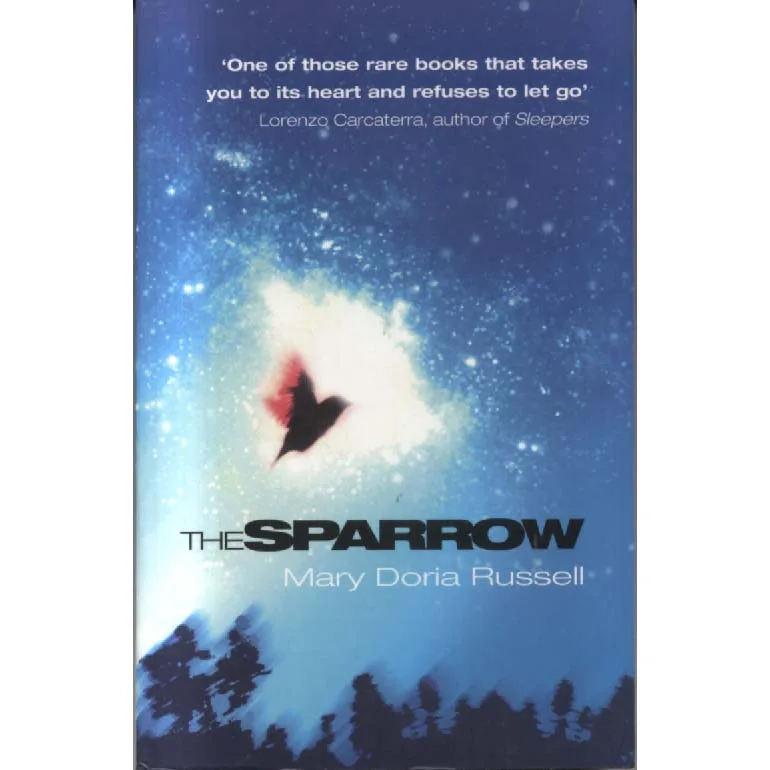
Publisher: Black Swan
Format: Paperback
ISBN: 9780552997775
The Sparrow (1997) by Mary Doria Russell
Publisher: Black Swan
ISBN: 9780552997775
Condition: As New
In the not-too-distant future, humanity finally receives proof that intelligent extraterrestrial life exists. Naturally, governments begin forming committees, scientists begin preparing proposals and the Society of Jesus quietly buys an asteroid, assembles a crew and gets there first. The Jesuits have been organising expeditions into unknown and potentially hostile territories for centuries; the fact that this particular territory is orbiting Alpha Centauri is merely a question of transport.
The mission begins when radio astronomers detect beautiful music coming from the planet Rakhat. Among those drawn into the discovery is Emilio Sandoz, a gifted Jesuit priest and linguist who has spent his life acquiring languages, enduring hardship and waiting for some unmistakable indication of what God intends him to do. An inhabited planet broadcasting celestial music seems fairly unmistakable. Emilio and his companions become convinced that a remarkable chain of friendships, accidents and opportunities has brought them together for a divine purpose. God, apparently, has opened a door. Nobody thinks to ask whether it might be the door to a cellar.
The expedition itself is an appealingly improvised combination of religious mission, scientific adventure and extremely ambitious outing among friends. Its members include priests, astronomers, doctors, engineers and people whose principal qualification is being far too interesting to leave behind. They cross interstellar space expecting danger, certainly, but also discovery, friendship and perhaps the most important encounter in human history. Upon reaching Rakhat, they find two intelligent species, unfamiliar societies, enchanting music and a culture whose subtleties they only partly understand. Initial contact goes remarkably well, which in a novel beginning with its sole survivor returning to Earth physically mutilated, psychologically destroyed and accused of appalling crimes is not especially reassuring.
Mary Doria Russell tells the story through two interwoven timelines. In one, the expedition forms, travels and gradually falls in love with Rakhat. In the other, decades later, Emilio has returned alone and must explain what happened to a Jesuit inquiry that alternates between pastoral concern and something resembling a particularly hostile performance review. The reader therefore knows from the beginning that catastrophe is coming, but not its nature. Every joyful discovery arrives with a small black border around it, while every innocent decision quietly joins a queue marked Consequences.
Despite the spaceships and aliens, The Sparrow is less interested in laser battles than in faith, language, friendship and the terrifying ease with which decent, intelligent people can misunderstand an unfamiliar society. The expedition’s members are not foolish and their intentions are not wicked. This is precisely the problem. They are compassionate, educated and certain that they are helping—the traditional opening ingredients of many of history’s larger disasters.
At its centre is Emilio’s struggle with a God whose apparent guidance has led not to revelation but to horror. If every coincidence that brought the mission together looked like providence, what does its destruction mean? Was the expedition called, abandoned, punished or simply mistaken? Russell takes the ancient question of why terrible things happen to people of faith, places it on another planet and removes all the convenient emergency exits.
This copy is in As New condition, which is considerably better than the condition in which Emilio Sandoz returns from Rakhat. It is clean, fresh and apparently little troubled by its previous existence: an unusually cheerful physical state for a novel containing spiritual collapse, disastrous first contact and enough accumulated guilt to keep an entire religious order occupied.
Ideal for readers who enjoy thoughtful science fiction, compelling characters, alien cultures, theological arguments and expeditions that begin with food, jokes and optimism before proceeding somewhere much darker. It is moving, intelligent and frequently funny, right up until the moments when it very much is not.
From Crappy Old Books, where first contact is generally limited to answering the door when the postman arrives, and even that can go badly.
Keep browsing: See more Science-Fiction books Other books by Mary Doria Russell
