


John Buchan - A Memoir
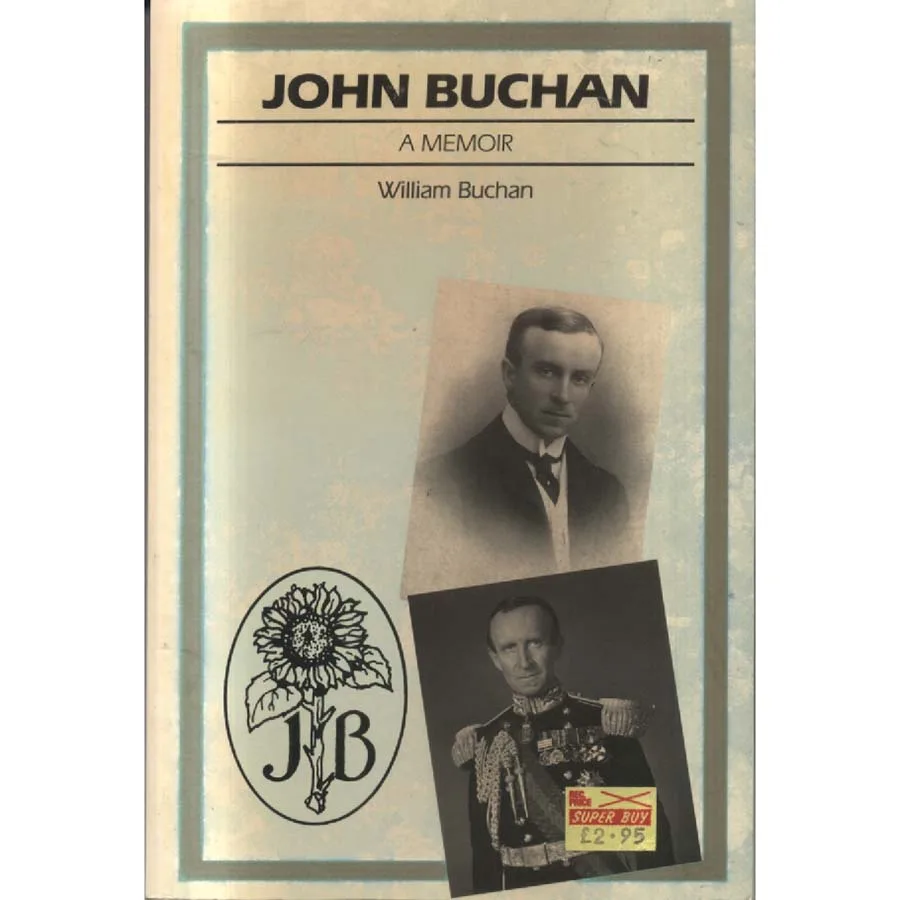
Publisher: Harrap
Format: Paperback
ISBN: 9780245542572
Important correction: ISBN 9780245542572 is John Buchan: A Memoir by William Buchan, John Buchan’s son—not by John Buchan himself. The 1985 Harrap edition is a reprint of William’s family memoir.
John Buchan was a novelist, historian, lawyer, publisher, politician, diplomat and Governor General of Canada, apparently having concluded at an early age that one career was an admission of defeat. To millions of readers he remains the creator of Richard Hannay and The Thirty-Nine Steps; to William Buchan, however, he was also simply his father—a familiar domestic figure who occasionally paused between writing books and administering parts of the British Empire to participate in family life.
In John Buchan: A Memoir, William Buchan offers an affectionate and unusually intimate portrait of the man behind the celebrated public career. This is not the work of a biographer peering sternly at a mountain of official correspondence, but the recollection of a son who saw Buchan away from podiums, government offices and literary dinners, when the great man was not being photographed looking as though he had just uncovered an international conspiracy.
Born in Perth in 1875 and raised in the household of a Free Church minister, John Buchan rose from comparatively modest beginnings to become one of the most industrious figures of his generation. He studied at Glasgow and Oxford, worked in South Africa, entered publishing and politics, produced histories and biographies, wrote an apparently inexhaustible supply of fiction, and eventually became Lord Tweedsmuir and Governor General of Canada. Most people would consider any three of these achievements a satisfactory life. Buchan treated them as items to be completed before lunch.
William Buchan concentrates particularly upon his father’s personal character and family relationships, presenting a warmer and more rounded figure than the brisk imperial statesman or master of the chase thriller familiar from public reputation. Here is Buchan as husband, parent, friend and host: a man of deep religious conviction, broad sympathies, formidable energy and an almost medically concerning capacity for work.
The memoir draws upon William’s childhood memories and his close knowledge of the family, giving readers access to details that official documents rarely preserve. Political appointments and literary triumphs are present, but so are private habits, household rhythms, illnesses, holidays and the countless small incidents through which a famous person becomes recognisably human.
Naturally, the literary career cannot be avoided. Buchan wrote novels, short stories, biographies, histories, essays and poetry while maintaining several other full-time occupations, presumably because sleep struck him as insufficiently constructive. William considers the imagination and values behind the books, helping to explain why Buchan’s adventures combine breathless pursuits with Scottish landscapes, moral seriousness and gentlemen who can identify danger from the behaviour of a distant grouse.
Readers interested primarily in Richard Hannay will discover the wider personality behind the fictional hero. Buchan shared something of Hannay’s resilience, loyalty and attachment to landscape, although his own enemies were generally deadlines rather than sinister foreign agents with unusual eyes. His thrillers were only one portion of a literary life encompassing scholarship, history and an enduring fascination with Scotland.
As a son’s account, the book is inevitably affectionate. William does not approach his subject with a sharpened psychological scalpel or the gleeful expectation of uncovering a locked cupboard full of disgrace. Instead, he writes with understanding, respect and the quiet authority of someone who knew the difference between the public monument and the man who came home for dinner.
That intimacy is the memoir’s particular strength. John Buchan’s achievements were so extensive that an ordinary biography can begin to resemble an annual report from an unusually successful civilisation. William restores proportion by showing the private individual moving behind the appointments, honours and publication lists.
The result is both a family memoir and a valuable contribution to Buchan studies: personal without becoming merely sentimental, informative without transforming its subject into a sequence of dates, committees and editions. It offers a revealing companion to Buchan’s own autobiography, Memory Hold-the-Door, supplying the perspective naturally omitted from any self-portrait—the view from elsewhere in the house.
This is an appealing book for admirers of John Buchan, students of twentieth-century literature, readers interested in British public life and anyone fascinated by people who somehow managed to combine successful literary careers with the administration of nations. It may also leave the average reader feeling mildly inadequate for having postponed answering two emails.
This copy is in Good condition, showing the normal signs of having passed through previous hands but remaining sound, complete and ready for further service. Offered by Crappy Old Books, an enterprise that has adopted the opposite strategy to John Buchan by setting expectations modestly and then accomplishing rather more than its title suggests.
Keep browsing: See more Biography books Other books by John Buchan
