


Tears On My Pillow - Australian Nurses In Vietnam
Publisher: Random House Australia
Format: Paperback
ISBN: 9781740511995
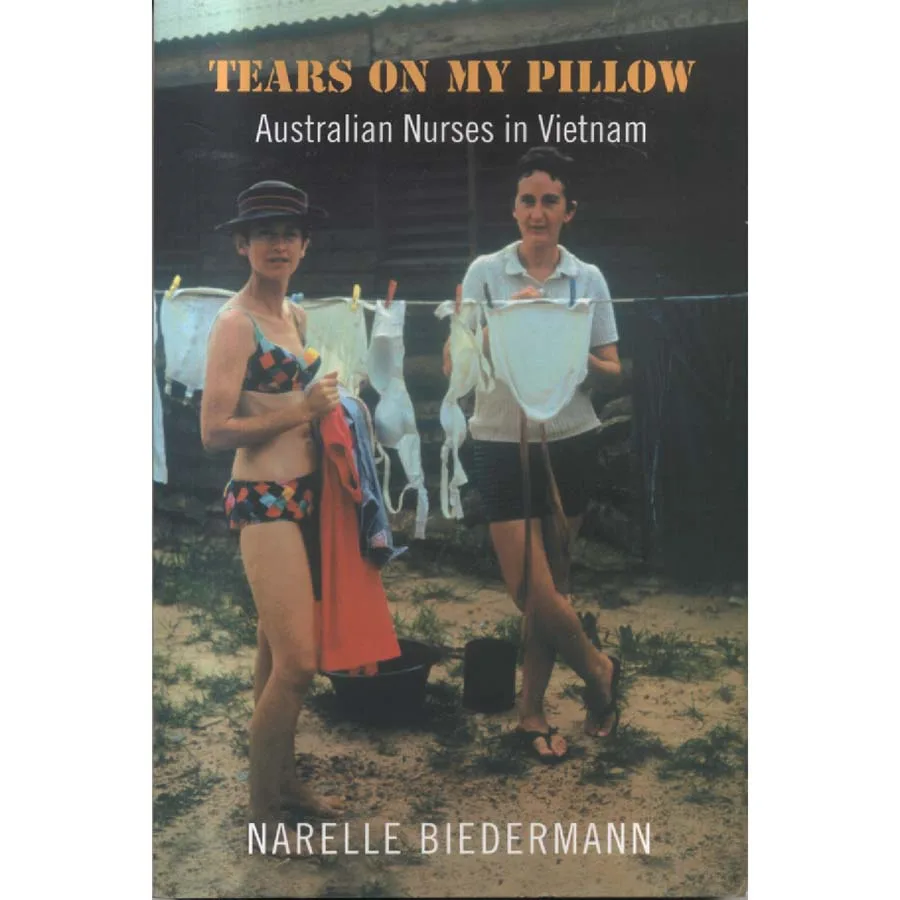
“Don’t forget your cotton underwear, girls!” was among the practical advice given to Australian Army nurses preparing for service in Vietnam. There was rather less discussion of mass casualties, battlefield trauma, intensive care and the emotional consequences of treating terribly wounded young men in a war zone. Military preparation, like civilian preparation, occasionally concentrates upon the items easiest to place on a checklist.
Between April 1967 and November 1971, forty-three members of the Royal Australian Army Nursing Corps served in Vietnam, generally undertaking tours of up to twelve months. Tears on My Pillow tells their story through their own recollections, supported by photographs and Narelle Biedermann’s careful research. It restores these women to a history of the war that has often found ample space for infantry battalions, aircraft and artillery while leaving the hospital somewhere beyond the edge of the narrative.
Most were young nurses sent to the Australian military hospital at Vung Tau. They arrived as commissioned officers but with limited preparation for the scale and severity of the injuries they would encounter. Some had little previous experience of trauma, intensive care or operating theatres. They learned quickly because war is an energetic instructor and does not offer a resit period.
The nurses treated Australian, allied and enemy casualties as well as civilians. Helicopters and ambulances delivered patients with gunshot wounds, blast injuries, burns, infections and devastating damage caused by mines and booby traps. A previously quiet ward could become a place of frantic activity within minutes, requiring clinical judgement, improvisation and the ability to continue working while the ordinary emotional response to suffering was postponed until a more administratively convenient hour.
Biedermann records the practical realities of nursing in extreme conditions: heat, humidity, exhaustion, unfamiliar equipment and the constant possibility of large numbers of casualties arriving together. Medical procedures had to be performed rapidly, supplies managed and wounded soldiers prepared for evacuation. The nurses occupied the peculiar territory between battlefield and home, receiving men at their most vulnerable and doing everything possible to send them back alive.
Their role was professional but intensely human. They wrote letters, reassured frightened patients, sat beside the dying and provided familiar Australian voices in an environment of pain and disorientation. For many soldiers, the nurses represented safety, compassion and the first indication that the journey away from the battlefield had begun. The contribution is difficult to measure statistically, which may explain why official histories have sometimes preferred counting helicopters.
The title reflects what happened after duty. The nurses were expected to remain calm, capable and cheerful in the wards, and many released their emotions only when alone. Tears could be saved for the pillow; morning required the uniform, professional composure and another shift. Emotional containment was considered part of the job, although nobody had yet invented a useful discharge procedure for everything being contained.
The book also explores the expectations placed upon women serving within a overwhelmingly male military culture. They were officers and highly trained professionals, yet were still treated according to conventional ideas of femininity. Advice about appearance and respectable behaviour accompanied responsibilities involving blood, death and emergency surgery. Apparently a woman could manage a critically wounded soldier but might still require institutional guidance concerning her underwear.
Using interviews and first-hand testimony, Biedermann allows the nurses to describe Vietnam in their own language. Their memories include friendship, humour, pride and occasional absurdity alongside grief and horror. Life in a war zone does not remain solemn every minute merely because later documentaries supply sombre music; people laugh, celebrate, irritate one another and find small pleasures because the alternative would make continued work impossible.
Returning to Australia brought its own difficulties. Like many Vietnam veterans, the nurses came home to a society divided over the war and often uninterested in hearing about their experiences. Their service did not fit comfortably into established images of combat or nursing. They had not carried rifles through the jungle, but they had lived daily with what rifles, mines and artillery did to human bodies.
The effects followed some of them long after Vietnam. Memories, grief and unspoken distress were carried into later careers and family lives at a time when psychological injury was poorly recognised and stoicism remained the preferred treatment. Being a nurse also created the assumption that coping with trauma was simply professional competence, as though medical training included immunity from being human.
Biedermann, herself a former officer in the Royal Australian Army Nursing Corps, developed the book from her doctoral research. Her understanding of military nursing gives the account professional depth, while the nurses’ voices keep it immediate and personal. This is oral history with blood in its memory, but also with humour, loyalty and the satisfaction of work performed under extraordinary pressure.
Tears on My Pillow will appeal to readers interested in the Vietnam War, Australian military history, nursing, women’s history and the experiences too easily omitted from conventional campaign narratives. It is not an account of generals directing arrows across maps; it concerns the people waiting at the other end of those arrows when the wounded came back.
This copy is in Good condition, showing ordinary signs of previous ownership but remaining entirely sound for further reading. Offered by Crappy Old Books, it is a moving and overdue tribute to forty-three Australian nurses who entered a war with professional training, limited preparation and strict instructions about cotton underwear—and returned carrying memories for which no packing list had made provision.
Keep browsing: See more War books Other books by Narelle Biedermann
